Softwr

Category

The best Databases software

Database & Data Management software and applications

Tools listed
50

All 50 databases tools

Every listing shows its published starting price on the same footing, so a shortlist does not take ten tabs.

Apache Solr logo

Apache Solr

Enterprise search platform built on Apache Lucene

Free
NATS logo

NATS

High-performance messaging system for cloud-native applications

Free
Redpanda logo

Redpanda

Kafka-compatible streaming platform with no ZooKeeper or JVM

Free
RabbitMQ logo

RabbitMQ

Open-source message broker supporting AMQP and other protocols

Free
OpenSearch logo

OpenSearch

Open-source search and analytics suite forked from Elasticsearch

Free
Valkey logo

Valkey

Open-source in-memory data store forked from Redis

Free
Meilisearch logo

Meilisearch

Fast open-source search engine built for typo tolerance

Free
Memcached logo

Memcached

Distributed memory object caching system

Free
Typesense logo

Typesense

Open-source typo-tolerant search engine as an Algolia alternative

Free
Materialize logo

Materialize

Live context layer for AI agents using real-time SQL transformations

From $1.5/compute-credit
Nile logo

Nile

PostgreSQL database platform built for multi-tenant SaaS applications

From $15/mo
Fivetran HVR logo

Fivetran HVR

Log-based change data capture for database replication and synchronization

Pricing on request
Readyset logo

Readyset

Database caching and optimization that reduces infrastructure costs 30-70%

Free
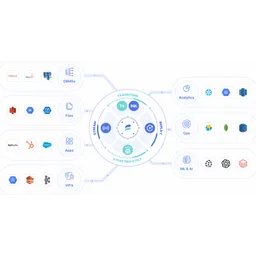
Estuary logo

Estuary

Real-time data integration combining streaming, CDC, and batch

From $0.5/gb
Zilliz logo

Zilliz

Managed vector database and vector lakebase for AI applications

Free
Marqo logo

Marqo

AI-native product discovery platform for ecommerce

Pricing on request
Dragonfly logo

Dragonfly

High-performance Redis-compatible in-memory datastore with 25x better throughput

Free
Vespa logo

Vespa

Distributed AI search platform for retrieval, ranking, and inference

Free
Timescale logo

Timescale

PostgreSQL platform for time-series and analytical workloads

From $30/mo
SurrealDB logo

SurrealDB

Multi-model database combining documents, graphs, vectors and time-series

Free
MotherDuck logo

MotherDuck

Serverless analytics data warehouse built on DuckDB

From $250/mo
DataGrip logo

DataGrip

Cross-platform database IDE from JetBrains for SQL and NoSQL databases

From $8.25/mo
Ninox logo

Ninox

The database for teams

Free
Grist logo

Grist

The evolution of spreadsheets

From $10/mo
Knack logo

Knack

Build online databases and apps without code

From $59/mo
Cloudinary logo

Cloudinary

Image and video API for developers

From $99/mo
MariaDB logo

MariaDB

The open source relational database for the enterprise

Free
CosmosDB logo

CosmosDB

Globally distributed, multi-model database service from Azure

Free
Microsoft SQL Server logo

Microsoft SQL Server

Enterprise-grade relational database management system

Free
Neo4j logo

Neo4j

The world's leading graph database

Free
ArangoDB logo

ArangoDB

Multi-model database for graph, document, and search

Free
Couchbase logo

Couchbase

The modern database for enterprise applications

Free
Oracle Database logo

Oracle Database

The world's most complete, reliable, and secure database

From $47,500/processor
PlanetScale logo

PlanetScale

The MySQL-compatible serverless database

From $15/mo
CouchDB logo

CouchDB

Seamless multi-master sync with Apache CouchDB

Free
PostgreSQL logo

PostgreSQL

The world's most advanced open source relational database

Free
Qdrant logo

Qdrant

High-performance vector database for similarity search and embedding-based retrieval

Free
Amazon RDS logo

Amazon RDS

Set up, operate, and scale a relational database in the cloud

Free
Azure SQL logo

Azure SQL

Intelligent, scalable cloud database service from Microsoft

Free
DataStax logo

DataStax

The real-time data company for AI applications

Free
QuestDB logo

QuestDB

Fast open source time-series database for high throughput ingestion

Free
RavenDB logo

RavenDB

The fully transactional NoSQL document database

Free
dbt logo

dbt

SQL transformation framework enabling analytics engineers to version, test and deploy models

Free
ScyllaDB logo

ScyllaDB

The real-time big data database compatible with Cassandra

Free
SingleStore logo

SingleStore

The real-time distributed SQL database for data-intensive applications

From $0.99/mo
BigQuery logo

BigQuery

Serverless, highly scalable enterprise data warehouse

Free
Apache Pulsar logo

Apache Pulsar

Cloud-native messaging and streaming with separated storage

Free
Apache Flink logo

Apache Flink

Stateful stream processing at scale

Free
Apache Kafka logo

Apache Kafka

Open-source distributed event streaming platform

Free
Apache Airflow logo

Apache Airflow

Programmatically author, schedule and monitor data workflows in Python

Free

What databases software costs

Counted from the published pricing of the 50 listings on this page. A tool counts as free only where it publishes a $0 plan, an open-source licence or a starting price of zero.

Cheapest paid plan
$0.19SurrealDB
Median entry price
$44.50across 20 priced
Dearest entry price
$47,500Oracle Database
Publish a $0 plan
36of 50

Paid databases plans in this set start anywhere from $0.19 a month for SurrealDB to $47,500 for Oracle Database. The median entry price across the 20 tools that publish one is $44.50, half of them start below that figure and half above it.

36 of 50 publish a $0 plan, and 21 of those charge nothing at all. 5 tools have no free tier of any kind.

14 of 50 keep at least one tier unpriced and sold by quote, which in practice means the number you end up paying at the top end is not on this page or on theirs.

SurrealDB pricingOracle Database pricingOracle Database plans

How these vendors bill

The billing model each of the 50 databases listings publishes, counted. Two tools at the same headline price are not the same purchase if one of them charges per seat.

freemium
9
usage-based
7
Open source, no licence fee; managed services billed separately
5
Open source, no licence fee; managed cloud billed separately
4
contact-sales
3
Open source, no licence fee
3
subscription
3
open-source
2
Monthly or annual subscription based on cache size
1
Pay-per-use with committed pricing
1
Source-available community edition with paid enterprise and cloud tiers
1
subscription|free
1
Usage-based cloud pricing with flexible tiers
1
Usage-based compute credits with volume discounts for annual prepay
1
Usage-based per GB plus per-connector cost
1
Usage-based, integrated with Fivetran billing
1

Separately, 14 of 50 publish at least one tier with no price attached. Those are sold by quote, so the top of the ladder is negotiable, and unknowable, until you talk to sales.

What comes as standard, and what you pay extra for

Every capability named in a published pricing tier by any of the 38 databases tools here that break their plans down, counted once per vendor. This measures what vendors choose to advertise as a selling point, not everything the software does, an absence below is silence, not a missing feature.

Named most often

  • Full functionality , 10 of 38
  • No usage limits , 10 of 38
  • Community support , 8 of 38
  • Self-hosted , 7 of 38
  • Dedicated support , 3 of 38

Named by fewer

  • Custom pricing , 2 of 38
  • Enterprise support , 2 of 38
  • High availability , 2 of 38
  • Limited resources , 2 of 38
  • Managed service , 2 of 38

Named by exactly one vendor: Advanced features, Basic integrations via Knack Flows, Dedicated VPC infrastructure, Full-text search, Pay per storage, SOC 2 and HIPAA compliance. Those are differentiators rather than table stakes.

What “Databases” covers in practice

The subject tags that recur across these 50 listings, with the number of tools carrying each. A category label is a filing decision; this is the closer read of what is actually filed under it.

  • database26
  • Open Source16
  • real-time9
  • analytics8
  • nosql7
  • search7
  • sql6
  • ai5
  • cloud5
  • Enterprise5
  • document4
  • serverless4

Carried by a single tool: .net, Cloud Database, dbaas, high-performance, microservices, optimization, recommendations, scheduling. If one of those is the reason you are here, the category page is the wrong lens, go straight to that product.

How to choose between them

Four things the numbers above should change about your shortlist.

Start with the free tiers if there are enough of them

36 of 50 databases tools here publish a $0 plan, which is enough to run a real trial without a purchase order. A free tier is worth more than a free trial when you are evaluating: a trial expires on the vendor's schedule, a free plan expires when you outgrow it. The thing to check before you commit is which of the capabilities below sit above the free line, starting with full functionality, the single most frequently named capability in this category's published tiers.

Read the spread before you read the features

$0.19 to $47,500 is a $47,499.81 spread on entry price alone, and a spread that wide is never about polish, it is about who the vendor built for. Tools at the bottom of this ladder are priced for one person or a small team; tools near $47,500 are priced for a department with a procurement process. Decide which of those you are before you compare capability, or you will shortlist four tools that were never competing for the same buyer.

Check which tier you actually land on

20 of 50 tools here publish three or more tiers, and the median vendor in this category ships 2.5 of them. The advertised price is the first rung, and the things teams tend to need, full functionality, no usage limits, community support, are named in higher plans far more often than in entry ones. Price your shortlist at the tier that contains what you need, not at the tier on the pricing page's left edge.

The billing model matters more than the headline number

This category splits across 16 billing models: freemium on 9 listings, usage-based on 7, and 14 other arrangements across the rest. A per-user price and a flat subscription at the same headline figure are not the same purchase, the first one grows with headcount and the second does not. Multiply by your real team size before you compare two numbers side by side.

Compare databases tools directly

Every pairing below is a full comparison: the same checklist applied to both, so a gap in one is a gap in the other.

Go straight to the numbers

Questions people ask about databases software

Answered from the listings on this page, and nowhere else.

How much does databases software cost?
Across the 50 databases tools listed here, paid plans start between $0.19 and $47,500 a month, with a median entry price of $44.50. The most expensive single tier published in the category is $47,500 a month (Oracle Database). 36 of 50 also publish a $0 plan.
What is the cheapest databases software?
21 of the 50 tools listed here cost nothing at all. Among the ones that charge, SurrealDB has the lowest published entry price at $0.19 a month. Cheapest and best value are different questions: check which tier the capability you need actually appears in before you compare starting prices.
Is there free databases software?
Yes, 36 of 50 tools in this category publish a plan priced at $0. 21 of them are free outright, with no paid tier above. A tool is only counted as free here when it publishes a $0 plan, an open-source licence, or a starting price of zero, a free trial does not count.
What features should databases software have?
Judging by what vendors put in their own published pricing tiers, the most frequently named capabilities in this category are full functionality (10 of 38 tools that publish plan detail), no usage limits (10) and community support (8). Treat those as the category baseline. Anything named by only one vendor, such as advanced features or basic integrations via knack flows, is a differentiator rather than a standard, so it is worth deciding whether you need it before it narrows your shortlist to one.
How is databases software usually billed?
freemium (9), usage-based (7), Open source, no licence fee; managed services billed separately (5), Open source, no licence fee; managed cloud billed separately (4), plus 12 less common arrangements, counted across the 50 listings on this page. The distinction that costs money is per-seat versus flat: a per-user plan at the same headline price scales with your headcount and a flat subscription does not. 14 of 50 tools also keep at least one tier unpriced and sold by quote.
What does databases software actually cover?
The 50 tools on this page do not describe themselves the same way. The subject tags they carry most often are database (26), open source (16), real-time (9), analytics (8), nosql (7). That spread is the honest answer to what the category means in practice: it is not one product shape, and two tools filed under databases may overlap on very little.
How many pricing tiers do databases tools offer?
40 of 50 tools here publish a plan breakdown, and the median one has 2.5 tiers. 20 of 50 publish three or more. More tiers is not generosity, it usually means the capability you are buying for sits two rungs above the advertised price, so price your shortlist at the tier that contains it.
How many databases tools are listed on Softwr?
50 approved databases listings appear on this page, including Apache Solr, NATS, Redpanda, RabbitMQ. Each links to a full breakdown with its pricing tiers and plan detail, and the category can be filtered by price and sorted by rating above. You can also read the shortlist view at /best/databases, which ranks the same set by published rating.

Keep this

Email me these 50 picks

The shortlist for “Databases”, plus a note if any of their prices change.

One email. Unsubscribe in a click.

Keep reading