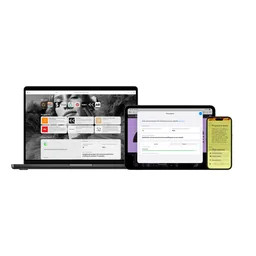
 Safarivs
 Mozilla Firefox
Mozilla Firefox: Fast, private & safe web browser

Apple's WebKit browser, available only on Apple operating systems and updated only with them.
As of 30 August 2026, Safari is free to use. Safari is the default browser across Apple's platforms and is tightly tuned for battery life and hardware integration. Softwr lists it under Technology.
Overview
Safari is Apple's web browser, built on WebKit and shipped as part of macOS, iOS, iPadOS and visionOS. It is not distributed for any non-Apple platform: the last Windows release was Safari 5.1.7 in 2012, and there has never been a Linux or Android version. Safari versions are tied to the operating system release, so major browser features arrive with the annual OS update, and a Mac that can no longer run a supported macOS stops receiving Safari updates entirely. Intelligent Tracking Prevention, iCloud Keychain and, for iCloud+ subscribers, Private Relay are the main privacy features. What distinguishes it is that Apple controls both the browser and the silicon underneath it, and optimises the pair together. On Apple laptops, Safari's power consumption during ordinary browsing and video playback is measurably lower than Chromium browsers on the same machine, which translates into hours of battery rather than percentage points. Combined with Handoff, iCloud Tab sync, Apple Pay in the browser and passkeys backed by the Secure Enclave, it is the browser that makes an all-Apple estate behave as one device, and the switching cost is proportional to how much of that estate you have. It is used, rather than bought, by anyone standardised on Apple hardware, and it is a mandatory concern for every web team regardless of what they use themselves, because Safari sets the compatibility floor for the mobile web. The trade-off is asymmetric: individual users pay very little for it, while organisations pay in tooling. Testing Safari means owning or renting Macs, since safaridriver runs on macOS only and has no headless mode, and building a Safari extension means shipping a signed macOS application through the App Store with a paid developer account, which is a disproportionate amount of process for a small internal tool.
The honest half
Concrete and checkable, so you can decide whether any of them matter to you. This is the half of a review a vendor will not write about Safari.
Cross-shopped
Each pairing was judged by two reviewers asking whether a buyer would genuinely weigh the two against each other. The ones that failed were deleted rather than published.
Mozilla Firefox: Fast, private & safe web browser

Google Chrome: Fast, secure browser built for the modern web

Microsoft Edge: The only browser optimized for superior performance on Windows
Microsoft Outlook: Email, calendars and contacts in one place, on desktop, mobile and web
Capabilities
WebKit engine
Apple's own rendering engine, the third significant engine alongside Blink and Gecko
Intelligent Tracking Prevention
Partitions and expires cross-site cookies and storage to limit tracking without an extension
Energy optimisation
Tuned against Apple silicon for lower power draw during browsing and video than Chromium browsers on the same hardware
iCloud Private Relay
For iCloud+ subscribers, routes Safari traffic through two relays so neither sees both the user and the destination
Passkeys in iCloud Keychain
Creates and syncs passkeys backed by the Secure Enclave across Apple devices
Handoff and tab sync
Pass an open page between Mac, iPhone and iPad, with iCloud Tabs listing what is open elsewhere
Profiles and Tab Groups
Separate cookies, history and extensions per profile, with shareable named collections of tabs
Web Inspector
Built-in developer tools, and the only way to debug pages running on a real iPhone or iPad
Answered, with sources
Each answer names the page it came from, so you can check it rather than take our word for it.
No. The last Windows version was Safari 5.1.7 in 2012 and it is long unsupported. There has never been a Linux build. Testing Safari requires macOS, either your own or a rented cloud device.
Through a cloud device farm such as BrowserStack, Sauce Labs or LambdaTest, which run real macOS and iOS instances. There is no reliable local emulation, because other browsers on Windows and Linux do not use WebKit.
Historically no: Apple required all iOS browsers to use WebKit, so Chrome and Firefox on iPhone were interface shells around Safari's engine. The EU's Digital Markets Act now permits alternative engines, but adoption is limited, so in practice iOS testing still means WebKit.
Safari ships with the operating system. When a Mac can no longer run a macOS version that Apple still updates, Safari stops updating too, including its security fixes.
Nothing. It is included with Apple operating systems. Private Relay requires an iCloud+ subscription, and publishing an extension requires a paid Apple Developer Program membership.
Keep looking
Microsoft's Chromium-based browser, distinguished by IE mode for legacy applications and by its integration with Microsoft 365 management.
An independent web browser with its own rendering engine, funded almost entirely by search placement deals.
Google's browser, built on Chromium, with the largest market share and the strictest limits on what extensions may do.
A distributed SQL engine that queries data where it already lives, across object storage, warehouses and operational databases.
A distributed engine for batch, SQL, streaming and machine learning workloads over data that does not fit on one machine.
A free, open source Git client from GitHub for Windows and macOS that covers common workflows rather than all of Git.
Enterprise-grade monitoring solution with advanced visualization and reporting
Project management for software teams
Microsoft's email and calendar client, in the middle of a transition from the classic Windows application to a web-based replacement.
Softwr does not host reviews and shows no star rating for Safari, because a rating we did not collect is not ours to publish. What is here is the pricing and platform detail from the vendor’s own pages, limitations we could state concretely, and alternatives a reviewer confirmed people weigh against it. Tell us if any of it is wrong.
What people switch to, and what they give up
Every tier, and where the cost actually lands
Put it head to head with anything we hold
Its rating, and an embed for your own site
Secure access for everyone
The digital analytics platform to understand your users