
Logging · head to head
Loggly vs Uptime.com

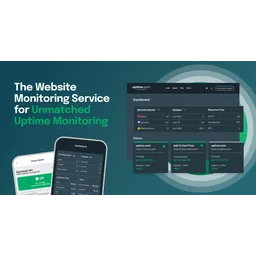
Uptime.com
Logging
Website monitoring and uptime checker with 80+ global monitoring points
- From
- On request
- Rated
- -
The short version
- Only Loggly has a free tier, so it costs nothing to try first.
- Each has a real cost: Loggly the free Lite plan caps ingest at 200 MB per day with 7 day retention; Uptime.com pricing structure not fully detailed publicly
- They diverge on capability: Loggly covers Log aggregation, Uptime.com covers Website monitoring.
- Prices and features above were last checked on 30 August 2026.
Where they differ
Only the attributes on which Loggly and Uptime.com actually diverge.
| Attribute | Loggly | Uptime.com |
|---|---|---|
| Starting price | Free | On request |
| Pricing model | usage-based | subscription |
| Free tier | Yes | No |
| Founded | 2009 | Unknown |
Identical on both: platforms (Web, Api), user rating (Not yet rated), category (Logging).
What each one covers
Drawn from each product's published feature list. An absence here means we hold no record of it - not that the product lacks it.
Only in Loggly
- Log aggregation
- Real-time search
- Custom dashboards
- Alert management
- API
- Webhooks
- REST
- Web support
Only in Uptime.com
- Website monitoring
- API monitoring
- Synthetic monitoring
- Page speed testing
- Real User Monitoring
- Status pages
- Private locations
- Global network
What people use each for
The jobs each tool is most often brought in to do.
Loggly
- Cloud-hosted log aggregation for small and mid-sized engineering teamsnot Uptime.com
- Alerting on log patterns via email, webhook, PagerDuty or Slacknot Uptime.com
- Log analysis alongside SolarWinds infrastructure and application monitoringnot Uptime.com
Uptime.com
- Monitor website availability across multiple global locationsnot Loggly
- Test API endpoints and validate response timesnot Loggly
- Verify DNS resolution and certificate validitynot Loggly
- Track page load performance over timenot Loggly
- Send alerts to teams when issues occurnot Loggly
Where each one falls short
Documented limitations, not opinions. Every one is a constraint you would hit in normal use.
Loggly
- The free Lite plan caps ingest at 200 MB per day with 7 day retention
- API access and archiving to Amazon S3 start on the Pro plan at $159 per month billed annually
- Federated identity management is an Enterprise feature, starting at $279 per month billed annually
- The Standard plan at $79 per month is limited to 1 GB per day and 3 source groups
- Maximum retention is 90 days and only on Enterprise; Standard is fixed at 15 days
Uptime.com
- Pricing structure not fully detailed publicly
- Limited information on check frequency in basic plans
- Real User Monitoring and status pages require add-ons
- Lower-tier plans may have feature limitations
Pricing, plan by plan
Loggly
Free- FreeFree
- Log aggregation
- Real-time search
- Custom dashboards
Uptime.com
On requestNo published plan breakdown. See the Uptime.com review.
Which should you pick?
Choose Loggly if
- You need log aggregation.
- You want to start without paying.
- You work on Web, Api.
- You also want real-time search.
Choose Uptime.com if
- You need website monitoring.
- You work on Web, API.
- You also want api monitoring.
Questions people ask
- Is Loggly or Uptime.com better?
- Neither clearly leads. Loggly starts at Free and Uptime.com at On request, and user ratings are close enough to be indistinguishable. Choose on capability and platform support.
- Which is cheaper, Loggly or Uptime.com?
- Loggly has a free tier; the other does not. Paid plans start at Free for Loggly and On request for Uptime.com.
- Does Loggly or Uptime.com run on more platforms?
- Loggly runs on Web, Api. Uptime.com runs on Web, API.
- Can I use Loggly for free?
- Yes. Loggly has a free tier, so you can try it without paying. Uptime.com starts at On request.
- What is Loggly best used for?
- Loggly is most often used for cloud-hosted log aggregation for small and mid-sized engineering teams, alerting on log patterns via email, webhook, pagerduty or slack, log analysis alongside solarwinds infrastructure and application monitoring. Of those, cloud-hosted log aggregation for small and mid-sized engineering teams and alerting on log patterns via email, webhook, pagerduty or slack are not what Uptime.com is typically brought in for.
- What can Loggly do that Uptime.com cannot?
- Loggly covers Log aggregation, Real-time search, Custom dashboards, Alert management. Uptime.com covers Website monitoring, API monitoring, Synthetic monitoring, Page speed testing.
Answered from the vendors’ own pages
Uptime.com: Does Uptime.com offer a money-back guarantee?
Yes, Uptime.com provides a 30-day money-back guarantee for new users, allowing risk-free trial of their service.
SourceUptime.com: What alerting methods does Uptime.com support?
All plans include email and SMS alerting with 20+ integrations available including Slack, Teams, PagerDuty, and webhooks for custom integrations.
SourceUptime.com: How many monitoring locations does Uptime.com have?
Uptime.com operates 80+ monitoring locations worldwide, enabling checks from multiple geographic regions to detect regional connectivity issues.
SourceRelated pages
Other head to heads
- Loggly vs Datadog Logs
- Loggly vs New Relic
- Loggly vs Coralogix
- Loggly vs Elastic Stack
- Loggly vs Sumo Logic
- Loggly vs Dynatrace Logs
- Loggly vs Splunk Cloud
- Loggly vs FireHydrant
- Loggly vs Rootly
- Loggly vs Axiom
- Loggly vs Vector
- Loggly vs Checkly
- Loggly vs CloudWatch
- Loggly vs Airbrake
- Loggly vs ELK Stack
- Loggly vs Dynatrace
- Loggly vs Filebeat
- Loggly vs Cronitor
- Loggly vs Healthchecks
- Loggly vs InfluxDB
- Loggly vs Traceloop
- Loggly vs Openstatus
- Loggly vs incident.io
- Loggly vs AppDynamics
- Loggly vs Better Stack
- Loggly vs Honeybadger
- Loggly vs Papertrail
- Loggly vs Raygun
- Loggly vs Retrace
- Loggly vs Rollbar
- Loggly vs Sematext
- Loggly vs New Relic Logs
- Uptime.com vs Datadog Logs
- Uptime.com vs New Relic
- Uptime.com vs Coralogix
- Uptime.com vs Elastic Stack
- Uptime.com vs Sumo Logic
- Uptime.com vs Dynatrace Logs
- Uptime.com vs Splunk Cloud
- Uptime.com vs FireHydrant
- Uptime.com vs Rootly
- Uptime.com vs Axiom
- Uptime.com vs Vector
- Uptime.com vs Checkly
- Uptime.com vs CloudWatch
- Uptime.com vs Airbrake
- Uptime.com vs ELK Stack
- Uptime.com vs Dynatrace
- Uptime.com vs Filebeat
- Uptime.com vs Cronitor
- Uptime.com vs Healthchecks
- Uptime.com vs InfluxDB
- Uptime.com vs Traceloop
- Uptime.com vs Openstatus
- Uptime.com vs incident.io
- Uptime.com vs AppDynamics
- Uptime.com vs Better Stack
- Uptime.com vs Honeybadger
- Uptime.com vs Papertrail
- Uptime.com vs Raygun
- Uptime.com vs Retrace
- Uptime.com vs Rollbar
- Uptime.com vs Sematext
- Uptime.com vs New Relic Logs