
Technology · head to head
PagerDuty vs Uptime.com

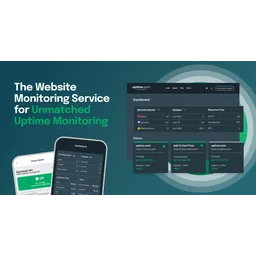
Uptime.com
Logging
Website monitoring and uptime checker with 80+ global monitoring points
- From
- On request
- Rated
- -
The short version
- Each has a real cost: PagerDuty aIOps, status pages, and live call routing are expensive add-ons not included in base plans, significantly increasing total cost; Uptime.com pricing structure not fully detailed publicly
- They diverge on capability: PagerDuty covers Incident response, Uptime.com covers Website monitoring.
- Prices and features above were last checked on 30 August 2026.
Where they differ
Only the attributes on which PagerDuty and Uptime.com actually diverge.
| Attribute | PagerDuty | Uptime.com |
|---|---|---|
| Starting price | $21/month | On request |
| Pricing model | Unknown | subscription |
| Platforms | Web, Ios, Android, Api | Web, API |
| Category | Technology | Logging |
| Founded | 2009 | Unknown |
Identical on both: free tier (No), user rating (Not yet rated).
What each one covers
Drawn from each product's published feature list. An absence here means we hold no record of it - not that the product lacks it.
Only in PagerDuty
- Incident response
- On-call management
- Alert grouping
- Escalation policies
- Mobile incident management
- Postmortems
- Event intelligence
- Datadog
Only in Uptime.com
- Website monitoring
- API monitoring
- Synthetic monitoring
- Page speed testing
- Real User Monitoring
- Private locations
- Global network
Both cover
- Status pages
What people use each for
The jobs each tool is most often brought in to do.
PagerDuty
- Incident managementnot Uptime.com
- On-call schedulingnot Uptime.com
- Real-time alertingnot Uptime.com
- Service reliabilitynot Uptime.com
- Digital operationsnot Uptime.com
Uptime.com
- Monitor website availability across multiple global locationsnot PagerDuty
- Test API endpoints and validate response timesnot PagerDuty
- Verify DNS resolution and certificate validitynot PagerDuty
- Track page load performance over timenot PagerDuty
- Send alerts to teams when issues occurnot PagerDuty
Where each one falls short
Documented limitations, not opinions. Every one is a constraint you would hit in normal use.
PagerDuty
- AIOps, status pages, and live call routing are expensive add-ons not included in base plans, significantly increasing total cost
- Complex escalation policies require workarounds for scheduling patterns beyond basic weekly rotations
- 5-user minimum requirement forces costs even for small teams, with forced Business tier upgrades adding $12,000+ annually for larger teams
Uptime.com
- Pricing structure not fully detailed publicly
- Limited information on check frequency in basic plans
- Real User Monitoring and status pages require add-ons
- Lower-tier plans may have feature limitations
Pricing, plan by plan
PagerDuty
$21/monthNo published plan breakdown. See the PagerDuty review.
Uptime.com
On requestNo published plan breakdown. See the Uptime.com review.
Which should you pick?
Choose PagerDuty if
- You need incident response.
- You work on Web, Ios, Android, Api.
- You also want on-call management.
Choose Uptime.com if
- You need website monitoring.
- You work on Web, API.
- You also want api monitoring.
Questions people ask
- Is PagerDuty or Uptime.com better?
- Neither clearly leads. PagerDuty starts at $21/month and Uptime.com at On request, and user ratings are close enough to be indistinguishable. Choose on capability and platform support.
- Which is cheaper, PagerDuty or Uptime.com?
- PagerDuty starts at $21/month and Uptime.com at On request.
- Does PagerDuty or Uptime.com run on more platforms?
- PagerDuty runs on Web, Ios, Android, Api. Uptime.com runs on Web, API.
- What is PagerDuty best used for?
- PagerDuty is most often used for incident management, on-call scheduling, real-time alerting, service reliability. Of those, incident management and on-call scheduling are not what Uptime.com is typically brought in for.
- What can PagerDuty do that Uptime.com cannot?
- PagerDuty covers Incident response, On-call management, Alert grouping, Escalation policies. Uptime.com covers Website monitoring, API monitoring, Synthetic monitoring, Page speed testing. Both handle Status pages.
Answered from the vendors’ own pages
PagerDuty: What is the minimum cost to use PagerDuty?
PagerDuty requires a minimum of 5 users per account. The Professional plan starts at $21 per user per month ($105/month minimum), with annual billing providing 16% discount.
SourceUptime.com: Does Uptime.com offer a money-back guarantee?
Yes, Uptime.com provides a 30-day money-back guarantee for new users, allowing risk-free trial of their service.
SourcePagerDuty: What integrations does PagerDuty support?
PagerDuty integrates with 750+ monitoring, ticketing, and collaboration tools including Datadog, Slack, Jira, ServiceNow, New Relic, and Nagios.
SourceUptime.com: What alerting methods does Uptime.com support?
All plans include email and SMS alerting with 20+ integrations available including Slack, Teams, PagerDuty, and webhooks for custom integrations.
SourcePagerDuty: How much does AIOps cost in PagerDuty?
AIOps Intelligence is sold separately as an add-on starting at $699 per month, and is not included in any of the base plans.
SourceUptime.com: How many monitoring locations does Uptime.com have?
Uptime.com operates 80+ monitoring locations worldwide, enabling checks from multiple geographic regions to detect regional connectivity issues.
SourceRelated pages
Other head to heads
- PagerDuty vs Sentry
- PagerDuty vs Datadog
- PagerDuty vs Kubernetes
- PagerDuty vs LaunchDarkly
- PagerDuty vs Terraform
- PagerDuty vs Jira
- PagerDuty vs GitLab
- PagerDuty vs LogRocket
- PagerDuty vs Docker
- PagerDuty vs Jenkins
- PagerDuty vs Plane
- PagerDuty vs Asana
- PagerDuty vs Sublime Text
- PagerDuty vs Thought Machine
- PagerDuty vs Userpilot
- PagerDuty vs Alkami
- PagerDuty vs Dashlane
- PagerDuty vs Finxact
- PagerDuty vs Checkly
- PagerDuty vs Cronitor
- PagerDuty vs New Relic
- PagerDuty vs Healthchecks
- PagerDuty vs InfluxDB
- PagerDuty vs Traceloop
- PagerDuty vs Openstatus
- PagerDuty vs incident.io
- PagerDuty vs AppDynamics
- PagerDuty vs Axiom
- PagerDuty vs Better Stack
- PagerDuty vs Honeybadger
- PagerDuty vs Papertrail
- PagerDuty vs Raygun
- PagerDuty vs Retrace
- PagerDuty vs Rollbar
- PagerDuty vs Sematext
- PagerDuty vs New Relic Logs
- Uptime.com vs Sentry
- Uptime.com vs Datadog
- Uptime.com vs Kubernetes
- Uptime.com vs LaunchDarkly
- Uptime.com vs Terraform
- Uptime.com vs Jira
- Uptime.com vs GitLab
- Uptime.com vs LogRocket
- Uptime.com vs Docker
- Uptime.com vs Jenkins
- Uptime.com vs Plane
- Uptime.com vs Asana
- Uptime.com vs Sublime Text
- Uptime.com vs Thought Machine
- Uptime.com vs Userpilot
- Uptime.com vs Alkami
- Uptime.com vs Dashlane
- Uptime.com vs Finxact
- Uptime.com vs Checkly
- Uptime.com vs Cronitor
- Uptime.com vs New Relic
- Uptime.com vs Healthchecks
- Uptime.com vs InfluxDB
- Uptime.com vs Traceloop
- Uptime.com vs Openstatus
- Uptime.com vs incident.io
- Uptime.com vs AppDynamics
- Uptime.com vs Axiom
- Uptime.com vs Better Stack
- Uptime.com vs Honeybadger
- Uptime.com vs Papertrail
- Uptime.com vs Raygun
- Uptime.com vs Retrace
- Uptime.com vs Rollbar
- Uptime.com vs Sematext
- Uptime.com vs New Relic Logs