
Accounting · head to head
Divvy vs Simplifi

The short version
- Only Divvy has a free tier, so it costs nothing to try first.
- Each has a real cost: Divvy divvy is now sold as BILL Spend & Expense and getdivvy.com redirects to bill.com; Simplifi there is no free tier at all
- They diverge on capability: Divvy covers Corporate cards, Simplifi covers Budget tracking.
- Prices and features above were last checked on 30 August 2026.
Where they differ
Only the attributes on which Divvy and Simplifi actually diverge.
Identical on both: platforms (Web, Ios, Android), user rating (Not yet rated).
What each one covers
Drawn from each product's published feature list. An absence here means we hold no record of it - not that the product lacks it.
Only in Divvy
- Corporate cards
- Budget management
- Expense tracking
- Real-time visibility
- Accounting sync
- QuickBooks
- NetSuite
- Oracle
Only in Simplifi
- Budget tracking
- Spending analysis
- Goal tracking
- Cash flow insights
- Bank accounts
- Credit cards
- IOS support
Both cover
- Web support
- Android support
What people use each for
The jobs each tool is most often brought in to do.
Divvy
- Issuing corporate cards with pre-set budgets to employeesnot Simplifi
- Automating expense reports and receipt capturenot Simplifi
- Syncing card spend into accounting softwarenot Simplifi
Simplifi
- Personal budgeting with automatic bank transaction importnot Divvy
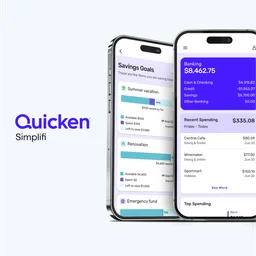
- Tracking spending, savings goals and net worth in one placenot Divvy
Where each one falls short
Documented limitations, not opinions. Every one is a constraint you would hit in normal use.
Divvy
- Divvy is now sold as BILL Spend & Expense and getdivvy.com redirects to bill.com
- No standalone pricing is published for the spend and expense product; the site routes to a trial signup and sales contact
- Signup is gated behind selecting a business type and accounting software rather than being open self-serve
Simplifi
- There is no free tier at all
- The advertised $3.99 a month requires annual billing, against $6.99 paying monthly
- The subscription auto renews yearly at the then current price, which the terms state is subject to change rather than fixed
Pricing, plan by plan
Divvy
Free- FreeFree
- Unlimited cards
- Expense management
- Budget controls
Simplifi
$3.99/month- Annual$3.99/month
- Financial aggregation across 14,000+ institutions
- Spending plan and budgeting tools
- Savings goals tracking
- Monthly$6.99/month
- Financial aggregation across 14,000+ institutions
- Spending plan and budgeting tools
- Savings goals tracking
Which should you pick?
Choose Divvy if
- You need corporate cards.
- You want to start without paying.
- You work on Web, Ios, Android.
- You also want budget management.
Choose Simplifi if
- You need budget tracking.
- You work on Web, IOS, Android.
- You also want spending analysis.
Questions people ask
- Is Divvy or Simplifi better?
- Neither clearly leads. Divvy starts at Free and Simplifi at $3.99/month, and user ratings are close enough to be indistinguishable. Choose on capability and platform support.
- Which is cheaper, Divvy or Simplifi?
- Divvy has a free tier; the other does not. Paid plans start at Free for Divvy and $3.99/month for Simplifi.
- Does Divvy or Simplifi run on more platforms?
- Divvy runs on Web, Ios, Android. Simplifi runs on Web, IOS, Android.
- Can I use Divvy for free?
- Yes. Divvy has a free tier, so you can try it without paying. Simplifi starts at $3.99/month.
- What is Divvy best used for?
- Divvy is most often used for issuing corporate cards with pre-set budgets to employees, automating expense reports and receipt capture, syncing card spend into accounting software. Of those, issuing corporate cards with pre-set budgets to employees and automating expense reports and receipt capture are not what Simplifi is typically brought in for.
- What can Divvy do that Simplifi cannot?
- Divvy covers Corporate cards, Budget management, Expense tracking, Real-time visibility. Simplifi covers Budget tracking, Spending analysis, Goal tracking, Cash flow insights. Both handle Web support, Android support.
Answered from the vendors’ own pages
Divvy: What is the cheapest way to get started with spend and expense management?
BILL's Spend & Expense plan has a free tier with no per-user subscription fee, including corporate cards, budget management, and AI receipt capture. You only pay transaction fees for ACH ($0.59), checks ($1.99), or instant payments (1%).
SourceSimplifi: How much does Quicken Simplifi cost?
Quicken Simplifi costs $3.99 per month when billed annually, or $6.99 per month if billed monthly. The annual plan provides a 43% discount compared to monthly billing.
SourceDivvy: What transaction costs apply when paying vendors?
ACH payments cost $0.59 per transaction, checks cost $1.99, virtual cards are free, and same-day ACH costs $11.99. International wire transfers cost $19.99. Card payments are 2.9%.
SourceSimplifi: Does Quicken Simplifi offer a free trial?
No free trial is mentioned on the Quicken Simplifi pricing page. The service operates as a cloud-based subscription requiring payment to access personal finance management features including budgeting, spending tracking, and investment portfolio management.
SourceDivvy: Does the free spend and expense tier include business credit lines?
The free Spend & Expense plan includes access to business credit lines ranging from $1,000 to $5 million, but credit lines are not guaranteed and eligibility is determined upon application approval.
SourceSimplifi: What payment options are available for Simplifi?
Simplifi requires annual or monthly billing at checkout with automatic renewal. Cancellation is permitted before renewal without penalty.
SourceDivvy: What is the pricing for accounts payable if I need more than the free tier?
AP plans range from $49/user/month (Essentials) to $89/user/month (Corporate, most popular), with Enterprise at custom pricing. Higher tiers add accounting software integrations, procurement features, and approval controls.
SourceRelated pages
Other head to heads
- Divvy vs Ramp
- Divvy vs Airbase
- Divvy vs Melio
- Divvy vs QuickBooks
- Divvy vs Pleo
- Divvy vs Spendesk
- Divvy vs Fyle
- Divvy vs Soldo
- Divvy vs Happay
- Divvy vs Brex
- Divvy vs SAP Concur
- Divvy vs Expensify
- Divvy vs Medius Expense
- Divvy vs Mercury
- Divvy vs Mesh Payments
- Divvy vs Money Forward Cloud
- Divvy vs Moneybird
- Divvy vs MYOB
- Divvy vs Cash App
- Divvy vs Kraken
- Divvy vs Coinbase
- Divvy vs PayPal
- Divvy vs PocketGuard
- Divvy vs Tiller Money
- Divvy vs Money Manager
- Divvy vs Spendee
- Divvy vs Wallet
- Divvy vs Wally
- Divvy vs Monarch Money
- Divvy vs Banktivity
- Divvy vs Expense Manager
- Divvy vs GnuCash
- Divvy vs Goodbudget
- Divvy vs Google Pay
- Divvy vs Investopedia Stock Simulator
- Divvy vs IRS2Go
- Simplifi vs Ramp
- Simplifi vs Airbase
- Simplifi vs Melio
- Simplifi vs QuickBooks
- Simplifi vs Pleo
- Simplifi vs Spendesk
- Simplifi vs Fyle
- Simplifi vs Soldo
- Simplifi vs Happay
- Simplifi vs Brex
- Simplifi vs SAP Concur
- Simplifi vs Expensify
- Simplifi vs Medius Expense
- Simplifi vs Mercury
- Simplifi vs Mesh Payments
- Simplifi vs Money Forward Cloud
- Simplifi vs Moneybird
- Simplifi vs MYOB
- Simplifi vs Cash App
- Simplifi vs Kraken
- Simplifi vs Coinbase
- Simplifi vs PayPal
- Simplifi vs PocketGuard
- Simplifi vs Tiller Money
- Simplifi vs Money Manager
- Simplifi vs Spendee
- Simplifi vs Wallet
- Simplifi vs Wally
- Simplifi vs Monarch Money
- Simplifi vs Banktivity
- Simplifi vs Expense Manager
- Simplifi vs GnuCash
- Simplifi vs Goodbudget
- Simplifi vs Google Pay
- Simplifi vs Investopedia Stock Simulator
- Simplifi vs IRS2Go