
Databases · head to head
Apache Doris vs Estuary

Apache Doris
Databases
MPP analytical database with a MySQL wire protocol and sub-second aggregation on wide tables
- From
- Free
- Rated
- -
Estuary
Databases
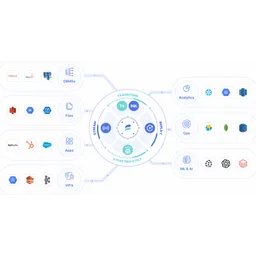
Real-time data integration combining streaming, CDC, and batch
- From
- Free
- Rated
- -
The short version
- Each has a real cost: Apache Doris two competing commercial vendors, VeloDB and SelectDB, were founded by overlapping core contributors, which makes the long-term governance and roadmap of the project harder to predict than a single-sponsor project.; Estuary per-GB pricing adds up quickly for high-volume scenarios
- They diverge on capability: Apache Doris covers MySQL wire protocol, Estuary covers Real-time data delivery.
- Prices and features above were last checked on 31 August 2026.
Where they differ
Only the attributes on which Apache Doris and Estuary actually diverge.
| Attribute | Apache Doris | Estuary |
|---|---|---|
| Pricing model | Open source, no licence fee | Usage-based per GB plus per-connector cost |
| Platforms | Linux, Docker, Kubernetes | Cloud, Private Cloud, BYOC |
| Founded | Unknown | 2019 |
Identical on both: starting price (Free), free tier (Yes), user rating (Not yet rated), category (Databases).
What each one covers
Drawn from each product's published feature list. An absence here means we hold no record of it - not that the product lacks it.
Only in Apache Doris
- MySQL wire protocol
- Aggregate and unique key models
- Materialised views
- Multi-catalogue federation
- Routine load from Kafka
- Compute storage separation
- Inverted indexes
- Workload groups
Only in Estuary
- Real-time data delivery
- Change data capture
- Batch processing
- Data transformation
- Pre-built connectors
- Multiple deployments
- RBAC and monitoring
What people use each for
The jobs each tool is most often brought in to do.
Apache Doris
- A team whose MySQL read replica can no longer serve reporting queries and wants an OLAP engine its existing drivers already speaknot Estuary
- A real-time dashboard backend needing sub-second aggregation over billions of rows with hundreds of concurrent usersnot Estuary
- An ad or ecommerce platform that needs updates and deletes on analytical tables, which append-only OLAP engines handle badlynot Estuary
- A data team that wants one SQL endpoint over both internal tables and existing Hive or Iceberg tables in the lakenot Estuary
Estuary
- Real-time data replication to data warehousesnot Apache Doris
- Change data capture from operational databasesnot Apache Doris
- Feeding analytics and BI systems with fresh datanot Apache Doris
- Powering real-time AI and ML data pipelinesnot Apache Doris
Where each one falls short
Documented limitations, not opinions. Every one is a constraint you would hit in normal use.
Apache Doris
- Two competing commercial vendors, VeloDB and SelectDB, were founded by overlapping core contributors, which makes the long-term governance and roadmap of the project harder to predict than a single-sponsor project.
- A large share of design discussion, issue reports and documentation detail originates in Chinese, so teams that do not read it get a thinner picture of known problems and workarounds.
- Operating a cluster means managing frontend and backend node roles, tablet balancing and compaction tuning, and compaction backlogs under heavy upsert load are a recurring production complaint.
- The MySQL protocol compatibility is at the wire level, not full MySQL semantics, so queries and functions still need porting and the familiarity can mislead.
- Managed cloud availability outside China and major clouds is limited compared with ClickHouse or Snowflake, so many Western adopters end up self-hosting whether they wanted to or not.
Estuary
- Per-GB pricing adds up quickly for high-volume scenarios
- No transparent per-connector volume discounts below 6 connectors
- Limited to data movement; transformation capabilities are basic
- BYOC and private deployment requires enterprise plan
- Smaller ecosystem compared to established alternatives
Pricing, plan by plan
Apache Doris
Free- Apache DorisFree
- Apache 2.0 licence with no usage restrictions
- All engine features included
- Community support via mailing list and Slack
Estuary
Free- DeveloperFree
- 10 GB per month
- 2 connector instances maximum
- No credit card required
- Cloud$0.5/GB
- $0.50 per GB of data moved
- $100 per connector monthly (6+ connectors $50 each)
- 200+ connectors
- Enterprise$null/custom
- Volume-based discounts
- SOC 2 and HIPAA compliance
- SSO authentication
Which should you pick?
Choose Apache Doris if
- You need mysql wire protocol.
- You want to start without paying.
- You work on Linux, Docker, Kubernetes.
- You also want aggregate and unique key models.
Choose Estuary if
- You need real-time data delivery.
- You want to start without paying.
- You work on Cloud, Private Cloud, BYOC.
- You also want change data capture.
Questions people ask
- Is Apache Doris or Estuary better?
- Neither clearly leads. Apache Doris starts at Free and Estuary at Free, and user ratings are close enough to be indistinguishable. Choose on capability and platform support.
- Which is cheaper, Apache Doris or Estuary?
- Apache Doris starts at Free and Estuary at Free.
- Does Apache Doris or Estuary run on more platforms?
- Apache Doris runs on Linux, Docker, Kubernetes. Estuary runs on Cloud, Private Cloud, BYOC.
- Can I use Apache Doris for free?
- Both have a free tier, so you can try either at no cost before committing.
- What is Apache Doris best used for?
- Apache Doris is most often used for a team whose mysql read replica can no longer serve reporting queries and wants an olap engine its existing drivers already speak, a real-time dashboard backend needing sub-second aggregation over billions of rows with hundreds of concurrent users, an ad or ecommerce platform that needs updates and deletes on analytical tables, which append-only olap engines handle badly, a data team that wants one sql endpoint over both internal tables and existing hive or iceberg tables in the lake. Of those, a team whose mysql read replica can no longer serve reporting queries and wants an olap engine its existing drivers already speak and a real-time dashboard backend needing sub-second aggregation over billions of rows with hundreds of concurrent users are not what Estuary is typically brought in for.
- What can Apache Doris do that Estuary cannot?
- Apache Doris covers MySQL wire protocol, Aggregate and unique key models, Materialised views, Multi-catalogue federation. Estuary covers Real-time data delivery, Change data capture, Batch processing, Data transformation.
Answered from the vendors’ own pages
Apache Doris: Is Apache Doris really free?
Yes, it is Apache 2.0 with no usage restrictions. The commercial products are managed services from VeloDB and SelectDB.
Estuary: What is included in the free Developer plan?
Developer plan ($0/month) includes 10 GB of data per month and up to 2 connector instances, no credit card required.
SourceApache Doris: Can I use my MySQL tools with it?
Yes, it implements the MySQL wire protocol, so clients and BI connectors attach without a new driver, though SQL semantics differ.
Estuary: How is data pricing calculated on Cloud plan?
Cloud plan charges $0.50 per GB of data moved plus $100/month per connector for the first 6 connectors, then $50/month for additional connectors.
SourceApache Doris: How does it compare with ClickHouse?
Doris handles updates and high concurrency more comfortably; ClickHouse is generally faster on raw single-query scan throughput and has far wider Western support.
Estuary: What discount is available when adding 6+ connectors?
When using 6 or more connectors, the per-connector cost drops to $50/month from $100/month, saving $50 per additional connector.
SourceApache Doris: Who maintains it?
The Apache Software Foundation project, with most committers employed by VeloDB or SelectDB.
Related pages
More on Apache Doris
Other head to heads
- Apache Doris vs ClickHouse
- Apache Doris vs StarRocks
- Apache Doris vs Tinybird
- Apache Doris vs DuckDB
- Apache Doris vs Firebolt
- Apache Doris vs Amazon Redshift
- Apache Doris vs TiDB
- Apache Doris vs BigQuery
- Apache Doris vs Canary Labs
- Apache Doris vs Dragonfly
- Apache Doris vs Dremio
- Apache Doris vs Readyset
- Apache Doris vs Fivetran HVR
- Apache Doris vs Grist
- Apache Doris vs IBM Db2
- Apache Doris vs Instaclustr
- Apache Doris vs Knack
- Apache Doris vs LanceDB
- Apache Doris vs Apache Druid
- Apache Doris vs Materialize
- Apache Doris vs Firebase Realtime Database
- Apache Doris vs SingleStore
- Apache Doris vs Timeplus
- Apache Doris vs NATS
- Apache Doris vs QuestDB
- Apache Doris vs Vitess
- Apache Doris vs Aiven
- Apache Doris vs CosmosDB
- Apache Doris vs DataStax
- Apache Doris vs Apache Pinot
- Apache Doris vs Apache Flink
- Apache Doris vs Apache Kafka
- Estuary vs ClickHouse
- Estuary vs StarRocks
- Estuary vs Tinybird
- Estuary vs DuckDB
- Estuary vs Firebolt
- Estuary vs Amazon Redshift
- Estuary vs TiDB
- Estuary vs BigQuery
- Estuary vs Canary Labs
- Estuary vs Dragonfly
- Estuary vs Dremio
- Estuary vs Readyset
- Estuary vs Fivetran HVR
- Estuary vs Grist
- Estuary vs IBM Db2
- Estuary vs Instaclustr
- Estuary vs Knack
- Estuary vs LanceDB
- Estuary vs Apache Druid
- Estuary vs Materialize
- Estuary vs Firebase Realtime Database
- Estuary vs SingleStore
- Estuary vs Timeplus
- Estuary vs NATS
- Estuary vs QuestDB
- Estuary vs Vitess
- Estuary vs Aiven
- Estuary vs CosmosDB
- Estuary vs DataStax
- Estuary vs Apache Pinot
- Estuary vs Apache Flink
- Estuary vs Apache Kafka