
Accounting · head to head
Airwallex vs QuickBooks
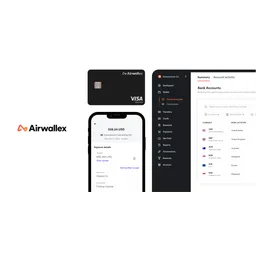
Airwallex
Accounting
Multi currency business accounts, international payments and card issuing from a licensed payments firm rather than a bank
- From
- Free
- Rated
- -

QuickBooks
Accounting
Cloud accounting from Intuit with country specific editions, seat caps by plan and payroll charged separately
- From
- $30/month
- Rated
- -
The short version
- Only Airwallex has a free tier, so it costs nothing to try first.
- Each has a real cost: Airwallex airwallex is a licensed payments firm rather than a bank, so balances sit in safeguarding accounts at partner banks and are not covered by deposit guarantee schemes, which means a treasury policy that requires insured deposits cannot hold operating cash there.; QuickBooks plans cap the number of billed users, so an approver who signs off bills and a manager who only reads reports each consume a seat and can force an upgrade to a higher tier for reasons that have nothing to do with accounting complexity.
- They diverge on capability: Airwallex covers Multi currency balances, QuickBooks covers General ledger.
- Prices and features above were last checked on 30 August 2026.
Where they differ
Only the attributes on which Airwallex and QuickBooks actually diverge.
| Attribute | Airwallex | QuickBooks |
|---|---|---|
| Starting price | Free | $30/month |
| Pricing model | freemium | subscription |
| Free tier | Yes | No |
| Platforms | Web | Web, Ios, Android, Api |
| Founded | Unknown | 1983 |
Identical on both: user rating (Not yet rated), category (Accounting).
What each one covers
Drawn from each product's published feature list. An absence here means we hold no record of it - not that the product lacks it.
Only in Airwallex
- Multi currency balances
- Local receiving accounts
- Foreign exchange conversion
- International payouts
- Card issuing
- Expense management
- Bill pay
- Payments gateway
Only in QuickBooks
- General ledger
- Bank feeds
- Reconciliation
- Sales invoicing
- Bills and expenses
- Sales tax and value added tax
- Multi currency
- Inventory
What people use each for
The jobs each tool is most often brought in to do.
Airwallex
- An exporter invoicing customers in United States dollars and euros who wants to be paid into local details rather than receive wires with correspondent deductionsnot QuickBooks
- An agency or software company paying contractors across several countries every month and losing money on bank foreign exchange spreadsnot QuickBooks
- An e-commerce seller collecting on multiple marketplaces in different currencies who wants to hold rather than convert on every settlementnot QuickBooks
- A startup that needs virtual cards with per subscription limits and cannot get a workable card programme from its local banknot QuickBooks
QuickBooks
- A small business whose accountant works in QuickBooks and can take a free access seat rather than being sent exportsnot Airwallex
- An owner who wants to be able to replace their bookkeeper without also replacing the accounting systemnot Airwallex
- A service business needing project level profitability without buying a separate job costing toolnot Airwallex
- A company that wants a large third party app ecosystem to fill gaps rather than a system that must do everything itselfnot Airwallex
Where each one falls short
Documented limitations, not opinions. Every one is a constraint you would hit in normal use.
Airwallex
- Airwallex is a licensed payments firm rather than a bank, so balances sit in safeguarding accounts at partner banks and are not covered by deposit guarantee schemes, which means a treasury policy that requires insured deposits cannot hold operating cash there.
- Available currencies, local account details, card programmes and product features differ by the entity you contract with, so a feature demonstrated to a customer in Australia or Singapore may simply not exist for the same company registered in another country.
- Onboarding is subject to compliance review and whole categories of business are declined or later offboarded, and because the account may hold operating cash, a compliance freeze during a review is a business interruption rather than an inconvenience.
- Foreign exchange is quoted as interbank plus a markup, which is cheaper than a high street bank but is still a spread that widens on less liquid pairs and on smaller amounts, so the saving assumed in the business case should be checked against the pairs you actually trade.
- Support is largely ticket and chat based with account management reserved for larger customers, so when a payment is stuck the resolution path is a queue rather than a named person, which is a poor fit for time critical settlement.
QuickBooks
- Plans cap the number of billed users, so an approver who signs off bills and a manager who only reads reports each consume a seat and can force an upgrade to a higher tier for reasons that have nothing to do with accounting complexity.
- Multi currency is confined to the higher tiers and, once enabled, cannot be turned off and the home currency cannot be changed, so a single foreign currency invoice permanently changes the shape of the file and the plan you must remain on.
- Inventory is average cost only, with no first in first out or standard costing, so a business whose accounts or tax position depend on a different costing method has to track stock outside the ledger and post adjustments.
- There is no multi entity consolidation, so a group runs a separate subscription and file per company and consolidates in a spreadsheet, and the cost and the manual consolidation both grow with each new entity.
- The country edition is selected at setup and cannot be changed afterwards, and the editions differ in tax handling and features, so a business that redomiciles or discovers it chose the global edition rather than a localised one starts a new file rather than switching a setting.
Pricing, plan by plan
Airwallex
FreeNo published plan breakdown. See the Airwallex review.
QuickBooks
$30/month- Simple Start$30/month
- Income & expense tracking
- Invoice & payments
- Tax deductions
- Essentials$60/month
- Everything in Simple Start
- Bill management
- Time tracking
- Plus$90/month
- Everything in Essentials
- Inventory tracking
- Project profitability
- Advanced$200/month
- Everything in Plus
- Dedicated account team
- 25 users
Which should you pick?
Choose Airwallex if
- You need multi currency balances.
- You want to start without paying.
- You also want local receiving accounts.
Choose QuickBooks if
- You need general ledger.
- You work on Web, Ios, Android, Api.
- You also want bank feeds.
Questions people ask
- Is Airwallex or QuickBooks better?
- Neither clearly leads. Airwallex starts at Free and QuickBooks at $30/month, and user ratings are close enough to be indistinguishable. Choose on capability and platform support.
- Which is cheaper, Airwallex or QuickBooks?
- Airwallex has a free tier; the other does not. Paid plans start at Free for Airwallex and $30/month for QuickBooks.
- Does Airwallex or QuickBooks run on more platforms?
- Airwallex runs on Web. QuickBooks runs on Web, Ios, Android, Api.
- Can I use Airwallex for free?
- Yes. Airwallex has a free tier, so you can try it without paying. QuickBooks starts at $30/month.
- What is Airwallex best used for?
- Airwallex is most often used for an exporter invoicing customers in united states dollars and euros who wants to be paid into local details rather than receive wires with correspondent deductions, an agency or software company paying contractors across several countries every month and losing money on bank foreign exchange spreads, an e-commerce seller collecting on multiple marketplaces in different currencies who wants to hold rather than convert on every settlement, a startup that needs virtual cards with per subscription limits and cannot get a workable card programme from its local bank. Of those, an exporter invoicing customers in united states dollars and euros who wants to be paid into local details rather than receive wires with correspondent deductions and an agency or software company paying contractors across several countries every month and losing money on bank foreign exchange spreads are not what QuickBooks is typically brought in for.
- What can Airwallex do that QuickBooks cannot?
- Airwallex covers Multi currency balances, Local receiving accounts, Foreign exchange conversion, International payouts. QuickBooks covers General ledger, Bank feeds, Reconciliation, Sales invoicing.
Answered from the vendors’ own pages
Airwallex: Is Airwallex a bank?
No. It holds payment institution, electronic money or equivalent licences in the markets it serves. Funds are safeguarded at partner banks rather than being deposits, and deposit insurance schemes do not apply.
QuickBooks: Which country editions actually exist?
Intuit sells localised editions principally for the United States, United Kingdom, Canada and Australia, with a global edition for other markets that has lighter tax localisation. Check that your country has a genuine localised edition before assuming filing support, and note the edition cannot be changed after setup.
Airwallex: Can it replace my business bank account?
For many operating flows it can, but consider what you lose: no deposit protection, no lending relationship, no cash or cheque handling, and some counterparties and government bodies still expect a conventional bank account. Most users run it alongside a bank rather than instead of one.
QuickBooks: Does the subscription include payroll?
No. Payroll is a separate subscription with a per employee charge in every market that offers it. Price it alongside the plan rather than after you have committed.
Airwallex: Which countries can open an account?
It serves entities registered in a defined list of markets across Asia Pacific, Europe, the United Kingdom, the Middle East and North America, and the list changes. Check for your specific country of incorporation, because the answer determines both eligibility and feature set.
QuickBooks: How many users do I get?
It depends on the tier, and the limits are lower than most buyers expect. Accountant access seats are free and separate, but internal approvers and read only reviewers count against the billed limit, so count everyone who needs to sign in before choosing a plan.
Airwallex: Does it connect to my accounting software?
It integrates with the mainstream cloud ledgers so transactions feed through rather than being imported by hand. Confirm the integration covers all the currencies you hold, since multi currency handling in the ledger is a separate question.
QuickBooks: Can my accountant work directly in my file?
Yes, that is one of its main advantages. Accountants use a separate practice console and take a free access seat in your company, which is also why so many practices standardise on it.
Airwallex: How does the foreign exchange rate compare with a bank?
Materially better than a typical business bank's retail rate on major pairs, because it is quoted as interbank plus a stated markup. The gap narrows on thin currency pairs and small amounts, so test with your real volumes.
QuickBooks: Is QuickBooks Desktop still available?
The desktop line persists in the United States for larger installations, but Intuit stopped selling new subscriptions of the smaller desktop products to new customers and the investment is in the online product. Treat desktop as a legacy path rather than a choice for a new business.
Airwallex: Are the cards accepted everywhere?
They are issued on the major networks and behave like ordinary company cards for most spend. Some merchants, particularly for deposits and car hire, treat prepaid style issuance differently, so do not assume parity with a bank credit card.
QuickBooks: How hard is it to migrate to or from QuickBooks?
Getting in from another system is well trodden and there are tools and specialists for it, though transaction history usually arrives partially rather than completely. Getting out is the harder direction, because your accountant's working knowledge, your app integrations and years of coded history all have to be reproduced. Most businesses move at a year end for that reason.
QuickBooks: Can it consolidate multiple companies?
No. Each legal entity needs its own subscription and file, and the consolidation happens outside the system. Groups with several entities should price that reality in from the start.
Related pages
Other head to heads
- Airwallex vs Ramp
- Airwallex vs Airbase
- Airwallex vs Melio
- Airwallex vs Kodo
- Airwallex vs Wise Business
- Airwallex vs RazorpayX
- Airwallex vs Sage 50
- Airwallex vs Soldo
- Airwallex vs Plaid
- Airwallex vs Spendesk
- Airwallex vs Modern Treasury
- Airwallex vs Veem
- Airwallex vs Vertex
- Airwallex vs Fyle
- Airwallex vs Microsoft Excel
- Airwallex vs Navan
- Airwallex vs Qonto
- Airwallex vs Zoho Books
- Airwallex vs Bench
- Airwallex vs Xero
- Airwallex vs FloQast
- Airwallex vs BlackLine
- Airwallex vs TurboTax
- Airwallex vs Lexware
- Airwallex vs Paychex
- Airwallex vs Conta Azul
- Airwallex vs Orb
- Airwallex vs Paddle
- Airwallex vs Basware
- Airwallex vs Circula
- Airwallex vs Invoice2go
- Airwallex vs Invoicely
- QuickBooks vs Ramp
- QuickBooks vs Airbase
- QuickBooks vs Melio
- QuickBooks vs Kodo
- QuickBooks vs Wise Business
- QuickBooks vs RazorpayX
- QuickBooks vs Sage 50
- QuickBooks vs Soldo
- QuickBooks vs Plaid
- QuickBooks vs Spendesk
- QuickBooks vs Modern Treasury
- QuickBooks vs Veem
- QuickBooks vs Vertex
- QuickBooks vs Fyle
- QuickBooks vs Microsoft Excel
- QuickBooks vs Navan
- QuickBooks vs Qonto
- QuickBooks vs Zoho Books
- QuickBooks vs Bench
- QuickBooks vs Xero
- QuickBooks vs FloQast
- QuickBooks vs BlackLine
- QuickBooks vs TurboTax
- QuickBooks vs Lexware
- QuickBooks vs Paychex
- QuickBooks vs Conta Azul
- QuickBooks vs Orb
- QuickBooks vs Paddle
- QuickBooks vs Basware
- QuickBooks vs Circula
- QuickBooks vs Invoice2go
- QuickBooks vs Invoicely