
Accounting · head to head
Airwallex vs Orb
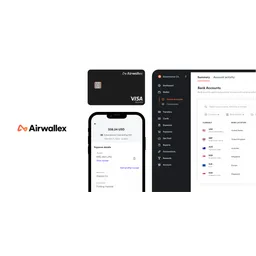
Airwallex
Accounting
Multi currency business accounts, international payments and card issuing from a licensed payments firm rather than a bank
- From
- Free
- Rated
- -

Orb
Accounting
Revenue design platform automating usage-based billing and pricing strategy
- From
- On request
- Rated
- -
The short version
- Only Airwallex has a free tier, so it costs nothing to try first.
- Each has a real cost: Airwallex airwallex is a licensed payments firm rather than a bank, so balances sit in safeguarding accounts at partner banks and are not covered by deposit guarantee schemes, which means a treasury policy that requires insured deposits cannot hold operating cash there.; Orb custom pricing model requires sales consultation, no transparent public pricing
- They diverge on capability: Airwallex covers Multi currency balances, Orb covers Usage metering.
- Prices and features above were last checked on 30 August 2026.
Where they differ
Only the attributes on which Airwallex and Orb actually diverge.
Identical on both: user rating (Not yet rated), category (Accounting).
What each one covers
Drawn from each product's published feature list. An absence here means we hold no record of it - not that the product lacks it.
Only in Airwallex
- Multi currency balances
- Local receiving accounts
- Foreign exchange conversion
- International payouts
- Card issuing
- Expense management
- Bill pay
- Payments gateway
Only in Orb
- Usage metering
- Automated billing
- Pricing modeling
- Revenue recognition
- Spend controls
- Pricing calculator
- NetSuite integration
- Data warehouse sync
What people use each for
The jobs each tool is most often brought in to do.
Airwallex
- An exporter invoicing customers in United States dollars and euros who wants to be paid into local details rather than receive wires with correspondent deductionsnot Orb
- An agency or software company paying contractors across several countries every month and losing money on bank foreign exchange spreadsnot Orb
- An e-commerce seller collecting on multiple marketplaces in different currencies who wants to hold rather than convert on every settlementnot Orb
- A startup that needs virtual cards with per subscription limits and cannot get a workable card programme from its local banknot Orb
Orb
- Implementing usage-based billing for cloud infrastructure providersnot Airwallex
- Modeling and testing multiple pricing strategies before launchnot Airwallex
- Automating revenue recognition for financial reportingnot Airwallex
- Managing complex hybrid pricing (seats plus usage) at scalenot Airwallex
- Providing customers real-time spend controls and usage visibilitynot Airwallex
Where each one falls short
Documented limitations, not opinions. Every one is a constraint you would hit in normal use.
Airwallex
- Airwallex is a licensed payments firm rather than a bank, so balances sit in safeguarding accounts at partner banks and are not covered by deposit guarantee schemes, which means a treasury policy that requires insured deposits cannot hold operating cash there.
- Available currencies, local account details, card programmes and product features differ by the entity you contract with, so a feature demonstrated to a customer in Australia or Singapore may simply not exist for the same company registered in another country.
- Onboarding is subject to compliance review and whole categories of business are declined or later offboarded, and because the account may hold operating cash, a compliance freeze during a review is a business interruption rather than an inconvenience.
- Foreign exchange is quoted as interbank plus a markup, which is cheaper than a high street bank but is still a spread that widens on less liquid pairs and on smaller amounts, so the saving assumed in the business case should be checked against the pairs you actually trade.
- Support is largely ticket and chat based with account management reserved for larger customers, so when a payment is stuck the resolution path is a queue rather than a named person, which is a poor fit for time critical settlement.
Orb
- Custom pricing model requires sales consultation, no transparent public pricing
- Pricing based on both events and billing volume adds complexity to cost estimation
- Enterprise-focused positioning may be overkill for simple subscription use cases
- Requires integration with existing accounting systems for full value
- Limited information on free tier or trial availability
Pricing, plan by plan
Airwallex
FreeNo published plan breakdown. See the Airwallex review.
Orb
On request- Core$undefined/custom
- Real-time event ingestion (up to 250K+ events/second)
- Real-time alerting
- Hybrid and usage-based billing
- Advanced$undefined/custom
- All Core features
- Data warehouse sync
- Salesforce integration
- Enterprise$undefined/custom
- All Advanced features
- Enterprise-grade SLAs
- Dedicated support
Which should you pick?
Choose Airwallex if
- You need multi currency balances.
- You want to start without paying.
- You also want local receiving accounts.
Choose Orb if
- You need usage metering.
- You work on Web, API.
- You also want automated billing.
Questions people ask
- Is Airwallex or Orb better?
- Neither clearly leads. Airwallex starts at Free and Orb at On request, and user ratings are close enough to be indistinguishable. Choose on capability and platform support.
- Which is cheaper, Airwallex or Orb?
- Airwallex has a free tier; the other does not. Paid plans start at Free for Airwallex and On request for Orb.
- Does Airwallex or Orb run on more platforms?
- Airwallex runs on Web. Orb runs on Web, API.
- Can I use Airwallex for free?
- Yes. Airwallex has a free tier, so you can try it without paying. Orb starts at On request.
- What is Airwallex best used for?
- Airwallex is most often used for an exporter invoicing customers in united states dollars and euros who wants to be paid into local details rather than receive wires with correspondent deductions, an agency or software company paying contractors across several countries every month and losing money on bank foreign exchange spreads, an e-commerce seller collecting on multiple marketplaces in different currencies who wants to hold rather than convert on every settlement, a startup that needs virtual cards with per subscription limits and cannot get a workable card programme from its local bank. Of those, an exporter invoicing customers in united states dollars and euros who wants to be paid into local details rather than receive wires with correspondent deductions and an agency or software company paying contractors across several countries every month and losing money on bank foreign exchange spreads are not what Orb is typically brought in for.
- What can Airwallex do that Orb cannot?
- Airwallex covers Multi currency balances, Local receiving accounts, Foreign exchange conversion, International payouts. Orb covers Usage metering, Automated billing, Pricing modeling, Revenue recognition.
Answered from the vendors’ own pages
Airwallex: Is Airwallex a bank?
No. It holds payment institution, electronic money or equivalent licences in the markets it serves. Funds are safeguarded at partner banks rather than being deposits, and deposit insurance schemes do not apply.
Orb: How does Orb pricing work?
Orb uses custom pricing based on your billing volume (total value of invoices) and events (raw data records ingested). Specific costs must be discussed with their sales team.
SourceAirwallex: Can it replace my business bank account?
For many operating flows it can, but consider what you lose: no deposit protection, no lending relationship, no cash or cheque handling, and some counterparties and government bodies still expect a conventional bank account. Most users run it alongside a bank rather than instead of one.
Orb: What is the difference between Core, Advanced, and Enterprise plans?
Core includes event ingestion and basic billing automation. Advanced adds data warehouse sync and Salesforce/NetSuite integrations. Enterprise adds SLAs, dedicated support, and mission-critical guarantees.
SourceAirwallex: Which countries can open an account?
It serves entities registered in a defined list of markets across Asia Pacific, Europe, the United Kingdom, the Middle East and North America, and the list changes. Check for your specific country of incorporation, because the answer determines both eligibility and feature set.
Orb: Can Orb handle hybrid pricing models?
Yes. Orb supports hybrid pricing combining seat-based, usage-based, and flat-rate components, making it suitable for complex monetization strategies.
SourceAirwallex: Does it connect to my accounting software?
It integrates with the mainstream cloud ledgers so transactions feed through rather than being imported by hand. Confirm the integration covers all the currencies you hold, since multi currency handling in the ledger is a separate question.
Airwallex: How does the foreign exchange rate compare with a bank?
Materially better than a typical business bank's retail rate on major pairs, because it is quoted as interbank plus a stated markup. The gap narrows on thin currency pairs and small amounts, so test with your real volumes.
Airwallex: Are the cards accepted everywhere?
They are issued on the major networks and behave like ordinary company cards for most spend. Some merchants, particularly for deposits and car hire, treat prepaid style issuance differently, so do not assume parity with a bank credit card.
Related pages
Other head to heads
- Airwallex vs Ramp
- Airwallex vs QuickBooks
- Airwallex vs Airbase
- Airwallex vs Melio
- Airwallex vs Kodo
- Airwallex vs Wise Business
- Airwallex vs RazorpayX
- Airwallex vs Sage 50
- Airwallex vs Soldo
- Airwallex vs Plaid
- Airwallex vs Spendesk
- Airwallex vs Modern Treasury
- Airwallex vs Veem
- Airwallex vs Vertex
- Airwallex vs Fyle
- Airwallex vs Microsoft Excel
- Airwallex vs Navan
- Airwallex vs Qonto
- Airwallex vs Lago
- Airwallex vs Metronome
- Airwallex vs Polar
- Airwallex vs Stigg
- Airwallex vs Zuora
- Airwallex vs Chargebee
- Airwallex vs Dodo Payments
- Airwallex vs Creem
- Airwallex vs Paddle
- Airwallex vs Invoicera
- Airwallex vs Recurly
- Airwallex vs Maxio
- Airwallex vs Hnry
- Airwallex vs Lemon Squeezy
- Airwallex vs Lexware
- Airwallex vs Paychex
- Airwallex vs Payoneer
- Orb vs Ramp
- Orb vs QuickBooks
- Orb vs Airbase
- Orb vs Melio
- Orb vs Kodo
- Orb vs Wise Business
- Orb vs RazorpayX
- Orb vs Sage 50
- Orb vs Soldo
- Orb vs Plaid
- Orb vs Spendesk
- Orb vs Modern Treasury
- Orb vs Veem
- Orb vs Vertex
- Orb vs Fyle
- Orb vs Microsoft Excel
- Orb vs Navan
- Orb vs Qonto
- Orb vs Lago
- Orb vs Metronome
- Orb vs Polar
- Orb vs Stigg
- Orb vs Zuora
- Orb vs Chargebee
- Orb vs Dodo Payments
- Orb vs Creem
- Orb vs Paddle
- Orb vs Invoicera
- Orb vs Recurly
- Orb vs Maxio
- Orb vs Hnry
- Orb vs Lemon Squeezy
- Orb vs Lexware
- Orb vs Paychex
- Orb vs Payoneer