
Personal Finance · head to head
Kubera vs Simplifi

Kubera
Personal Finance
Net worth tracker for banks, crypto, real estate and private holdings, with a deadman's switch
- From
- $250/year
- Free plan
- No
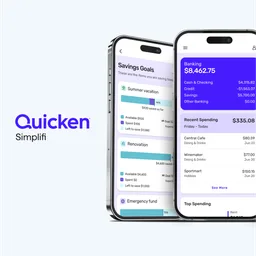
Simplifi
Personal Finance
Smart budgeting and spending tracker
- From
- $3.99/month
- Free plan
- No
The short version
- Kubera starts at $250/yr, Simplifi at $3.99/mo.
- Only Kubera lists live balance sheet; only Simplifi lists spending analysis.
- Where Kubera falls short: annual price is high next to budgeting apps.
- Where Simplifi falls short: there is no free tier at all.
- Prices and features on this page were last checked on 26 November 2026.
How do Kubera and Simplifi differ?
Kubera and Simplifi differ on starting price ($250/year against $3.99/month). Only the attributes on which Kubera and Simplifi actually diverge.
Identical on both: pricing model (Subscription), free tier (No), platforms (Web, iOS, Android), category (Personal Finance).
Not yet recorded: founded for Kubera.
Which features does each one have?
They share no listed features; 8 appear only for Kubera and 9 only for Simplifi. Drawn from each product's published feature list. An absence here means we hold no record of it - not that the product lacks it.
Only in Kubera
- Live balance sheet
- Bank and brokerage syncing
- Crypto, DeFi and NFT tracking
- Private investment tracking
- Automatic real estate valuation
- Dead Man's Switch
- Family sharing
- Multi-currency totals
Only in Simplifi
- Budget tracking
- Spending analysis
- Goal tracking
- Cash flow insights
- Bank accounts
- Credit cards
- Web support
- IOS support
What is each one used for?
Kubera is most often brought in for tracking crypto and traditional assets together; Simplifi for personal budgeting with automatic bank transaction import. The jobs each tool is most often brought in to do.
Kubera
- Tracking crypto and traditional assets togethernot Simplifi
- Estate and heir planningnot Simplifi
- Family office style net worth reportingnot Simplifi
- Holding private equity and startup stakesnot Simplifi
- Multi-currency wealth trackingnot Simplifi
Simplifi
- Personal budgeting with automatic bank transaction importnot Kubera
- Tracking spending, savings goals and net worth in one placenot Kubera
Where do Kubera and Simplifi fall short?
Kubera's most cited limit: annual price is high next to budgeting apps. Simplifi's: there is no free tier at all. Documented limitations, not opinions. Every one is a constraint you would hit in normal use.
Kubera
- Annual price is high next to budgeting apps
- Focused on net worth, not daily budgeting or bill tracking
- Essentials limits you to two portfolios and two users
- Black plan at $2,500 a year suits large estates only
Simplifi
- There is no free tier at all
- The advertised $3.99 a month requires annual billing, against $6.99 paying monthly
- The subscription auto renews yearly at the then current price, which the terms state is subject to change rather than fixed
How much do Kubera and Simplifi cost?
Kubera starts at $250/yr; Simplifi starts at $3.99/mo. Plan by plan below, from each vendor's own pricing page.
Kubera
$250/year- Essentials$250/yr
- 2 portfolios
- 2 users
- 1GB of documents
- Black$2,500/yr
- Unlimited portfolios, users and documents
- Nested portfolios
- Ownership tags
Simplifi
$3.99/month- Annual$3.99/mo
- Financial aggregation across 14,000+ institutions
- Spending plan and budgeting tools
- Savings goals tracking
- Monthly$6.99/mo
- Financial aggregation across 14,000+ institutions
- Spending plan and budgeting tools
- Savings goals tracking
Which should you pick?
Choose Kubera if
- You need live balance sheet.
- You work on Web, iOS, Android.
- You also want bank and brokerage syncing.
Choose Simplifi if
- You need budget tracking.
- You work on Web, iOS, Android.
- You also want spending analysis.
Questions people ask
- Is Kubera or Simplifi better?
- Neither clearly leads. Kubera starts at $250/year and Simplifi at $3.99/month, and user ratings are close enough to be indistinguishable. Choose on capability and platform support.
- Which is cheaper, Kubera or Simplifi?
- Kubera starts at $250/year and Simplifi at $3.99/month.
- Does Kubera or Simplifi run on more platforms?
- Both run on Web, iOS, Android, so platform support will not decide this one for you.
- What is Kubera best used for?
- Kubera is most often used for tracking crypto and traditional assets together, estate and heir planning, family office style net worth reporting, holding private equity and startup stakes. Of those, tracking crypto and traditional assets together and estate and heir planning are not what Simplifi is typically brought in for.
- What can Kubera do that Simplifi cannot?
- Kubera covers Live balance sheet, Bank and brokerage syncing, Crypto, DeFi and NFT tracking, Private investment tracking. Simplifi covers Budget tracking, Spending analysis, Goal tracking, Cash flow insights.
Answered from the vendors’ own pages
Kubera: What does Kubera cost?
Essentials is $250 a year and Black is $2,500 a year.
SourceSimplifi: How much does Quicken Simplifi cost?
Quicken Simplifi costs $3.99 per month when billed annually, or $6.99 per month if billed monthly. The annual plan provides a 43% discount compared to monthly billing.
SourceKubera: Is there a free trial?
Yes, a 14-day trial with all features.
SourceSimplifi: Does Quicken Simplifi offer a free trial?
No free trial is mentioned on the Quicken Simplifi pricing page. The service operates as a cloud-based subscription requiring payment to access personal finance management features including budgeting, spending tracking, and investment portfolio management.
SourceKubera: What is the Dead Man's Switch?
It securely delivers your portfolio to chosen people if you go silent for too long.
SourceSimplifi: What payment options are available for Simplifi?
Simplifi requires annual or monthly billing at checkout with automatic renewal. Cancellation is permitted before renewal without penalty.
SourceKubera: Which devices does it run on?
A web app plus iPhone and Android apps.
SourceRelated pages
Other head to heads
- Kubera vs Monarch Money
- Kubera vs Tiller Money
- Kubera vs PocketSmith
- Kubera vs Crypto.com
- Kubera vs Coinbase
- Kubera vs Kraken
- Kubera vs Lunch Money
- Kubera vs Actual Budget
- Kubera vs Revolut
- Kubera vs Robinhood
- Kubera vs Affirm
- Kubera vs Starling Bank
- Kubera vs Strands
- Kubera vs WorldRemit
- Kubera vs Credit Karma
- Kubera vs Dave
- Kubera vs Mint
- Kubera vs PocketGuard
- Kubera vs Copilot Money
- Kubera vs Goodbudget
- Kubera vs Rocket Money
- Kubera vs YNAB
- Kubera vs Personal Capital
- Kubera vs Money Manager
- Kubera vs IRS2Go
- Kubera vs Origin
- Kubera vs Public
- Kubera vs Skrill
- Kubera vs Splitwise
- Simplifi vs Monarch Money
- Simplifi vs Tiller Money
- Simplifi vs PocketSmith
- Simplifi vs Crypto.com
- Simplifi vs Coinbase
- Simplifi vs Kraken
- Simplifi vs Lunch Money
- Simplifi vs Actual Budget
- Simplifi vs Revolut
- Simplifi vs Robinhood
- Simplifi vs Affirm
- Simplifi vs Starling Bank
- Simplifi vs Strands
- Simplifi vs WorldRemit
- Simplifi vs Credit Karma
- Simplifi vs Dave
- Simplifi vs Mint
- Simplifi vs PocketGuard
- Simplifi vs Copilot Money
- Simplifi vs Goodbudget
- Simplifi vs Rocket Money
- Simplifi vs YNAB
- Simplifi vs Personal Capital
- Simplifi vs Money Manager
- Simplifi vs IRS2Go
- Simplifi vs Origin
- Simplifi vs Public
- Simplifi vs Skrill
- Simplifi vs Splitwise