
Personal Finance · head to head
Simplifi vs Strands

Strands
Personal Finance
Personal and business financial management modules for banks, owned by CRIF
- From
- On request
- Rated
- -
The short version
- Each has a real cost: Simplifi there is no free tier at all; Strands transaction categorisation accuracy depends on local merchant data, and banks in smaller markets face months of tuning before customers trust the categories shown.
- They diverge on capability: Simplifi covers Budget tracking, Strands covers Transaction categorisation.
- Prices and features above were last checked on 1 September 2026.
Where they differ
Only the attributes on which Simplifi and Strands actually diverge.
Identical on both: free tier (No), user rating (Not yet rated), category (Personal Finance).
What each one covers
Drawn from each product's published feature list. An absence here means we hold no record of it - not that the product lacks it.
Only in Simplifi
- Budget tracking
- Spending analysis
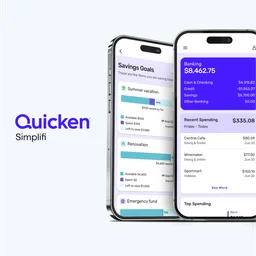
- Goal tracking
- Cash flow insights
- Bank accounts
- Credit cards
- Web support
- IOS support
Only in Strands
- Transaction categorisation
- Personal financial management
- Business financial management
- Lighthouse
- Automated savings
- Account aggregation
What people use each for
The jobs each tool is most often brought in to do.
Simplifi
- Personal budgeting with automatic bank transaction importnot Strands
- Tracking spending, savings goals and net worth in one placenot Strands
Strands
- A retail bank adding budgeting and spending insight without building a categorisation enginenot Simplifi
- A bank wanting personalised product offers driven by observed spending and credit datanot Simplifi
- A credit union offering small business customers cash flow forecasting inside online bankingnot Simplifi
- A Nordic institution combining Strands insight with open banking account aggregationnot Simplifi
Where each one falls short
Documented limitations, not opinions. Every one is a constraint you would hit in normal use.
Simplifi
- There is no free tier at all
- The advertised $3.99 a month requires annual billing, against $6.99 paying monthly
- The subscription auto renews yearly at the then current price, which the terms state is subject to change rather than fixed
Strands
- Transaction categorisation accuracy depends on local merchant data, and banks in smaller markets face months of tuning before customers trust the categories shown.
- It is now a product line inside CRIF, a credit bureau, so roadmap priorities follow group data strategy rather than standalone software competition.
- Commercial terms are often bundled with other CRIF services, which makes a standalone comparison against a pure PFM vendor harder to run.
- Money management features have weak measurable impact on bank revenue, so the business case relies on engagement metrics that are difficult to tie to profit.
- It is a white-label component, so the bank still owns design, support and customer communication, and a poor in-app implementation reflects on the bank rather than the vendor.
Pricing, plan by plan
Simplifi
$3.99/month- Annual$3.99/month
- Financial aggregation across 14,000+ institutions
- Spending plan and budgeting tools
- Savings goals tracking
- Monthly$6.99/month
- Financial aggregation across 14,000+ institutions
- Spending plan and budgeting tools
- Savings goals tracking
Strands
On request- Strands AI Finance Suite$undefined/year
- Licence scaled by end customers or active users
- Modules licensed separately for personal, business and Lighthouse
- Implementation and categorisation tuning charged as a project
Which should you pick?
Choose Simplifi if
- You need budget tracking.
- You work on Web, IOS, Android.
- You also want spending analysis.
Choose Strands if
- You need transaction categorisation.
- You work on Web, iOS, Android, REST API.
- You also want personal financial management.
Questions people ask
- Is Simplifi or Strands better?
- Neither clearly leads. Simplifi starts at $3.99/month and Strands at On request, and user ratings are close enough to be indistinguishable. Choose on capability and platform support.
- Which is cheaper, Simplifi or Strands?
- Simplifi starts at $3.99/month and Strands at On request.
- Does Simplifi or Strands run on more platforms?
- Simplifi runs on Web, IOS, Android. Strands runs on Web, iOS, Android, REST API.
- What is Simplifi best used for?
- Simplifi is most often used for personal budgeting with automatic bank transaction import, tracking spending, savings goals and net worth in one place. Of those, personal budgeting with automatic bank transaction import and tracking spending, savings goals and net worth in one place are not what Strands is typically brought in for.
- What can Simplifi do that Strands cannot?
- Simplifi covers Budget tracking, Spending analysis, Goal tracking, Cash flow insights. Strands covers Transaction categorisation, Personal financial management, Business financial management, Lighthouse.
Answered from the vendors’ own pages
Simplifi: How much does Quicken Simplifi cost?
Quicken Simplifi costs $3.99 per month when billed annually, or $6.99 per month if billed monthly. The annual plan provides a 43% discount compared to monthly billing.
SourceStrands: Who owns Strands?
CRIF, the Italian credit bureau and information services group, which acquired it to combine money management software with credit data.
Simplifi: Does Quicken Simplifi offer a free trial?
No free trial is mentioned on the Quicken Simplifi pricing page. The service operates as a cloud-based subscription requiring payment to access personal finance management features including budgeting, spending tracking, and investment portfolio management.
SourceStrands: Is it sold to consumers?
No. It is licensed to banks and credit unions who embed it in their own applications under their own brand.
Simplifi: What payment options are available for Simplifi?
Simplifi requires annual or monthly billing at checkout with automatic renewal. Cancellation is permitted before renewal without penalty.
SourceStrands: Does it include account aggregation?
It supports aggregated external accounts, with CRIF and partners such as Enable Banking supplying the open banking connectivity.
Related pages
Other head to heads
- Simplifi vs Cash App
- Simplifi vs Kraken
- Simplifi vs Coinbase
- Simplifi vs PayPal
- Simplifi vs PocketGuard
- Simplifi vs Tiller Money
- Simplifi vs Money Manager
- Simplifi vs Spendee
- Simplifi vs Wallet
- Simplifi vs Wally
- Simplifi vs Monarch Money
- Simplifi vs Banktivity
- Simplifi vs Expense Manager
- Simplifi vs GnuCash
- Simplifi vs Goodbudget
- Simplifi vs Google Pay
- Simplifi vs Investopedia Stock Simulator
- Simplifi vs IRS2Go
- Simplifi vs Afterpay
- Simplifi vs Credit Karma
- Simplifi vs Zelle
- Simplifi vs Wise
- Simplifi vs Monzo
- Simplifi vs Revolut
- Simplifi vs Starling Bank
- Simplifi vs Affirm
- Simplifi vs Betterment
- Simplifi vs Fidelity
- Simplifi vs Firefly III
- Simplifi vs Mint
- Strands vs Cash App
- Strands vs Kraken
- Strands vs Coinbase
- Strands vs PayPal
- Strands vs PocketGuard
- Strands vs Tiller Money
- Strands vs Money Manager
- Strands vs Spendee
- Strands vs Wallet
- Strands vs Wally
- Strands vs Monarch Money
- Strands vs Banktivity
- Strands vs Expense Manager
- Strands vs GnuCash
- Strands vs Goodbudget
- Strands vs Google Pay
- Strands vs Investopedia Stock Simulator
- Strands vs IRS2Go
- Strands vs Afterpay
- Strands vs Credit Karma
- Strands vs Zelle
- Strands vs Wise
- Strands vs Monzo
- Strands vs Revolut
- Strands vs Starling Bank
- Strands vs Affirm
- Strands vs Betterment
- Strands vs Fidelity
- Strands vs Firefly III
- Strands vs Mint