
Developer Tools · head to head
Deno vs OWASP ZAP
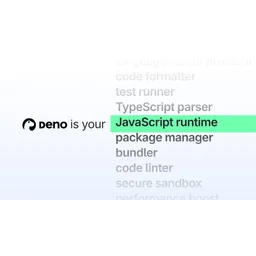
Deno
Developer Tools
A fast, open-source, fully Node-compatible JS runtime with TypeScript baked right in
- From
- Free
- Free plan
- Yes

OWASP ZAP
Cybersecurity
Free, open-source web application scanner and intercepting proxy, now governed by the Software Security Project.
- From
- Free
- Free plan
- Yes
The short version
- Each has a real cost: Deno egress bandwidth overage costs $0.20/GB which can become expensive for high-traffic applications; OWASP ZAP authenticated scanning of modern single-page applications is the hard part and ZAP makes you build it by hand: session handling, token refresh and login scripts are configured per application, and a misconfigured session means the scanner logs itself out and reports a clean result for pages it never reached.
- Prices and features above were last checked on 30 August 2026.
Where they differ
Only the attributes on which Deno and OWASP ZAP actually diverge.
Identical on both: starting price (Free), free tier (Yes), user rating (Not yet rated).
What each one covers
Drawn from each product's published feature list. An absence here means we hold no record of it - not that the product lacks it.
Only in Deno
Nothing recorded that OWASP ZAP does not also cover.
Only in OWASP ZAP
- Intercepting proxy
- Passive scanner
- Active scanner
- AJAX spider
- Automation Framework
- Headless daemon and REST API
- Docker images
- Add-on marketplace
What people use each for
The jobs each tool is most often brought in to do.
Deno
- Running TypeScript natively without transpilation overheadnot OWASP ZAP
- Migrating Node.js applications to secure-by-default runtimenot OWASP ZAP
- Deploying edge functions and serverless containers seamlesslynot OWASP ZAP
- Consolidating developer tools into single binarynot OWASP ZAP
OWASP ZAP
- Adding a baseline security scan to every application's pipeline where per-target commercial licensing would limit coverage to a handfulnot Deno
- Manual penetration testing that needs an intercepting proxy, request replay and fuzzing without a paid licence per testernot Deno
- Teaching developers what an attack against their own endpoint looks like, using a tool they can install themselvesnot Deno
- Pre-release regression scanning of an internal application that would never justify a commercial DAST subscriptionnot Deno
Where each one falls short
Documented limitations, not opinions. Every one is a constraint you would hit in normal use.
Deno
- Egress bandwidth overage costs $0.20/GB which can become expensive for high-traffic applications
- CPU time overage is $0.10/hour on Pro and Builder tiers, adding to costs for compute-intensive workloads
- Enterprise pricing is not disclosed; requires sales contact
OWASP ZAP
- Authenticated scanning of modern single-page applications is the hard part and ZAP makes you build it by hand: session handling, token refresh and login scripts are configured per application, and a misconfigured session means the scanner logs itself out and reports a clean result for pages it never reached.
- There is no support contract in the product, so when a scan breaks the day before a release the escalation path is a GitHub issue and a community chat, which is not an answer that satisfies a delivery manager or an auditor who wants a named responsible party.
- Active scanning sends genuine attack traffic, so it can create records, trigger emails, exhaust rate limits or destabilise a fragile environment, and pointing it at production without prior agreement produces an incident rather than a test result.
- Output needs triage: passive rules generate large volumes of low-severity informational findings about headers and cookie flags that bury the few results that matter, and a team without someone tuning the rule set stops reading the report within a few sprints.
- As a dynamic scanner it can only test what it can reach, so authorisation flaws between accounts, business logic abuse and anything behind an undiscovered endpoint go unreported, and a passing ZAP scan is evidence of nothing more than the absence of the classes of bug it looks for.
Pricing, plan by plan
Deno
Free- FreeFree
- 1 million requests/month
- 20GB egress bandwidth
- 10 apps
- Pro$20/month
- 5 million requests/month
- 200GB egress
- 50 apps
- Builder$200/month
- 25 million requests/month
- 2,000GB egress
- 10,000 apps
- Enterprise$null/month
- Custom limits on all metrics
- 99.95% reliability SLA
- Email support with SLA
OWASP ZAP
Free- Free & Open SourceFree
- Full functionality
- Active & passive scanning
- Spider
Which should you pick?
Choose OWASP ZAP if
- You need intercepting proxy.
- You want to start without paying.
- You work on Desktop, Cli, Api.
- You also want passive scanner.
Questions people ask
- Is Deno or OWASP ZAP better?
- Neither clearly leads. Deno starts at Free and OWASP ZAP at Free, and user ratings are close enough to be indistinguishable. Choose on capability and platform support.
- Which is cheaper, Deno or OWASP ZAP?
- Deno starts at Free and OWASP ZAP at Free.
- Does Deno or OWASP ZAP run on more platforms?
- Deno runs on Web. OWASP ZAP runs on Desktop, Cli, Api.
- Can I use Deno for free?
- Both have a free tier, so you can try either at no cost before committing.
- What is Deno best used for?
- Deno is most often used for running typescript natively without transpilation overhead, migrating node.js applications to secure-by-default runtime, deploying edge functions and serverless containers seamlessly, consolidating developer tools into single binary. Of those, running typescript natively without transpilation overhead and migrating node.js applications to secure-by-default runtime are not what OWASP ZAP is typically brought in for.
- What can Deno do that OWASP ZAP cannot?
- OWASP ZAP covers Intercepting proxy, Passive scanner, Active scanner, AJAX spider.
Answered from the vendors’ own pages
Deno: How much does Deno Deploy cost?
Deno Deploy offers a free tier at $0/month, Pro at $20/month, and Builder at $200/month. Enterprise has custom pricing. All plans include base request and bandwidth limits, with overage charges for additional usage.
SourceOWASP ZAP: Is it still called OWASP ZAP?
The project left OWASP in August 2024 and is now governed by the Software Security Project, with core development sponsored by Checkmarx. The tool is now just ZAP, though most existing documentation, courses and search results still use the OWASP name.
Deno: What are Deno Deploy's overage charges?
Egress bandwidth overages cost $0.20 per GB. CPU time overages are $0.10 per hour on Pro and Builder tiers. Memory time and KV database operations also incur charges beyond included limits.
SourceOWASP ZAP: Is it free for commercial use?
Yes. It is Apache 2.0 licensed, with no per-application, per-scan or per-user cost, and it can be used and modified commercially without a licence agreement.
Deno: How many apps can I deploy on Deno's free plan?
The free tier includes 10 apps with up to 1 concurrent build. Pro tier supports 50 apps with 3 concurrent builds, and Builder supports 10,000 apps with 20 concurrent builds.
SourceOWASP ZAP: Can it replace a penetration test?
No. It automates checks for known vulnerability classes against endpoints it can reach. It does not reason about business logic, chain findings into an attack, or test authorisation between accounts, which is most of what a tester actually does.
Deno: How many team members can access Deno Deploy?
The free tier supports up to 3 team members. Pro supports 10 team members. Builder supports 25 team members. Enterprise has custom seat limits.
SourceOWASP ZAP: Does it run in CI?
Yes, through the official Docker images and the Automation Framework, which defines scan jobs in YAML so configuration lives in the repository. A baseline passive scan is the usual starting point because it is fast and non-intrusive.
OWASP ZAP: How does it compare to Burp Suite?
Burp Suite Professional is the more polished manual testing tool and has a stronger scanner and extension ecosystem, but it is licensed per tester and Burp Suite Enterprise per target. ZAP is the better fit where cost per target is the binding constraint; many teams use both.
Related pages
Other head to heads
- Deno vs Turborepo
- Deno vs ESLint
- Deno vs pnpm
- Deno vs Visual Studio Code
- Deno vs Jitsu
- Deno vs Argo CD
- Deno vs Git
- Deno vs Soketi
- Deno vs Bazel
- Deno vs Pants Build
- Deno vs Tilt
- Deno vs Dagger
- Deno vs RAD Studio
- Deno vs Refact
- Deno vs Restate
- Deno vs RubyMine
- Deno vs SonarQube
- Deno vs 1Password
- Deno vs Bitdefender Total Security
- Deno vs Norton 360
- Deno vs LastPass
- Deno vs Bitwarden
- Deno vs Burp Suite
- Deno vs Metasploit
- Deno vs Wireshark
- Deno vs authentik
- Deno vs Authelia
- Deno vs Infisical
- Deno vs Trivy
- Deno vs Feedzai
- Deno vs Frontegg
- Deno vs HashiCorp Boundary
- Deno vs JumpCloud
- Deno vs McAfee Total Protection
- OWASP ZAP vs Turborepo
- OWASP ZAP vs ESLint
- OWASP ZAP vs pnpm
- OWASP ZAP vs Visual Studio Code
- OWASP ZAP vs Jitsu
- OWASP ZAP vs Argo CD
- OWASP ZAP vs Git
- OWASP ZAP vs Soketi
- OWASP ZAP vs Bazel
- OWASP ZAP vs Pants Build
- OWASP ZAP vs Tilt
- OWASP ZAP vs Dagger
- OWASP ZAP vs RAD Studio
- OWASP ZAP vs Refact
- OWASP ZAP vs Restate
- OWASP ZAP vs RubyMine
- OWASP ZAP vs SonarQube
- OWASP ZAP vs 1Password
- OWASP ZAP vs Bitdefender Total Security
- OWASP ZAP vs Norton 360
- OWASP ZAP vs LastPass
- OWASP ZAP vs Bitwarden
- OWASP ZAP vs Burp Suite
- OWASP ZAP vs Metasploit
- OWASP ZAP vs Wireshark
- OWASP ZAP vs authentik
- OWASP ZAP vs Authelia
- OWASP ZAP vs Infisical
- OWASP ZAP vs Trivy
- OWASP ZAP vs Feedzai
- OWASP ZAP vs Frontegg
- OWASP ZAP vs HashiCorp Boundary
- OWASP ZAP vs JumpCloud
- OWASP ZAP vs McAfee Total Protection