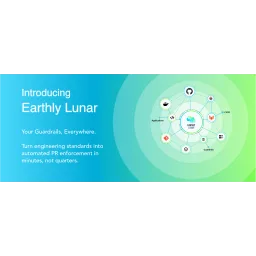
 Gardenvs
 Docker
Docker: If your application is small enough that docker-compose still represents production honestly

Kubernetes development and testing automation with shared caching, now owned by Incredibuild
As of 31 August 2026, Garden is free to use. An open source tool that builds, deploys and tests a whole Kubernetes application from one declarative graph, with result caching shared across developers and CI. Softwr lists it under Developer Tools. Garden is made by Incredibuild (Garden Technologies), available on Linux, macOS, Windows, Self-hosted.
Overview
Garden describes an application as a graph of build, deploy, test and run actions in YAML. From that graph it can spin up a production-like environment in a remote Kubernetes cluster, run integration tests against it, and reuse cached results when nothing that an action depends on has changed. The same configuration drives a laptop, a shared dev cluster and a CI pipeline, which is the point: developers stop maintaining a docker-compose approximation of an environment that behaves differently from production. The distinguishing mechanic is the caching. Because Garden tracks the dependency graph and content hashes, a test suite that has already passed on identical inputs is skipped rather than rerun, and that cache is shared between engineers and CI rather than being local. On a repository with dozens of services, this is the difference between a twenty minute pipeline and a two minute one. It also runs builds in the remote cluster, so developers on modest laptops are not the bottleneck. Buyers are platform teams at organisations with a microservice estate on Kubernetes and painfully slow integration test cycles. The trade-off is ownership and configuration burden. Incredibuild, a build acceleration vendor, acquired Garden in November 2024 and the standalone pricing page now redirects to documentation, so the commercial roadmap is directed by a company whose main business is C++ and shader compilation. The open source core remains on GitHub, but a team standardising on Garden should assume it will get its answers from the repository rather than a product organisation.
The honest half
Concrete and checkable, so you can decide whether any of them matter to you. This is the half of a review a vendor will not write about Garden.
Cross-shopped
Each pairing was judged by two reviewers asking whether a buyer would genuinely weigh the two against each other. The ones that failed were deleted rather than published.
Docker: If your application is small enough that docker-compose still represents production honestly

GitHub Actions: If the problem is pipeline orchestration rather than reproducing a Kubernetes environment locally

Kubernetes: If you would rather build ephemeral environments with native tooling and scripts you own outright
Pricing
Taken from the vendor's own pricing page. Prices move, so check before you buy.
Garden open source
Free
Commercial tier
On request
Capabilities
Action graph
Declarative build, deploy, test and run actions with explicit dependencies
Shared result caching
Cached test and build results reused across developers and CI
Remote Kubernetes environments
Ephemeral, production-like namespaces per developer or per branch
In-cluster builds
Image builds run in the cluster rather than on developer laptops
Same config everywhere
One configuration drives local dev, preview environments and pipelines
Hot reload sync
Sync local file changes into running containers without a rebuild
Helm and Kustomize support
Deploy existing charts and overlays as actions in the graph
Templating
Variables and environment-specific overrides in the YAML config
Answered, with sources
Each answer names the page it came from, so you can check it rather than take our word for it.
The open source project remains on GitHub under Incredibuild ownership, but the commercial pricing page redirects to the docs and there is no public paid offer.
Effectively yes. Garden is built around Kubernetes environments and offers little to teams on other runtimes.
No. It runs inside GitHub Actions, GitLab CI or similar and speeds up what those pipelines execute.
It comes from skipping builds and tests whose inputs have not changed, so the benefit scales with how many services you have and how often only a few change.
Keep looking
Runs production-like development environments on your own Kubernetes cluster
Purely functional package manager and the NixOS distribution built on it, for byte-reproducible environments
Local Kubernetes development loop that rebuilds and live-updates containers on save
Feature flag service priced per flag and environment with unlimited seats and unlimited monthly active users
Internal developer portal that scores service ownership and production readiness
Cloud development environments repositioned as a control plane for software engineering agents
Extensible, customizable free text editor and computing environment
Infrastructure for spinning up secure, sub-second sandboxes to run AI-generated code
Softwr does not host reviews and shows no star rating for Garden, because a rating we did not collect is not ours to publish. What is here is the pricing and platform detail from the vendor’s own pages, limitations we could state concretely, and alternatives a reviewer confirmed people weigh against it. Tell us if any of it is wrong.
What people switch to, and what they give up
Every tier, and where the cost actually lands
Put it head to head with anything we hold
Its rating, and an embed for your own site
Programmable CI/CD engine that runs your pipeline as containers on any runner
Per month per team for Dagger CloudInternal developer portal that scores service ownership and maturity rather than just cataloguing services
quoteFeature flag service priced per flag and environment with unlimited seats and unlimited monthly active users
Per month by feature flag and environment countAnalytics governance: define a tracking plan, generate typed code from it, and catch drift before release
Per editor seat per monthEvent gateway that receives, queues, retries and replays inbound webhooks
Per month by delivered event countThe Python web framework behind ERPNext, sold as managed hosting through Frappe Cloud
Per month by site or server