 Cubasevs
 Logic Pro
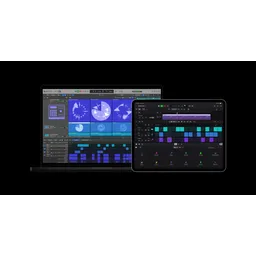
Logic Pro: Pick Logic Pro on macOS for a one-off purchase with free major updates and a very large bundled library, if you can live without the score editor depth.

Steinberg workstation with the strongest score editor of any DAW, now licensed without a USB dongle
As of 31 August 2026, Cubase starts at $99.99/one-time. The workstation Steinberg has shipped since 1989 and the application in which the VST plugin format was created. Softwr lists it under Music. Cubase is made by Steinberg Media Technologies GmbH, available on Windows, macOS.
Overview
Cubase is a digital audio workstation from Steinberg, a Yamaha subsidiary since 2005, sold in three editions: Elements, Artist and Pro. It handles audio recording, MIDI sequencing, mixing and scoring in one project. Distinctive parts include the Chord Track and Chord Pads, VariAudio for pitch correction inside the sample editor, the Logical Editor for rule based MIDI transformation, and expression maps, which map notation and keyswitches onto sample library articulations. The change that matters commercially is licensing. Until Cubase 11 the licence lived on a USB eLicenser dongle: you could carry it between machines, including machines that never touched the internet, and losing the stick meant buying the software again. From Cubase 12 Steinberg replaced this with Steinberg Licensing, which activates against your account on up to three computers through the Steinberg Activation Manager. That removes the dongle as a failure point, and removes the second-hand dongle market with it, but activation and deactivation are now account operations. A studio machine on an isolated network needs the offline activation path rather than simply having a stick plugged in, and anyone running an air-gapped scoring rig should test that path before buying. Buyers are media composers, orchestral template users and Yamaha hardware owners; the score editor and expression maps are why they stay and why they rarely move to Live or Logic. The trade-offs are weight and tiering. The install is large, the mixer and editor windows assume a big screen, and Elements and Artist withhold features such as full surround work and the top VariAudio tier, so the working configuration is usually Pro. Version upgrades are charged separately and arrive roughly annually.
The honest half
Concrete and checkable, so you can decide whether any of them matter to you. This is the half of a review a vendor will not write about Cubase.
Cross-shopped
Each pairing was judged by two reviewers asking whether a buyer would genuinely weigh the two against each other. The ones that failed were deleted rather than published.
Logic Pro: Pick Logic Pro on macOS for a one-off purchase with free major updates and a very large bundled library, if you can live without the score editor depth.

REAPER: Pick REAPER if you need a cheap licence and heavy customisation, and you are willing to solve notation and articulation handling yourself.

Ableton Live: Pick Live if the work is electronic and performance oriented rather than scored, where the Session View matters more than engraving.
Pricing
Taken from the vendor's own pricing page. Prices move, so check before you buy.
Cubase Elements
$99.99 /one-time
Cubase Artist
$329.99 /one-time
Cubase Pro
$579.99 /one-time
Capabilities
Score editor
Engraves and prints parts from the same MIDI data the sequencer plays, with no export step
Expression maps
Maps notation and keyswitches onto sample library articulations, so a slur in the score triggers the legato patch
VariAudio
Edits pitch and timing of monophonic audio in place inside the sample editor
Chord Track and Chord Pads
Drives harmony across tracks and lets chords be played and voiced from a pad grid
Logical Editor
Applies rule based transformations to MIDI in bulk, such as rewriting velocities across a filtered selection
Video track
Plays a reference film in the timeline for writing to picture
Steinberg Licensing
Dongle free activation on up to three machines through the Activation Manager
MixConsole
Channel strip with per-channel EQ and dynamics and a history of mixer states
Answered, with sources
Each answer names the page it came from, so you can check it rather than take our word for it.
No. From Cubase 12 onwards Steinberg Licensing replaced the eLicenser. Activation runs through the Steinberg Activation Manager on up to three computers.
Yes, but through the offline activation path in the Activation Manager rather than a normal sign in, and you repeat it if the machine is rebuilt. Test it before committing an isolated scoring rig.
No. Editions are bought outright and keep working. Steinberg charges separately for version upgrades, which appear roughly once a year.
Pro. Artist includes a score editor, but Pro is the edition with the full engraving, expression map and surround feature set that media work assumes.
Keep looking
Full digital audio workstation with a 60 day evaluation and a USD 60 personal licence
Digital audio workstation built around a Session View for arranging ideas live
Apple's digital audio workstation, sold outright on Mac and by subscription on iPad
Avid digital audio workstation with four tiers gated by track count and simultaneous I/O rather than by feature
Single-window workstation with album mastering built into the same project, now owned by Fender
Spotify-owned browser-based DAW and podcast studio, sold on separate Music Maker and Storytellers subscription tracks
Free, browser and mobile-based collaborative DAW, with optional Pro and Max membership tiers for sample libraries and extras
GPL workstation whose source is free and whose prebuilt binaries are paid
Modular DAW with a native Linux build and a 12-month upgrade window rather than a subscription
Subscription sample and preset library with cloud project storage, unrelated to the catalogued Splice Software insurance platform
DJ mixing software sold as Pro and Suite tiers, with a free Lite edition and hardware unlocking on supported controllers
Native Instruments DJ software sold as a straightforward one-time purchase, with a free entry edition called Traktor Play
AI mastering and music distribution, sold as separate mastering, distribution and bundled Studio subscriptions
Free digital audio workstation bundled with macOS and iOS, with no paid tier or upgrade path of its own
Avid’s music notation software, now sold primarily on subscription with perpetual licences still available at higher upfront cost
Apple-owned song identification app, free with no ads or in-app purchases
Avid’s music notation software, now sold primarily on subscription with perpetual licences still available at higher upfront cost
Softwr does not host reviews and shows no star rating for Cubase, because a rating we did not collect is not ours to publish. What is here is the pricing and platform detail from the vendor’s own pages, limitations we could state concretely, and alternatives a reviewer confirmed people weigh against it. Tell us if any of it is wrong.
What people switch to, and what they give up
Every tier, and where the cost actually lands
Put it head to head with anything we hold
Its rating, and an embed for your own site
Free digital audio workstation bundled with macOS and iOS, with no paid tier or upgrade path of its own
Open source, no licence feeFree, browser and mobile-based collaborative DAW, with optional Pro and Max membership tiers for sample libraries and extras
Per user per yearAI mastering and music distribution, sold as separate mastering, distribution and bundled Studio subscriptions
Per user per month, separate mastering and distribution subscriptionsAvid digital audio workstation with four tiers gated by track count and simultaneous I/O rather than by feature
Per user per yearFlat annual subscription music distribution where artists keep 100% of streaming royalties
One-time purchaseFree, open source notation software under the GPL, distinct from the separate paid MuseScore.com and MuseSounds subscriptions
Open source, no licence feeSteinberg’s notation software, still sold as a perpetual licence on desktop with subscription only offered on iPad
One-time purchaseMusic distribution charging an upfront per-release fee plus a permanent 9% commission on royalties, now owned by Universal Music Group
One-time purchase plus ongoing commission