
Logging · head to head
Uptime.com vs Fluentd
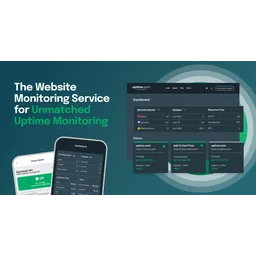
Uptime.com
Logging
Website monitoring and uptime checker with 80+ global monitoring points
- From
- On request
- Rated
- -

The short version
- Only Fluentd has a free tier, so it costs nothing to try first.
- Each has a real cost: Uptime.com pricing structure not fully detailed publicly; Fluentd fluentd needs more than 60 MB of memory at runtime, against roughly 450 KB for Fluent Bit
- They diverge on capability: Uptime.com covers Website monitoring, Fluentd covers Log collection.
Where they differ
Only the attributes on which Uptime.com and Fluentd actually diverge.
| Attribute | Uptime.com | Fluentd |
|---|---|---|
| Starting price | On request | Free |
| Pricing model | subscription | open-source |
| Free tier | No | Yes |
| Founded | Unknown | 2011 |
Identical on both: platforms (Web, API), user rating (Not yet rated), category (Logging).
What each one covers
Drawn from each product's published feature list. An absence here means we hold no record of it - not that the product lacks it.
Only in Uptime.com
- Website monitoring
- API monitoring
- Synthetic monitoring
- Page speed testing
- Real User Monitoring
- Status pages
- Private locations
- Global network
Only in Fluentd
- Log collection
- Data parsing
- Filtering and buffering
- Event routing
- API
- Webhooks
- REST
- Web support
What people use each for
The jobs each tool is most often brought in to do.
Uptime.com
- Monitor website availability across multiple global locationsnot Fluentd
- Test API endpoints and validate response timesnot Fluentd
- Verify DNS resolution and certificate validitynot Fluentd
- Track page load performance over timenot Fluentd
- Send alerts to teams when issues occurnot Fluentd
Fluentd
- Unified log collection and routing from many sources to many destinationsnot Uptime.com
- Parsing and transforming log records before forwardingnot Uptime.com
- Aggregating logs from containers into Elasticsearch, S3 or a SIEMnot Uptime.com
Where each one falls short
Documented limitations, not opinions. Every one is a constraint you would hit in normal use.
Uptime.com
- Pricing structure not fully detailed publicly
- Limited information on check frequency in basic plans
- Real User Monitoring and status pages require add-ons
- Lower-tier plans may have feature limitations
Fluentd
- Fluentd needs more than 60 MB of memory at runtime, against roughly 450 KB for Fluent Bit
- Fluentd is built as a Ruby gem and depends on other gems, so a Ruby runtime is required
- Its capability comes from over 1,000 external plugins rather than built in functionality, so each added input or output is a separate dependency
- The Fluent Bit documentation states that cloud providers have switched from Fluentd to Fluent Bit for performance and compatibility and calls Fluent Bit the next generation solution
Pricing, plan by plan
Uptime.com
On requestNo published plan breakdown. See the Uptime.com review.
Fluentd
Free- FreeFree
- Log collection
- Data parsing
- Filtering and buffering
Which should you pick?
Choose Uptime.com if
- You need website monitoring.
- You work on Web, API.
- You also want api monitoring.
Choose Fluentd if
- You need log collection.
- You want to start without paying.
- You work on Web, Api.
- You also want data parsing.
Questions people ask
- Is Uptime.com or Fluentd better?
- Neither clearly leads. Uptime.com starts at On request and Fluentd at Free, and user ratings are close enough to be indistinguishable. Choose on capability and platform support.
- Which is cheaper, Uptime.com or Fluentd?
- Fluentd has a free tier; the other does not. Paid plans start at On request for Uptime.com and Free for Fluentd.
- Does Uptime.com or Fluentd run on more platforms?
- Uptime.com runs on Web, API. Fluentd runs on Web, Api.
- Can I use Fluentd for free?
- Yes. Fluentd has a free tier, so you can try it without paying. Uptime.com starts at On request.
- What is Uptime.com best used for?
- Uptime.com is most often used for monitor website availability across multiple global locations, test api endpoints and validate response times, verify dns resolution and certificate validity, track page load performance over time. Of those, monitor website availability across multiple global locations and test api endpoints and validate response times are not what Fluentd is typically brought in for.
- What can Uptime.com do that Fluentd cannot?
- Uptime.com covers Website monitoring, API monitoring, Synthetic monitoring, Page speed testing. Fluentd covers Log collection, Data parsing, Filtering and buffering, Event routing.
Answered from the vendors’ own pages
Uptime.com: Does Uptime.com offer a money-back guarantee?
Yes, Uptime.com provides a 30-day money-back guarantee for new users, allowing risk-free trial of their service.
SourceFluentd: How much does Fluentd cost?
Fluentd is free and open-source under the Apache 2 License from the Cloud Native Computing Foundation (CNCF). There are no subscription fees, licensing costs, or commercial pricing tiers.
SourceUptime.com: What alerting methods does Uptime.com support?
All plans include email and SMS alerting with 20+ integrations available including Slack, Teams, PagerDuty, and webhooks for custom integrations.
SourceUptime.com: How many monitoring locations does Uptime.com have?
Uptime.com operates 80+ monitoring locations worldwide, enabling checks from multiple geographic regions to detect regional connectivity issues.
SourceRelated pages
Other head to heads
- Uptime.com vs Elastic Stack
- Uptime.com vs New Relic
- Uptime.com vs Datadog Logs
- Uptime.com vs Coralogix
- Uptime.com vs Grafana Loki
- Uptime.com vs incident.io
- Uptime.com vs Cronitor
- Uptime.com vs FireHydrant
- Uptime.com vs Healthchecks
- Uptime.com vs Openstatus
- Uptime.com vs Rootly
- Uptime.com vs Checkly
- Uptime.com vs CloudWatch
- Uptime.com vs Dynatrace
- Uptime.com vs InfluxDB
- Uptime.com vs Airbrake
- Uptime.com vs AppDynamics
- Uptime.com vs Axiom
- Fluentd vs Elastic Stack
- Fluentd vs New Relic
- Fluentd vs Datadog Logs
- Fluentd vs Coralogix
- Fluentd vs Grafana Loki
- Fluentd vs incident.io
- Fluentd vs Cronitor
- Fluentd vs FireHydrant
- Fluentd vs Healthchecks
- Fluentd vs Openstatus
- Fluentd vs Rootly
- Fluentd vs Checkly
- Fluentd vs CloudWatch
- Fluentd vs Dynatrace
- Fluentd vs InfluxDB
- Fluentd vs Airbrake
- Fluentd vs AppDynamics
- Fluentd vs Axiom