
Productivity · head to head
Memberstack vs Microsoft Defender for Endpoint
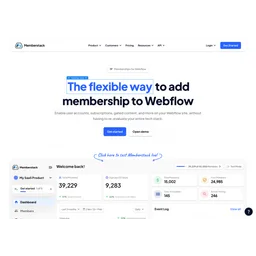
Memberstack
Productivity
Add memberships and logins to any website
- From
- Free
- Free plan
- Yes

Microsoft Defender for Endpoint
Cybersecurity
Enterprise endpoint security built into Microsoft 365
- From
- On request
- Free plan
- No
The short version
- Microsoft Defender for Endpoint is an enterprise endpoint security platform.
- Memberstack starts at $29/mo; Microsoft Defender for Endpoint prices on request.
- Where Memberstack falls short: basic and Professional tiers include transaction fees of 4% and 2% respectively.
- Where Microsoft Defender for Endpoint falls short: pricing not published on public websites; quote required from Microsoft sales.
- Prices and features on this page were last checked on 20 November 2026.
How do Memberstack and Microsoft Defender for Endpoint differ?
Memberstack and Microsoft Defender for Endpoint differ on starting price (Free against On request), pricing model (Subscription against Quote) and free tier (Yes against No). Only the attributes on which Memberstack and Microsoft Defender for Endpoint actually diverge.
| Attribute | Memberstack | Microsoft Defender for Endpoint |
|---|---|---|
| Starting price | Free | On request |
| Pricing model | Subscription | Quote |
| Free tier | Yes | No |
| Platforms | Web | Windows, macOS, Linux, iOS, Android |
| Category | Productivity | Cybersecurity |
| Founded | 2018 | 1975 |
Which features does each one have?
They share no listed features; 20 only for Microsoft Defender for Endpoint. Drawn from each product's published feature list. An absence here means we hold no record of it - not that the product lacks it.
Only in Memberstack
Nothing recorded that Microsoft Defender for Endpoint does not also cover.
Only in Microsoft Defender for Endpoint
- Threat & vulnerability management
- Attack surface reduction
- Next-gen protection
- EDR
- Auto investigation
- Microsoft Threat Experts
- Threat analytics
- Secure score
What is each one used for?
Memberstack is most often brought in for launching course platforms without custom backend; Microsoft Defender for Endpoint for organisations using Microsoft 365 E5 which includes Defender for Endpoint Plan 2. The jobs each tool is most often brought in to do.
Memberstack
- Launching course platforms without custom backendnot Microsoft Defender for Endpoint
- Building subscription services with Webflow and paymentnot Microsoft Defender for Endpoint
- Gating content without writing codenot Microsoft Defender for Endpoint
- Managing password resets and two-factor authenticationnot Microsoft Defender for Endpoint
- Processing Stripe billing automaticallynot Microsoft Defender for Endpoint
Microsoft Defender for Endpoint
- Enterprise endpoint security across Windows, macOS, Linux, Android, and iOS via Plans 1 or 2not Memberstack
- Small and medium-sized businesses using Microsoft Defender for Business as alternativenot Memberstack
- Organisations using Microsoft 365 E5 which includes Defender for Endpoint Plan 2not Memberstack
Where do Memberstack and Microsoft Defender for Endpoint fall short?
Memberstack's most cited limit: basic and Professional tiers include transaction fees of 4% and 2% respectively. Microsoft Defender for Endpoint's: pricing not published on public websites; quote required from Microsoft sales. Documented limitations, not opinions. Every one is a constraint you would hit in normal use.
Memberstack
- Basic and Professional tiers include transaction fees of 4% and 2% respectively
- Annual billing required for discounts; monthly pricing is higher
- Webflow community builders receive Basic plan free but locked to that tier
Microsoft Defender for Endpoint
- Pricing not published on public websites; quote required from Microsoft sales
- Defender for Endpoint Plan 1 and Plan 2 do not include server licenses; additional licensing required for server protection
- Specific feature differences between Plan 1 and Plan 2 require consulting Microsoft documentation
How much do Memberstack and Microsoft Defender for Endpoint cost?
Memberstack has a free plan, with paid plans from $29/mo; Microsoft Defender for Endpoint is priced on request. Plan by plan below, from each vendor's own pricing page.
Memberstack
Free- Basic$29/mo
- Up to 1,000 members
- 4% transaction fee
- $25/month with annual billing
- Professional$49/mo
- Up to 5,000 members
- 2% transaction fee
- $39/month with annual billing
- Business$99/mo
- 10,000+ members
- 0.9% transaction fee
- $79/month with annual billing
- Established$499/mo
- 10,000+ members
- Zero transaction fees
- $399/month with annual billing
Microsoft Defender for Endpoint
On request- Defender for Endpoint Plan 1On request
- Defender for Endpoint Plan 2 (included in Microsoft 365 E5)On request
- Microsoft Defender for BusinessOn request
Which should you pick?
Choose Microsoft Defender for Endpoint if
- You need threat & vulnerability management.
- You work on Windows, macOS, Linux, iOS, Android.
- You also want attack surface reduction.
Questions people ask
- Is Memberstack or Microsoft Defender for Endpoint better?
- Neither clearly leads. Memberstack starts at Free and Microsoft Defender for Endpoint at On request, and user ratings are close enough to be indistinguishable. Choose on capability and platform support.
- Which is cheaper, Memberstack or Microsoft Defender for Endpoint?
- Memberstack has a free tier; the other does not. Paid plans start at Free for Memberstack and On request for Microsoft Defender for Endpoint.
- Does Memberstack or Microsoft Defender for Endpoint run on more platforms?
- Memberstack runs on Web. Microsoft Defender for Endpoint runs on Windows, macOS, Linux, iOS, Android.
- Can I use Memberstack for free?
- Yes. Memberstack has a free tier, so you can try it without paying. Microsoft Defender for Endpoint starts at On request.
- What is Memberstack best used for?
- Memberstack is most often used for launching course platforms without custom backend, building subscription services with webflow and payment, gating content without writing code, managing password resets and two-factor authentication. Of those, launching course platforms without custom backend and building subscription services with webflow and payment are not what Microsoft Defender for Endpoint is typically brought in for.
- What can Memberstack do that Microsoft Defender for Endpoint cannot?
- Microsoft Defender for Endpoint covers Threat & vulnerability management, Attack surface reduction, Next-gen protection, EDR.
Answered from the vendors’ own pages
Memberstack: What are Memberstack's transaction fees?
Memberstack's transaction fee varies by tier: Basic plan charges 4% per transaction, Professional charges 2%, Business charges 0.9%, and Established tier charges zero transaction fees.
SourceMicrosoft Defender for Endpoint: How is Microsoft Defender for Endpoint priced?
Defender for Endpoint is bundled into Microsoft 365 enterprise subscriptions. Plan 1 is included in Microsoft 365 E3, and Plan 2 is included in Microsoft 365 E5. Individual pricing is not published separately.
SourceMemberstack: Does Memberstack offer a free trial or testing mode?
Yes, Memberstack offers an unlimited free trial in test mode requiring no credit card. Users maintain full feature access at no cost until their site launches with real members.
SourceMicrosoft Defender for Endpoint: Does Microsoft Defender for Endpoint offer a trial?
Yes. A free trial is available for prospective customers to test the product before committing to a subscription.
SourceMemberstack: What discounts does Memberstack offer?
Memberstack offers 50% discount for non-profits, special pricing for young professionals (4% fees), and $249/month with zero fees for startups under $1M raised. Webflow community builders receive the Basic plan free. 30-day money-back guarantee available with full refund.
SourceMicrosoft Defender for Endpoint: What is the difference between Plan 1 and Plan 2?
Plan 1 (in E3) includes unified security tools, device controls, network protection, firewall, web/URL controls, APIs, SIEM connectors, and app controls. Plan 2 (in E5) adds endpoint detection and response, deception techniques, automatic attack disruption, exposure management, and threat intelligence.
SourceRelated pages
More on Memberstack
More on Microsoft Defender for Endpoint
Other head to heads
- Memberstack vs Notion
- Memberstack vs Todoist
- Memberstack vs Tana
- Memberstack vs Gamma
- Memberstack vs Hubstaff
- Memberstack vs Paprika Recipe Manager
- Memberstack vs Remember The Milk
- Memberstack vs Lazy
- Memberstack vs Standard Notes
- Memberstack vs TickTick
- Memberstack vs FigJam
- Memberstack vs Bear Notes
- Memberstack vs WPS Office
- Memberstack vs Bluemail
- Memberstack vs Bring!
- Memberstack vs Day One
- Memberstack vs DeskTime
- Memberstack vs Focus@Will
- Memberstack vs Cybereason Defense Platform
- Memberstack vs VMware Carbon Black
- Memberstack vs CrowdStrike Falcon
- Memberstack vs SentinelOne Singularity
- Memberstack vs Sophos Intercept X
- Memberstack vs Trend Micro Vision One
- Memberstack vs Tanium
- Memberstack vs Tenable
- Memberstack vs Splunk Enterprise Security
- Memberstack vs Darktrace
- Memberstack vs Recorded Future
- Memberstack vs Okta
- Memberstack vs Bitwarden
- Memberstack vs Genetec Security Center
- Memberstack vs HashiCorp Vault
- Memberstack vs Clerk
- Memberstack vs Semgrep
- Memberstack vs Bitdefender Total Security
- Microsoft Defender for Endpoint vs Notion
- Microsoft Defender for Endpoint vs Todoist
- Microsoft Defender for Endpoint vs Tana
- Microsoft Defender for Endpoint vs Gamma
- Microsoft Defender for Endpoint vs Hubstaff
- Microsoft Defender for Endpoint vs Paprika Recipe Manager
- Microsoft Defender for Endpoint vs Remember The Milk
- Microsoft Defender for Endpoint vs Lazy
- Microsoft Defender for Endpoint vs Standard Notes
- Microsoft Defender for Endpoint vs TickTick
- Microsoft Defender for Endpoint vs FigJam
- Microsoft Defender for Endpoint vs Bear Notes
- Microsoft Defender for Endpoint vs WPS Office
- Microsoft Defender for Endpoint vs Bluemail
- Microsoft Defender for Endpoint vs Bring!
- Microsoft Defender for Endpoint vs Day One
- Microsoft Defender for Endpoint vs DeskTime
- Microsoft Defender for Endpoint vs Focus@Will
- Microsoft Defender for Endpoint vs Cybereason Defense Platform
- Microsoft Defender for Endpoint vs VMware Carbon Black
- Microsoft Defender for Endpoint vs CrowdStrike Falcon
- Microsoft Defender for Endpoint vs SentinelOne Singularity
- Microsoft Defender for Endpoint vs Sophos Intercept X
- Microsoft Defender for Endpoint vs Trend Micro Vision One
- Microsoft Defender for Endpoint vs Tanium
- Microsoft Defender for Endpoint vs Tenable
- Microsoft Defender for Endpoint vs Splunk Enterprise Security
- Microsoft Defender for Endpoint vs Darktrace
- Microsoft Defender for Endpoint vs Recorded Future
- Microsoft Defender for Endpoint vs Okta
- Microsoft Defender for Endpoint vs Bitwarden
- Microsoft Defender for Endpoint vs Genetec Security Center
- Microsoft Defender for Endpoint vs HashiCorp Vault
- Microsoft Defender for Endpoint vs Clerk
- Microsoft Defender for Endpoint vs Semgrep
- Microsoft Defender for Endpoint vs Bitdefender Total Security