
Cybersecurity · head to head
Feedzai vs Uptime.com

Feedzai
Cybersecurity
Real-time transaction fraud and financial crime detection for banks and payment processors
- From
- On request
- Free plan
- No
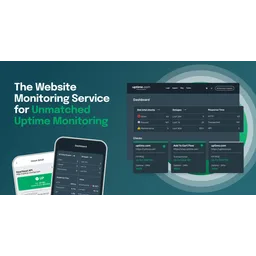
Uptime.com
Logging
Website monitoring and uptime checker with 80+ global monitoring points
- From
- $9/month
- Free plan
- No
The short version
- Uptime.com is a website and API monitoring service.
- Uptime.com starts at $9/mo; Feedzai prices on request.
- Only Feedzai lists rule and model hybrid; only Uptime.com lists website monitoring.
- Where Uptime.com falls short: pricing structure not fully detailed publicly.
- Prices and features on this page were last checked on 25 November 2026.
How do Feedzai and Uptime.com differ?
Feedzai and Uptime.com differ on starting price (On request against $9/month), pricing model (Quote against Subscription) and platforms (Web, Linux against Web, API). Only the attributes on which Feedzai and Uptime.com actually diverge.
| Attribute | Feedzai | Uptime.com |
|---|---|---|
| Starting price | On request | $9/month |
| Pricing model | Quote | Subscription |
| Platforms | Web, Linux | Web, API |
| Category | Cybersecurity | Logging |
| Founded | 2011 | 2013 |
Identical on both: free tier (No).
Which features does each one have?
They share no listed features; 6 appear only for Feedzai and 8 only for Uptime.com. Drawn from each product's published feature list. An absence here means we hold no record of it - not that the product lacks it.
Only in Feedzai
- Real-time scoring
- Rule and model hybrid
- Case manager
- Behavioural biometrics
- Model explainability
- Deployment options
Only in Uptime.com
- Website monitoring
- API monitoring
- Synthetic monitoring
- Page speed testing
- Real User Monitoring
- Status pages
- Private locations
- Global network
What is each one used for?
Uptime.com is most often brought in for monitor website availability across multiple global locations. The jobs each tool is most often brought in to do.
Feedzai
- A bank joining an instant payments scheme where transfers are irrevocable and post-hoc recovery is impossiblenot Uptime.com
- A card issuer whose existing rules engine cannot be changed without a release, so fraud waves run for daysnot Uptime.com
- An acquirer needing per-merchant risk models rather than one portfolio-wide modelnot Uptime.com
- A bank required by its regulator to explain automated declines to customers, which rules out opaque scoringnot Uptime.com
Uptime.com
- Monitor website availability across multiple global locationsnot Feedzai
- Test API endpoints and validate response timesnot Feedzai
- Verify DNS resolution and certificate validitynot Feedzai
- Track page load performance over timenot Feedzai
- Send alerts to teams when issues occurnot Feedzai
Where do Feedzai and Uptime.com fall short?
Uptime.com's most cited limit: pricing structure not fully detailed publicly. Documented limitations, not opinions. Every one is a constraint you would hit in normal use.
Feedzai
- Pricing is per transaction with an annual minimum, so a bank with seasonal or growing volume commits to a floor it may not use and pays overage above the band
- It sits in the authorisation path, which makes every upgrade a change-controlled event with rollback plans, and the operational burden falls on the bank rather than the vendor
- Out of the box models need months of the customer own labelled fraud history before they beat the rules they replace, so the value case starts late
- AML and fraud are licensed as separate modules, so institutions expecting one platform fee find the transaction monitoring capability is a second line item
- The buyer profile is large institutions, so smaller banks and fintechs face minimums that make per-transaction economics unattractive below significant scale
Uptime.com
- Pricing structure not fully detailed publicly
- Limited information on check frequency in basic plans
- Real User Monitoring and status pages require add-ons
- Lower-tier plans may have feature limitations
How much do Feedzai and Uptime.com cost?
Feedzai is priced on request; Uptime.com starts at $9/mo. Plan by plan below, from each vendor's own pricing page.
Feedzai
On request- Feedzai Financial Crime PlatformOn request
- Priced by transaction volume with annual minimum commitment
- Modules for fraud, AML and account opening licensed separately
- Cloud, private cloud and on-premises deployment
Uptime.com
$9/monthNo published plan breakdown. See the Uptime.com review.
Which should you pick?
Choose Feedzai if
- You need real-time scoring.
- You work on Web, Linux.
- You also want rule and model hybrid.
Choose Uptime.com if
- You need website monitoring.
- You work on Web, API.
- You also want api monitoring.
Questions people ask
- Is Feedzai or Uptime.com better?
- Neither clearly leads. Feedzai starts at On request and Uptime.com at $9/month, and user ratings are close enough to be indistinguishable. Choose on capability and platform support.
- Which is cheaper, Feedzai or Uptime.com?
- Feedzai starts at On request and Uptime.com at $9/month.
- Does Feedzai or Uptime.com run on more platforms?
- Feedzai runs on Web, Linux. Uptime.com runs on Web, API.
- What is Feedzai best used for?
- Feedzai is most often used for a bank joining an instant payments scheme where transfers are irrevocable and post-hoc recovery is impossible, a card issuer whose existing rules engine cannot be changed without a release, so fraud waves run for days, an acquirer needing per-merchant risk models rather than one portfolio-wide model, a bank required by its regulator to explain automated declines to customers, which rules out opaque scoring. Of those, a bank joining an instant payments scheme where transfers are irrevocable and post-hoc recovery is impossible and a card issuer whose existing rules engine cannot be changed without a release, so fraud waves run for days are not what Uptime.com is typically brought in for.
- What can Feedzai do that Uptime.com cannot?
- Feedzai covers Real-time scoring, Rule and model hybrid, Case manager, Behavioural biometrics. Uptime.com covers Website monitoring, API monitoring, Synthetic monitoring, Page speed testing.
Answered from the vendors’ own pages
Feedzai: Can Feedzai run on-premises?
Yes. On-premises and private cloud deployments are supported, which is why it appears in markets where transaction data cannot legally leave the country.
Uptime.com: Does Uptime.com offer a money-back guarantee?
Yes, Uptime.com provides a 30-day money-back guarantee for new users, allowing risk-free trial of their service.
SourceFeedzai: Does it cover AML as well as fraud?
It does, but transaction monitoring is a separately licensed module. Assume two line items if you want both.
Uptime.com: What alerting methods does Uptime.com support?
All plans include email and SMS alerting with 20+ integrations available including Slack, Teams, PagerDuty, and webhooks for custom integrations.
SourceFeedzai: How fast are decisions?
Designed for the authorisation window, typically tens of milliseconds. This is the constraint that rules out batch scoring architectures.
Uptime.com: How many monitoring locations does Uptime.com have?
Uptime.com operates 80+ monitoring locations worldwide, enabling checks from multiple geographic regions to detect regional connectivity issues.
SourceRelated pages
Other head to heads
- Feedzai vs Featurespace ARIC Risk Hub
- Feedzai vs NICE Actimize
- Feedzai vs Unit21
- Feedzai vs Quantexa
- Feedzai vs ThetaRay
- Feedzai vs Sardine
- Feedzai vs Silent Eight
- Feedzai vs Transmit Security
- Feedzai vs Fenergo
- Feedzai vs Socure
- Feedzai vs Jumio
- Feedzai vs Sumsub
- Feedzai vs Logto
- Feedzai vs Nessus
- Feedzai vs Netwrix
- Feedzai vs OWASP ZAP
- Feedzai vs Spot AI
- Feedzai vs Very Good Security
- Feedzai vs Checkly
- Feedzai vs Atlassian Statuspage
- Feedzai vs UptimeRobot
- Feedzai vs StatusCake
- Feedzai vs Site24x7
- Feedzai vs Better Stack
- Feedzai vs Cronitor
- Feedzai vs Sentry
- Feedzai vs PagerDuty
- Feedzai vs New Relic
- Feedzai vs Datadog
- Feedzai vs InfluxDB
- Feedzai vs Filebeat
- Feedzai vs FireHydrant
- Feedzai vs Fluent Bit
- Feedzai vs Raygun
- Feedzai vs Logstash
- Feedzai vs Fluentd
- Uptime.com vs Featurespace ARIC Risk Hub
- Uptime.com vs NICE Actimize
- Uptime.com vs Unit21
- Uptime.com vs Quantexa
- Uptime.com vs ThetaRay
- Uptime.com vs Sardine
- Uptime.com vs Silent Eight
- Uptime.com vs Transmit Security
- Uptime.com vs Fenergo
- Uptime.com vs Socure
- Uptime.com vs Jumio
- Uptime.com vs Sumsub
- Uptime.com vs Logto
- Uptime.com vs Nessus
- Uptime.com vs Netwrix
- Uptime.com vs OWASP ZAP
- Uptime.com vs Spot AI
- Uptime.com vs Very Good Security
- Uptime.com vs Checkly
- Uptime.com vs Atlassian Statuspage
- Uptime.com vs UptimeRobot
- Uptime.com vs StatusCake
- Uptime.com vs Site24x7
- Uptime.com vs Better Stack
- Uptime.com vs Cronitor
- Uptime.com vs Sentry
- Uptime.com vs PagerDuty
- Uptime.com vs New Relic
- Uptime.com vs Datadog
- Uptime.com vs InfluxDB
- Uptime.com vs Filebeat
- Uptime.com vs FireHydrant
- Uptime.com vs Fluent Bit
- Uptime.com vs Raygun
- Uptime.com vs Logstash
- Uptime.com vs Fluentd