
Inventory · head to head
ERPNext vs SAP Analytics Cloud
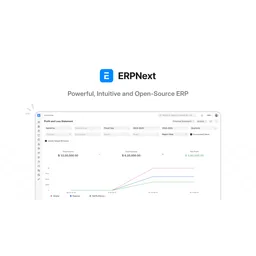
ERPNext
Inventory
Open-source ERP solution for SMEs and growing businesses
- From
- Free
- Rated
- -

SAP Analytics Cloud
Inventory
Enterprise inventory analytics and planning
- From
- On request
- Rated
- -
The short version
- Only ERPNext has a free tier, so it costs nothing to try first.
- Each has a real cost: ERPNext the software is AGPL-3.0 licensed, which imposes source disclosure obligations on anyone distributing a modified network service built on it; SAP Analytics Cloud high implementation costs and complexity for large enterprises
- They diverge on capability: ERPNext covers Accounting, SAP Analytics Cloud covers Advanced analytics.
- Prices and features above were last checked on 30 August 2026.
Where they differ
Only the attributes on which ERPNext and SAP Analytics Cloud actually diverge.
| Attribute | ERPNext | SAP Analytics Cloud |
|---|---|---|
| Starting price | Free | On request |
| Pricing model | freemium | subscription |
| Free tier | Yes | No |
| Platforms | Self-hosted, Cloud, Web | Cloud |
| Founded | 2014 | 1972 |
Identical on both: user rating (Not yet rated), category (Inventory).
What each one covers
Drawn from each product's published feature list. An absence here means we hold no record of it - not that the product lacks it.
Only in ERPNext
- Accounting
- Inventory
- Manufacturing
- CRM
- Human Resources
- Payment gateways
- Email systems
- Custom extensions
Only in SAP Analytics Cloud
- Advanced analytics
- Demand planning
- Inventory optimization
- Predictive modeling
- Supply chain visibility
- Real-time reporting
- Machine learning capabilities
- SAP ecosystem
Both cover
- Web support
What people use each for
The jobs each tool is most often brought in to do.
ERPNext
- Enterprise resource planning for small to medium businessesnot SAP Analytics Cloud
- Accounting and financial managementnot SAP Analytics Cloud
- Inventory and stock managementnot SAP Analytics Cloud
- Supply chain managementnot SAP Analytics Cloud
SAP Analytics Cloud
- Demand forecastingnot ERPNext
- Inventory optimizationnot ERPNext
- Supply chain analyticsnot ERPNext
- Predictive planningnot ERPNext
Where each one falls short
Documented limitations, not opinions. Every one is a constraint you would hit in normal use.
ERPNext
- The software is AGPL-3.0 licensed, which imposes source disclosure obligations on anyone distributing a modified network service built on it
- Managed hosting is priced per site and per server rather than per user, so a small team running several sites pays more than a large team on one
- Dedicated server isolation and stronger reliability guarantees start at $125 a month
- Self hosting is free but places upgrades, backups and availability entirely on the operator
SAP Analytics Cloud
- High implementation costs and complexity for large enterprises
- Requires significant data governance and planning infrastructure
Pricing, plan by plan
ERPNext
Free- Community EditionFree
- Frappe Cloud Starter$14/month
- Frappe Cloud Standard$50/month
- Frappe Cloud Professional$100/month
SAP Analytics Cloud
On request- Standard$5000/month
- Core analytics
- 20 users
- Standard support
- Premium$10000/month
- Advanced planning
- 30 users
- Priority support
- Enterprise$20000/month
- Full suite
- Unlimited users
- Dedicated support
Which should you pick?
Choose ERPNext if
- You need accounting.
- You want to start without paying.
- You work on Self-hosted, Cloud, Web.
- You also want inventory.
Choose SAP Analytics Cloud if
- You need advanced analytics.
- You work on Cloud.
- You also want demand planning.
Questions people ask
- Is ERPNext or SAP Analytics Cloud better?
- Neither clearly leads. ERPNext starts at Free and SAP Analytics Cloud at On request, and user ratings are close enough to be indistinguishable. Choose on capability and platform support.
- Which is cheaper, ERPNext or SAP Analytics Cloud?
- ERPNext has a free tier; the other does not. Paid plans start at Free for ERPNext and On request for SAP Analytics Cloud.
- Does ERPNext or SAP Analytics Cloud run on more platforms?
- ERPNext runs on Self-hosted, Cloud, Web. SAP Analytics Cloud runs on Cloud.
- Can I use ERPNext for free?
- Yes. ERPNext has a free tier, so you can try it without paying. SAP Analytics Cloud starts at On request.
- What is ERPNext best used for?
- ERPNext is most often used for enterprise resource planning for small to medium businesses, accounting and financial management, inventory and stock management, supply chain management. Of those, enterprise resource planning for small to medium businesses and accounting and financial management are not what SAP Analytics Cloud is typically brought in for.
- What can ERPNext do that SAP Analytics Cloud cannot?
- ERPNext covers Accounting, Inventory, Manufacturing, CRM. SAP Analytics Cloud covers Advanced analytics, Demand planning, Inventory optimization, Predictive modeling. Both handle Web support.
Answered from the vendors’ own pages
ERPNext: Is ERPNext free?
Yes, ERPNext Community Edition is completely free and open source with no hidden paywalls. Everything is available to use, modify, or resell at no cost. Users can also access professional hosting through Frappe Cloud starting at USD$14 per month.
SourceSAP Analytics Cloud: What are the main modules in SAP Analytics Cloud?
SAP Analytics Cloud combines business intelligence (BI), enterprise planning, and predictive analytics in one solution for unified financial, supply chain, and operational planning.
SourceERPNext: What is Frappe Cloud pricing based on?
Frappe Cloud pricing is compute-based rather than per-user licensing. Costs range from USD$14 to USD$108 per month depending on resource needs. The pricing advantage is that hosting costs do not scale linearly with the number of users, unlike traditional per-seat SaaS models.
SourceSAP Analytics Cloud: Does SAP Analytics Cloud support AI and machine learning?
Yes, SAP Analytics Cloud includes Joule, an AI assistant that helps automate forecasts at any planning level, uncover insights, and develop business plans.
SourceSAP Analytics Cloud: What data sources can I connect to SAP Analytics Cloud?
SAP Analytics Cloud supports native Snowflake connectivity, Azure SQL, and integration with SAP Datasphere for unified data management across multiple sources.
SourceSAP Analytics Cloud: What planning features does SAP Analytics Cloud offer?
SAP Analytics Cloud provides enterprise planning capabilities including budgeting, forecasting, and supply chain planning with real-time data and collaborative workflows.
SourceRelated pages
More on SAP Analytics Cloud
Other head to heads
- ERPNext vs DEAR Inventory
- ERPNext vs Katana
- ERPNext vs Brightpearl
- ERPNext vs Finale Inventory
- ERPNext vs Odoo Inventory
- ERPNext vs inFlow
- ERPNext vs Wasp Barcode
- ERPNext vs Megaventory
- ERPNext vs ABC Inventory
- ERPNext vs EZOfficeInventory
- ERPNext vs Fishbowl Inventory
- ERPNext vs Snipe-IT
- ERPNext vs SkuVault
- ERPNext vs TradeGecko
- ERPNext vs Unleashed
- ERPNext vs Zoho Inventory
- ERPNext vs Asset Panda
- ERPNext vs Netstock
- ERPNext vs Fiix
- ERPNext vs ChannelAdvisor
- ERPNext vs Extensiv
- ERPNext vs QuickBooks Enterprise
- ERPNext vs Oberlo
- ERPNext vs BlueCart
- SAP Analytics Cloud vs DEAR Inventory
- SAP Analytics Cloud vs Katana
- SAP Analytics Cloud vs Brightpearl
- SAP Analytics Cloud vs Finale Inventory
- SAP Analytics Cloud vs Odoo Inventory
- SAP Analytics Cloud vs inFlow
- SAP Analytics Cloud vs Wasp Barcode
- SAP Analytics Cloud vs Megaventory
- SAP Analytics Cloud vs ABC Inventory
- SAP Analytics Cloud vs EZOfficeInventory
- SAP Analytics Cloud vs Fishbowl Inventory
- SAP Analytics Cloud vs Snipe-IT
- SAP Analytics Cloud vs SkuVault
- SAP Analytics Cloud vs TradeGecko
- SAP Analytics Cloud vs Unleashed
- SAP Analytics Cloud vs Zoho Inventory
- SAP Analytics Cloud vs Asset Panda
- SAP Analytics Cloud vs Netstock
- SAP Analytics Cloud vs Fiix
- SAP Analytics Cloud vs ChannelAdvisor
- SAP Analytics Cloud vs Extensiv
- SAP Analytics Cloud vs QuickBooks Enterprise
- SAP Analytics Cloud vs Oberlo
- SAP Analytics Cloud vs BlueCart