
Developer Tools · head to head
Earthly vs Vagrant
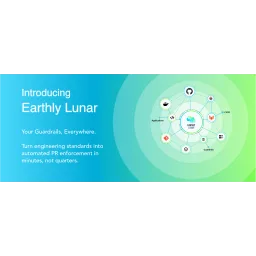

The short version
- Each has a real cost: Earthly pricing model not published; requires sales contact; Vagrant vagrant 2.4.3 and later is licensed under the Business Source License 1.1 with IBM Corporation as licensor, not an OSI open source licence
- They diverge on capability: Earthly covers Policy as code, Vagrant covers Box management.
- Prices and features above were last checked on 30 August 2026.
Where they differ
Only the attributes on which Earthly and Vagrant actually diverge.
Identical on both: starting price (Free), free tier (Yes), user rating (Not yet rated).
What each one covers
Drawn from each product's published feature list. An absence here means we hold no record of it - not that the product lacks it.
Only in Earthly
- Policy as code
- Multi-stage enforcement
- AI agent governance
- Repository-wide policies
- Incident response automation
- Compliance management
- Earthfiles build tool
- Satellites
Only in Vagrant
- Box management
- Provider support
- Multi-machine setups
- Provisioners
- Networking
- Synced folders
- Snapshots
- Plugins
What people use each for
The jobs each tool is most often brought in to do.
Earthly
- Enforcing engineering standards across AI and human developersnot Vagrant
- Automating incident response procedures across all repositoriesnot Vagrant
- Embedding compliance requirements into development workflowsnot Vagrant
- Standardizing build processes with Earthfilesnot Vagrant
Vagrant
- Reproducible local development environments defined in a Vagrantfilenot Earthly
- Provisioning identical VMs across VirtualBox, VMware and Hyper-V for a teamnot Earthly
- Sandboxing multi-machine setups on a developer laptopnot Earthly
Where each one falls short
Documented limitations, not opinions. Every one is a constraint you would hit in normal use.
Earthly
- Pricing model not published; requires sales contact
- Earthly Lunar is a recent launch (2025) with limited track record
- Primarily GitHub-focused; limited integration with other platforms
- No public documentation on pricing or feature tiers
Vagrant
- Vagrant 2.4.3 and later is licensed under the Business Source License 1.1 with IBM Corporation as licensor, not an OSI open source licence
- The Additional Use Grant forbids offering Vagrant to third parties on a hosted or embedded basis in a paid product that competes with IBM's paid versions of Vagrant
- Each version converts to the MPL 2.0 Change License only four years after that version is first published
- Uses that fall outside the Additional Use Grant require a separately negotiated licence from the licensor
Pricing, plan by plan
Earthly
FreeNo published plan breakdown. See the Earthly review.
Vagrant
Free- Open SourceFree
- Development environment provisioning
- Multiple providers
- Provisioner support
Which should you pick?
Choose Earthly if
- You need policy as code.
- You want to start without paying.
- You work on Web, CLI.
- You also want multi-stage enforcement.
Choose Vagrant if
- You need box management.
- You want to start without paying.
- You work on Linux, Windows, Mac.
- You also want provider support.
Questions people ask
- Is Earthly or Vagrant better?
- Neither clearly leads. Earthly starts at Free and Vagrant at Free, and user ratings are close enough to be indistinguishable. Choose on capability and platform support.
- Which is cheaper, Earthly or Vagrant?
- Earthly starts at Free and Vagrant at Free.
- Does Earthly or Vagrant run on more platforms?
- Earthly runs on Web, CLI. Vagrant runs on Linux, Windows, Mac.
- Can I use Earthly for free?
- Both have a free tier, so you can try either at no cost before committing.
- What is Earthly best used for?
- Earthly is most often used for enforcing engineering standards across ai and human developers, automating incident response procedures across all repositories, embedding compliance requirements into development workflows, standardizing build processes with earthfiles. Of those, enforcing engineering standards across ai and human developers and automating incident response procedures across all repositories are not what Vagrant is typically brought in for.
- What can Earthly do that Vagrant cannot?
- Earthly covers Policy as code, Multi-stage enforcement, AI agent governance, Repository-wide policies. Vagrant covers Box management, Provider support, Multi-machine setups, Provisioners.
Answered from the vendors’ own pages
Earthly: What is the difference between Earthfiles and Earthly Lunar?
Earthfiles is an open-source build tool that reached 12,000 GitHub stars and is used by companies like NVIDIA, Intel, and Databricks. Earthly Lunar is a separate governance platform launched in 2025 for enforcing standards across development workflows.
SourceVagrant: Is Vagrant free to use?
Vagrant is a free, open-source command-line utility for managing virtual machine lifecycles.
SourceEarthly: How does Earthly Lunar enforce standards?
Lunar converts engineering standards, compliance requirements, and processes documented in AGENTS.md files, wikis, and incident postmortems into enforceable guardrails that apply consistently across repositories and development stages.
SourceVagrant: Does Vagrant offer a paid tier?
Vagrant itself is free. HashiCorp offers a HCP Vagrant Registry with a free tier for use with Vagrant.
SourceEarthly: What is the pricing for Earthly Lunar?
Pricing is not published on the website. Interested customers should contact Earthly's sales team for current pricing and feature tiers.
SourceRelated pages
Other head to heads
- Earthly vs Spacelift
- Earthly vs Dagger
- Earthly vs Nixpacks
- Earthly vs Cloud Native Buildpacks
- Earthly vs OpsLevel
- Earthly vs Namespace
- Earthly vs Depot
- Earthly vs Blacksmith
- Earthly vs WarpBuild
- Earthly vs Ona (formerly Gitpod)
- Earthly vs Garden
- Earthly vs Nx Cloud
- Earthly vs ConfigCat
- Earthly vs Cortex
- Earthly vs Deep Code
- Earthly vs Deno
- Earthly vs Fig
- Earthly vs DigitalOcean
- Earthly vs Neon
- Earthly vs AWS (Amazon Web Services)
- Earthly vs Grafana Cloud
- Earthly vs Pulumi
- Earthly vs Portworx
- Earthly vs Serverless Framework
- Earthly vs Podman
- Earthly vs Caddy
- Earthly vs Rancher
- Earthly vs Infracost
- Earthly vs Porter
- Earthly vs SST
- Earthly vs Tencent Cloud
- Earthly vs Terragrunt
- Earthly vs Thanos
- Earthly vs Zeabur
- Earthly vs Zipkin
- Vagrant vs Spacelift
- Vagrant vs Dagger
- Vagrant vs Nixpacks
- Vagrant vs Cloud Native Buildpacks
- Vagrant vs OpsLevel
- Vagrant vs Namespace
- Vagrant vs Depot
- Vagrant vs Blacksmith
- Vagrant vs WarpBuild
- Vagrant vs Ona (formerly Gitpod)
- Vagrant vs Garden
- Vagrant vs Nx Cloud
- Vagrant vs ConfigCat
- Vagrant vs Cortex
- Vagrant vs Deep Code
- Vagrant vs Deno
- Vagrant vs Fig
- Vagrant vs DigitalOcean
- Vagrant vs Neon
- Vagrant vs AWS (Amazon Web Services)
- Vagrant vs Grafana Cloud
- Vagrant vs Pulumi
- Vagrant vs Portworx
- Vagrant vs Serverless Framework
- Vagrant vs Podman
- Vagrant vs Caddy
- Vagrant vs Rancher
- Vagrant vs Infracost
- Vagrant vs Porter
- Vagrant vs SST
- Vagrant vs Tencent Cloud
- Vagrant vs Terragrunt
- Vagrant vs Thanos
- Vagrant vs Zeabur
- Vagrant vs Zipkin