
Accounting · head to head
Airwallex vs Lyft
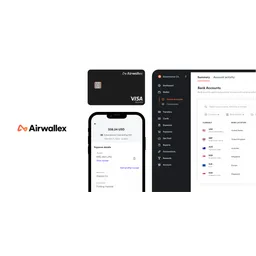
Airwallex
Accounting
Multi currency business accounts, international payments and card issuing from a licensed payments firm rather than a bank
- From
- Free
- Free plan
- Yes

Lyft
Travel
US and Canada focused ride hailing app, the smaller of the two dominant North American ride hailing platforms alongside Uber
- From
- Free
- Free plan
- Yes
The short version
- Lyft is free; Airwallex starts at $12/mo.
- Only Airwallex lists multi currency balances; only Lyft lists on-demand ride hailing.
- Prices and features on this page were last checked on 26 November 2026.
How do Airwallex and Lyft differ?
Airwallex and Lyft differ on pricing model, platforms (Web against iOS, Android, Web) and category (Accounting against Travel). Only the attributes on which Airwallex and Lyft actually diverge.
Identical on both: starting price (Free), free tier (Yes).
Which features does each one have?
They share no listed features; 13 appear only for Airwallex and 6 only for Lyft. Drawn from each product's published feature list. An absence here means we hold no record of it - not that the product lacks it.
Only in Airwallex
- Multi currency balances
- Local receiving accounts
- Foreign exchange conversion
- International payouts
- Card issuing
- Expense management
- Bill pay
- Payments gateway
Only in Lyft
- On-demand ride hailing
- Dynamic pricing
- Lyft Pink membership
- Bike and scooter share
- Lyft Business
- Scheduled rides
What is each one used for?
The jobs each tool is most often brought in to do.
Airwallex
- An exporter invoicing customers in United States dollars and euros who wants to be paid into local details rather than receive wires with correspondent deductionsnot Lyft
- An agency or software company paying contractors across several countries every month and losing money on bank foreign exchange spreadsnot Lyft
- An e-commerce seller collecting on multiple marketplaces in different currencies who wants to hold rather than convert on every settlementnot Lyft
- A startup that needs virtual cards with per subscription limits and cannot get a workable card programme from its local banknot Lyft
Lyft
- A rider in a US or Canadian city wanting to compare fares against Uber for the same trip before bookingnot Airwallex
- A frequent rider who wants Lyft Pink for ongoing ride discounts and priority pickupnot Airwallex
- A business traveller whose company uses Lyft Business for expensed corporate travelnot Airwallex
- Someone in a city with Lyft-operated bike or scooter share wanting an alternative to a car ride for short tripsnot Airwallex
Where do Airwallex and Lyft fall short?
Documented limitations, not opinions. Every one is a constraint you would hit in normal use.
Airwallex
- Airwallex is a licensed payments firm rather than a bank, so balances sit in safeguarding accounts at partner banks and are not covered by deposit guarantee schemes, which means a treasury policy that requires insured deposits cannot hold operating cash there
- Available currencies, local account details, card programmes and product features differ by the entity you contract with, so a feature demonstrated to a customer in Australia or Singapore may simply not exist for the same company registered in another country
- Onboarding is subject to compliance review and whole categories of business are declined or later offboarded, and because the account may hold operating cash, a compliance freeze during a review is a business interruption rather than an inconvenience
- Foreign exchange is quoted as interbank plus a markup, which is cheaper than a high street bank but is still a spread that widens on less liquid pairs and on smaller amounts, so the saving assumed in the business case should be checked against the pairs you actually trade
- Support is largely ticket and chat based with account management reserved for larger customers, so when a payment is stuck the resolution path is a queue rather than a named person, which is a poor fit for time critical settlement
Lyft
- Lyft operates only in the United States and Canada, so it is not an option at all for ride hailing anywhere else in the world, unlike Uber or the regional operators such as Grab or Bolt
- Fares are dynamic and can surge significantly during high demand periods such as bad weather or major events, with no published cap on how high a surge multiplier can go
- Driver availability varies significantly by city and even by neighbourhood or time of day, and in many mid-size markets Lyft has noticeably fewer available drivers than Uber
- Lyft Pink is a recurring subscription that, like most mobile subscriptions, must be cancelled through account settings and auto-renews if forgotten
- Pricing is fully algorithmic with no fixed rate card published anywhere, so estimating a fare in advance requires checking the app itself rather than any external reference
How much do Airwallex and Lyft cost?
Airwallex has a free plan, with paid plans from $12/mo; Lyft is free to use. Plan by plan below, from each vendor's own pricing page.
Airwallex
Free- ExploreFree
- Grow$12/mo
- AccelerateOn request
- Platform APIs and Embedded FinanceOn request
Lyft
Free- LyftFree
- App is free to download; riders pay per trip at dynamic, demand-based fares
- No published flat rate card, fares vary by city, time and route
- Lyft Pink membership optional, roughly $9.99 to $19.99 a month or about $99 a year, for discounts and perks
Which should you pick?
Choose Airwallex if
- You need multi currency balances.
- You want to start without paying.
- You also want local receiving accounts.
Choose Lyft if
- You need on-demand ride hailing.
- You want to start without paying.
- You work on iOS, Android, Web.
- You also want dynamic pricing.
Questions people ask
- Is Airwallex or Lyft better?
- Neither clearly leads. Airwallex starts at Free and Lyft at Free, and user ratings are close enough to be indistinguishable. Choose on capability and platform support.
- Which is cheaper, Airwallex or Lyft?
- Airwallex starts at Free and Lyft at Free.
- Does Airwallex or Lyft run on more platforms?
- Airwallex runs on Web. Lyft runs on iOS, Android, Web.
- Can I use Airwallex for free?
- Both have a free tier, so you can try either at no cost before committing.
- What is Airwallex best used for?
- Airwallex is most often used for an exporter invoicing customers in united states dollars and euros who wants to be paid into local details rather than receive wires with correspondent deductions, an agency or software company paying contractors across several countries every month and losing money on bank foreign exchange spreads, an e-commerce seller collecting on multiple marketplaces in different currencies who wants to hold rather than convert on every settlement, a startup that needs virtual cards with per subscription limits and cannot get a workable card programme from its local bank. Of those, an exporter invoicing customers in united states dollars and euros who wants to be paid into local details rather than receive wires with correspondent deductions and an agency or software company paying contractors across several countries every month and losing money on bank foreign exchange spreads are not what Lyft is typically brought in for.
- What can Airwallex do that Lyft cannot?
- Airwallex covers Multi currency balances, Local receiving accounts, Foreign exchange conversion, International payouts. Lyft covers On-demand ride hailing, Dynamic pricing, Lyft Pink membership, Bike and scooter share.
Answered from the vendors’ own pages
Airwallex: Is Airwallex a bank?
No. It holds payment institution, electronic money or equivalent licences in the markets it serves. Funds are safeguarded at partner banks rather than being deposits, and deposit insurance schemes do not apply.
Lyft: Does Lyft operate outside the US and Canada?
No. Lyft ride hailing is limited to the United States and Canada; it has not expanded internationally, unlike Uber.
Airwallex: Can it replace my business bank account?
For many operating flows it can, but consider what you lose: no deposit protection, no lending relationship, no cash or cheque handling, and some counterparties and government bodies still expect a conventional bank account. Most users run it alongside a bank rather than instead of one.
Lyft: Is Lyft cheaper than Uber?
It varies by city, time and route since both use dynamic pricing; there is no consistent answer, and comparing both apps at the time of booking is the only reliable way to check.
Airwallex: Which countries can open an account?
It serves entities registered in a defined list of markets across Asia Pacific, Europe, the United Kingdom, the Middle East and North America, and the list changes. Check for your specific country of incorporation, because the answer determines both eligibility and feature set.
Lyft: Do I need Lyft Pink to use the app?
No, it is optional and most riders never subscribe. It adds ride discounts and perks on top of standard dynamic fares.
Airwallex: Does it connect to my accounting software?
It integrates with the mainstream cloud ledgers so transactions feed through rather than being imported by hand. Confirm the integration covers all the currencies you hold, since multi currency handling in the ledger is a separate question.
Airwallex: How does the foreign exchange rate compare with a bank?
Materially better than a typical business bank's retail rate on major pairs, because it is quoted as interbank plus a stated markup. The gap narrows on thin currency pairs and small amounts, so test with your real volumes.
Airwallex: Are the cards accepted everywhere?
They are issued on the major networks and behave like ordinary company cards for most spend. Some merchants, particularly for deposits and car hire, treat prepaid style issuance differently, so do not assume parity with a bank credit card.
Related pages
Other head to heads
- Airwallex vs Wise Business
- Airwallex vs RazorpayX
- Airwallex vs QuickBooks
- Airwallex vs Airbase
- Airwallex vs Melio
- Airwallex vs Qonto
- Airwallex vs Payoneer
- Airwallex vs Veem
- Airwallex vs Kodo
- Airwallex vs Sage 50
- Airwallex vs Soldo
- Airwallex vs Plaid
- Airwallex vs Medius Expense
- Airwallex vs Mercury
- Airwallex vs Mesh Payments
- Airwallex vs Netvisor
- Airwallex vs Pennylane
- Airwallex vs Sage Accounting
- Airwallex vs Didi
- Airwallex vs Bolt
- Airwallex vs Careem
- Airwallex vs Grab
- Airwallex vs Ola
- Airwallex vs Cloudbeds
- Airwallex vs PriceLabs
- Airwallex vs ThinkReservations
- Airwallex vs Apaleo
- Airwallex vs Skyscanner
- Airwallex vs Uplisting
- Airwallex vs Egencia
- Airwallex vs Bookinglayer
- Airwallex vs Duetto
- Airwallex vs Redeam
- Airwallex vs Sabre Red 360
- Airwallex vs Spotnana
- Airwallex vs Travelport Smartpoint
- Lyft vs Wise Business
- Lyft vs RazorpayX
- Lyft vs QuickBooks
- Lyft vs Airbase
- Lyft vs Melio
- Lyft vs Qonto
- Lyft vs Payoneer
- Lyft vs Veem
- Lyft vs Kodo
- Lyft vs Sage 50
- Lyft vs Soldo
- Lyft vs Plaid
- Lyft vs Medius Expense
- Lyft vs Mercury
- Lyft vs Mesh Payments
- Lyft vs Netvisor
- Lyft vs Pennylane
- Lyft vs Sage Accounting
- Lyft vs Didi
- Lyft vs Bolt
- Lyft vs Careem
- Lyft vs Grab
- Lyft vs Ola
- Lyft vs Cloudbeds
- Lyft vs PriceLabs
- Lyft vs ThinkReservations
- Lyft vs Apaleo
- Lyft vs Skyscanner
- Lyft vs Uplisting
- Lyft vs Egencia
- Lyft vs Bookinglayer
- Lyft vs Duetto
- Lyft vs Redeam
- Lyft vs Sabre Red 360
- Lyft vs Spotnana
- Lyft vs Travelport Smartpoint