
Developer Tools · head to head
Deno vs JetBrains Rider
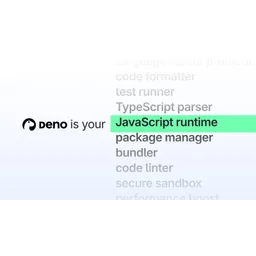
Deno
Developer Tools
A fast, open-source, fully Node-compatible JS runtime with TypeScript baked right in
- From
- Free
- Rated
- -

JetBrains Rider
Developer Tools
Cross-platform .NET IDE from JetBrains for C#, F#, VB.NET and Unity
- From
- $18.25/month
- Rated
- -
The short version
- Only Deno has a free tier, so it costs nothing to try first.
- Each has a real cost: Deno egress bandwidth overage costs $0.20/GB which can become expensive for high-traffic applications; JetBrains Rider requires a paid subscription with no permanently free commercial tier.
- Prices and features above were last checked on 29 August 2026.
Where they differ
Only the attributes on which Deno and JetBrains Rider actually diverge.
| Attribute | Deno | JetBrains Rider |
|---|---|---|
| Starting price | Free | $18.25/month |
| Pricing model | freemium | subscription |
| Free tier | Yes | No |
| Platforms | Web | windows, mac, linux |
| Founded | Unknown | 2000 |
Identical on both: user rating (Not yet rated), category (Developer Tools).
What each one covers
Drawn from each product's published feature list. An absence here means we hold no record of it - not that the product lacks it.
Only in Deno
Nothing recorded that JetBrains Rider does not also cover.
Only in JetBrains Rider
- Cross-platform .NET Development
- ReSharper-powered Code Analysis
- Integrated Debugger and Profiler
- Version Control Integration
- Unity Support
What people use each for
The jobs each tool is most often brought in to do.
Deno
- Running TypeScript natively without transpilation overheadnot JetBrains Rider
- Migrating Node.js applications to secure-by-default runtimenot JetBrains Rider
- Deploying edge functions and serverless containers seamlesslynot JetBrains Rider
- Consolidating developer tools into single binarynot JetBrains Rider
JetBrains Rider
- Cross-platform .NET and ASP.NET Core developmentnot Deno
- Unity game development and debuggingnot Deno
- Large-scale C# refactoring with ReSharper-grade analysisnot Deno
- Teams standardizing on JetBrains tooling across languagesnot Deno
Where each one falls short
Documented limitations, not opinions. Every one is a constraint you would hit in normal use.
Deno
- Egress bandwidth overage costs $0.20/GB which can become expensive for high-traffic applications
- CPU time overage is $0.10/hour on Pro and Builder tiers, adding to costs for compute-intensive workloads
- Enterprise pricing is not disclosed; requires sales contact
JetBrains Rider
- Requires a paid subscription with no permanently free commercial tier.
- Heavier resource usage than lightweight editors like VS Code for small projects.
- Some advanced features overlap with a separate ReSharper Visual Studio plugin, causing licensing confusion.
- First-year pricing increased in late 2025, raising the cost of entry versus prior years.
Pricing, plan by plan
Deno
Free- FreeFree
- 1 million requests/month
- 20GB egress bandwidth
- 10 apps
- Pro$20/month
- 5 million requests/month
- 200GB egress
- 50 apps
- Builder$200/month
- 25 million requests/month
- 2,000GB egress
- 10,000 apps
- Enterprise$null/month
- Custom limits on all metrics
- 99.95% reliability SLA
- Email support with SLA
JetBrains Rider
$18.25/month- Individual - Year 1$219/year
- Full Rider IDE license
- Free minor and major updates during subscription
- Individual - Year 2$175/year
- Continuity discount after first year
- Individual - Year 3+$131/year
- Further continuity discount from third year onward
Which should you pick?
Choose JetBrains Rider if
- You need cross-platform .net development.
- You work on windows, mac, linux.
- You also want resharper-powered code analysis.
Questions people ask
- Is Deno or JetBrains Rider better?
- Neither clearly leads. Deno starts at Free and JetBrains Rider at $18.25/month, and user ratings are close enough to be indistinguishable. Choose on capability and platform support.
- Which is cheaper, Deno or JetBrains Rider?
- Deno has a free tier; the other does not. Paid plans start at Free for Deno and $18.25/month for JetBrains Rider.
- Does Deno or JetBrains Rider run on more platforms?
- Deno runs on Web. JetBrains Rider runs on windows, mac, linux.
- Can I use Deno for free?
- Yes. Deno has a free tier, so you can try it without paying. JetBrains Rider starts at $18.25/month.
- What is Deno best used for?
- Deno is most often used for running typescript natively without transpilation overhead, migrating node.js applications to secure-by-default runtime, deploying edge functions and serverless containers seamlessly, consolidating developer tools into single binary. Of those, running typescript natively without transpilation overhead and migrating node.js applications to secure-by-default runtime are not what JetBrains Rider is typically brought in for.
- What can Deno do that JetBrains Rider cannot?
- JetBrains Rider covers Cross-platform .NET Development, ReSharper-powered Code Analysis, Integrated Debugger and Profiler, Version Control Integration.
Answered from the vendors’ own pages
Deno: How much does Deno Deploy cost?
Deno Deploy offers a free tier at $0/month, Pro at $20/month, and Builder at $200/month. Enterprise has custom pricing. All plans include base request and bandwidth limits, with overage charges for additional usage.
SourceJetBrains Rider: Does Rider have a free version?
JetBrains offers a free non-commercial license for Rider for personal, non-commercial use, alongside paid commercial subscriptions with continuity discounts after the first year.
SourceDeno: What are Deno Deploy's overage charges?
Egress bandwidth overages cost $0.20 per GB. CPU time overages are $0.10 per hour on Pro and Builder tiers. Memory time and KV database operations also incur charges beyond included limits.
SourceJetBrains Rider: What counts as non-commercial use under the free license?
Learning, open-source contributions without commercial benefit, content creation like monetized tutorials, and hobby projects qualify; any paid work or commercial release does not.
SourceDeno: How many apps can I deploy on Deno's free plan?
The free tier includes 10 apps with up to 1 concurrent build. Pro tier supports 50 apps with 3 concurrent builds, and Builder supports 10,000 apps with 20 concurrent builds.
SourceJetBrains Rider: Does the free non-commercial license include all Rider features?
Yes, it is a full-featured IDE identical to the paid version, with one exception: Code With Me is limited to the Community tier instead of the premium tier.
SourceDeno: How many team members can access Deno Deploy?
The free tier supports up to 3 team members. Pro supports 10 team members. Builder supports 25 team members. Enterprise has custom seat limits.
SourceJetBrains Rider: How often does the non-commercial license renew?
It issues a one-year license that renews automatically each year, provided Rider was opened at least once during the preceding six months.
SourceJetBrains Rider: What support do non-commercial license holders get?
Non-commercial users get community forums and public bug trackers rather than private support tickets, which are reserved for paid subscribers.
SourceRelated pages
More on JetBrains Rider
Other head to heads
- Deno vs Turborepo
- Deno vs ESLint
- Deno vs pnpm
- Deno vs Visual Studio Code
- Deno vs Jitsu
- Deno vs Argo CD
- Deno vs Frappe
- Deno vs Git
- Deno vs Restate
- Deno vs Soketi
- Deno vs Keil MDK
- Deno vs Vite
- Deno vs SonarQube
- Deno vs Sourcegraph
- Deno vs Sweep
- Deno vs Visual Studio
- Deno vs Warp
- Deno vs Eclipse IDE
- Deno vs RAD Studio
- Deno vs Penpot
- Deno vs CLion
- Deno vs GNAT Pro
- Deno vs Notepad++
- Deno vs ConfigCat
- Deno vs Cortex
- Deno vs Dagger
- Deno vs Deep Code
- Deno vs Fig
- JetBrains Rider vs Turborepo
- JetBrains Rider vs ESLint
- JetBrains Rider vs pnpm
- JetBrains Rider vs Visual Studio Code
- JetBrains Rider vs Jitsu
- JetBrains Rider vs Argo CD
- JetBrains Rider vs Frappe
- JetBrains Rider vs Git
- JetBrains Rider vs Restate
- JetBrains Rider vs Soketi
- JetBrains Rider vs Keil MDK
- JetBrains Rider vs Vite
- JetBrains Rider vs SonarQube
- JetBrains Rider vs Sourcegraph
- JetBrains Rider vs Sweep
- JetBrains Rider vs Visual Studio
- JetBrains Rider vs Warp
- JetBrains Rider vs Eclipse IDE
- JetBrains Rider vs RAD Studio
- JetBrains Rider vs Penpot
- JetBrains Rider vs CLion
- JetBrains Rider vs GNAT Pro
- JetBrains Rider vs Notepad++
- JetBrains Rider vs ConfigCat
- JetBrains Rider vs Cortex
- JetBrains Rider vs Dagger
- JetBrains Rider vs Deep Code
- JetBrains Rider vs Fig