
Databases · head to head
Chroma vs LaunchDarkly
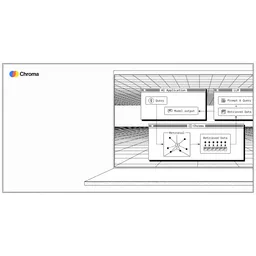
Chroma
Databases
Apache 2.0 vector and full-text search engine that runs as an embedded library, a single server or a distributed cloud service.
- From
- Free
- Free plan
- Yes

The short version
- LaunchDarkly is a feature management platform.
- Free plans on both; paid from $250/mo and $12/mo.
- Only Chroma lists embedded mode; only LaunchDarkly lists feature flags.
- Where LaunchDarkly falls short: pricing scales rapidly with monthly active users, becoming expensive at scale.
- Prices and features on this page were last checked on 13 November 2026.
Where they differ
Only the attributes on which Chroma and LaunchDarkly actually diverge.
| Attribute | Chroma | LaunchDarkly |
|---|---|---|
| Platforms | Web | Web, APIs |
| Category | Databases | Developer Tools |
Identical on both: starting price (Free), free tier (Yes).
Not yet recorded: pricing model for LaunchDarkly, founded for Chroma.
What each one covers
Drawn from each product's published feature list. An absence here means we hold no record of it - not that the product lacks it.
Only in Chroma
- Embedded mode
- Single-node server
- Distributed architecture
- Vector search
- Full-text search
- Metadata filtering
- Consistent API across modes
- Multi-language clients
Only in LaunchDarkly
- Feature flags
- Progressive rollouts
- User targeting
- A/B testing
- Kill switches
- Audit log
- Multi-environment
- SDKs for all platforms
What people use each for
The jobs each tool is most often brought in to do.
Chroma
- Prototyping retrieval-augmented generation where the priority is having a working index in minutes rather than choosing a permanent storenot LaunchDarkly
- Agent memory in a single application process, where an embedded store avoids adding a network dependencynot LaunchDarkly
- A departmental search application under roughly ten million records where one server is sufficient and simplicity is worth more than headroomnot LaunchDarkly
- Local and CI testing of retrieval code with the same client library used in productionnot LaunchDarkly
LaunchDarkly
- Progressive deliverynot Chroma
- Feature experimentationnot Chroma
- Risk mitigationnot Chroma
- Performance optimizationnot Chroma
- Infrastructure migrationnot Chroma
Where each one falls short
Documented limitations, not opinions. Every one is a constraint you would hit in normal use.
Chroma
- On a single node, available memory sets a hard upper bound on collection size, roughly 245,000 records per gigabyte of RAM at 1024 dimensions, so capacity planning is a memory purchase and the ceiling arrives without warning
- Single-node queries parallelise only up to the number of vCPUs, after which requests queue and latency rises linearly with concurrency, so throughput problems appear as a slow application rather than as errors
- The distributed deployment behind Chroma Cloud is a different architecture from the embedded library, so latency, consistency and failure behaviour observed in a local prototype do not predict production behaviour
- The open source server has no built-in authentication or multi-tenancy worth relying on, so a self-hosted deployment needs its own auth proxy and network controls before anything untrusted can reach it
- The project has moved quickly through major internal rewrites and version changes, so upgrades have historically involved data migrations and client changes, and pinning versions is necessary rather than cautious
LaunchDarkly
- Pricing scales rapidly with monthly active users, becoming expensive at scale
- Limited seats for engineers on standard plans, forcing upgrade to enterprise
- Advanced features like experimentation and audit logs require higher-tier plans
- Occasional reliability issues and backend delays reported by users
Pricing, plan by plan
Chroma
Free- StarterFree
- 10 databases
- 10 team members
- Community Slack access
- Team$250/mo
- 100 databases
- 30 team members
- $100 in included credits
- EnterpriseOn request
- Unlimited databases
- Unlimited team members
- Dedicated support
LaunchDarkly
Free- DeveloperFree
- Unlimited seats
- Unlimited feature flags
- A/B tests and experiments
- FoundationOn request
- $12 per connection
- $10 per 1K MAU
- Targeted segmentation
- EnterpriseOn request
- Custom pricing
- Advanced automation
- Compliance features
Which should you pick?
Choose Chroma if
- You need embedded mode.
- You want to start without paying.
- You also want single-node server.
Choose LaunchDarkly if
- You need feature flags.
- You want to start without paying.
- You work on Web, APIs.
- You also want progressive rollouts.
Questions people ask
- Is Chroma or LaunchDarkly better?
- Neither clearly leads. Chroma starts at Free and LaunchDarkly at Free, and user ratings are close enough to be indistinguishable. Choose on capability and platform support.
- Which is cheaper, Chroma or LaunchDarkly?
- Chroma starts at Free and LaunchDarkly at Free.
- Does Chroma or LaunchDarkly run on more platforms?
- Chroma runs on Web. LaunchDarkly runs on Web, APIs.
- Can I use Chroma for free?
- Both have a free tier, so you can try either at no cost before committing.
- What is Chroma best used for?
- Chroma is most often used for prototyping retrieval-augmented generation where the priority is having a working index in minutes rather than choosing a permanent store, agent memory in a single application process, where an embedded store avoids adding a network dependency, a departmental search application under roughly ten million records where one server is sufficient and simplicity is worth more than headroom, local and ci testing of retrieval code with the same client library used in production. Of those, prototyping retrieval-augmented generation where the priority is having a working index in minutes rather than choosing a permanent store and agent memory in a single application process, where an embedded store avoids adding a network dependency are not what LaunchDarkly is typically brought in for.
- What can Chroma do that LaunchDarkly cannot?
- Chroma covers Embedded mode, Single-node server, Distributed architecture, Vector search. LaunchDarkly covers Feature flags, Progressive rollouts, User targeting, A/B testing.
Answered from the vendors’ own pages
Chroma: Do I need to run a server?
No. Chroma runs embedded in your process with persistence to a local directory, which is how most projects start. The server and distributed modes exist for when multiple clients or larger collections require them.
LaunchDarkly: What does the free Developer plan include?
The free Developer plan includes unlimited seats, unlimited feature flags, A/B tests and experiments, 30 SDKs, 10 million logs and traces, 5,000 session replays and errors, and 14 days of data retention.
SourceChroma: How large can a single node get?
The project puts single-node deployments at fewer than about ten million records across a handful of collections, with collection size bounded by system memory at roughly 245,000 records per gigabyte at 1024 dimensions.
LaunchDarkly: How does LaunchDarkly pricing scale?
Foundation plan pricing is $12 per connection plus $10 per 1,000 Monthly Active Users (MAU). Enterprise and Guardian plans have custom pricing based on usage, advanced features, and compliance requirements.
SourceChroma: Is Chroma Cloud the same software?
It is the same API and project, but the distributed deployment is a different architecture, using independent services, object storage and SSD caches rather than a single process. Behaviour under load differs accordingly.
LaunchDarkly: Does LaunchDarkly integrate with Jira and Slack?
Yes, LaunchDarkly integrates with Jira Cloud, allowing you to link feature flags to Jira issues and create issues from observability data. It also integrates with Slack for flag notifications and allows authorized members to trigger flag changes from Slack.
SourceChroma: How does it compare with pgvector?
pgvector keeps vectors in a Postgres database you already operate, with SQL, joins and transactions. Chroma is a dedicated retrieval engine with a lower setup cost and a retrieval-shaped API. If you already run Postgres, pgvector removes a system; if you do not, Chroma removes a decision.
LaunchDarkly: What is dark launching and how does LaunchDarkly enable it?
Dark launching keeps code changes hidden in production until ready to enable. LaunchDarkly enables this through feature flags that let teams safely test code in production before rolling out to users.
SourceChroma: What licence is it under?
Apache 2.0, which permits self-hosting and embedding in commercial products without a competing-use restriction.
Related pages
More on LaunchDarkly
Other head to heads
- Chroma vs DuckDB
- Chroma vs turbopuffer
- Chroma vs Vespa
- Chroma vs Qdrant
- Chroma vs SQLite
- Chroma vs Timeplus
- Chroma vs EMQX
- Chroma vs LanceDB
- Chroma vs Presto
- Chroma vs Zilliz
- Chroma vs Elasticsearch
- Chroma vs Redis
- Chroma vs Apache Pinot
- Chroma vs DataGrip
- Chroma vs Estuary
- Chroma vs Apache Pulsar
- Chroma vs Cassandra
- Chroma vs CouchDB
- Chroma vs ConfigCat
- Chroma vs Terraform
- Chroma vs GitLab
- Chroma vs Jenkins
- Chroma vs Kubernetes
- Chroma vs Moonrepo
- Chroma vs Ansible
- Chroma vs Blacksmith
- Chroma vs Namespace
- Chroma vs OpsLevel
- Chroma vs Docker
- Chroma vs GitHub Copilot
- Chroma vs IAR Embedded Workbench
- Chroma vs Keil MDK
- Chroma vs Nx Cloud
- Chroma vs Pants Build
- Chroma vs Swagger UI
- Chroma vs Buildkite
- LaunchDarkly vs DuckDB
- LaunchDarkly vs turbopuffer
- LaunchDarkly vs Vespa
- LaunchDarkly vs Qdrant
- LaunchDarkly vs SQLite
- LaunchDarkly vs Timeplus
- LaunchDarkly vs EMQX
- LaunchDarkly vs LanceDB
- LaunchDarkly vs Presto
- LaunchDarkly vs Zilliz
- LaunchDarkly vs Elasticsearch
- LaunchDarkly vs Redis
- LaunchDarkly vs Apache Pinot
- LaunchDarkly vs DataGrip
- LaunchDarkly vs Estuary
- LaunchDarkly vs Apache Pulsar
- LaunchDarkly vs Cassandra
- LaunchDarkly vs CouchDB
- LaunchDarkly vs ConfigCat
- LaunchDarkly vs Terraform
- LaunchDarkly vs GitLab
- LaunchDarkly vs Jenkins
- LaunchDarkly vs Kubernetes
- LaunchDarkly vs Moonrepo
- LaunchDarkly vs Ansible
- LaunchDarkly vs Blacksmith
- LaunchDarkly vs Namespace
- LaunchDarkly vs OpsLevel
- LaunchDarkly vs Docker
- LaunchDarkly vs GitHub Copilot
- LaunchDarkly vs IAR Embedded Workbench
- LaunchDarkly vs Keil MDK
- LaunchDarkly vs Nx Cloud
- LaunchDarkly vs Pants Build
- LaunchDarkly vs Swagger UI
- LaunchDarkly vs Buildkite