
Automation Integration · head to head
Airbyte vs HighLevel

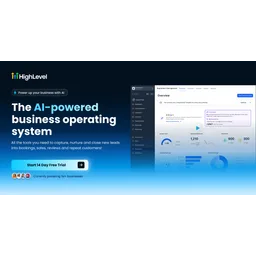
HighLevel
Automation Integration
The all-in-one sales and marketing platform for agencies
- From
- $97/month
- Rated
- -
The short version
- Only Airbyte has a free tier, so it costs nothing to try first.
- Each has a real cost: Airbyte the self-managed open source Core edition has no SSO or RBAC, no multiple workspaces, no row filtering or encryption, and no monitoring integrations; HighLevel enterprise pricing requires contacting sales with no published rates
- Prices and features above were last checked on 30 August 2026.
Where they differ
Only the attributes on which Airbyte and HighLevel actually diverge.
Identical on both: pricing model (subscription), user rating (Not yet rated), category (Automation Integration).
What each one covers
Drawn from each product's published feature list. An absence here means we hold no record of it - not that the product lacks it.
Only in Airbyte
- Data replication
- Schema detection
- ELT pipelines
- Real-time sync
- Data transformation
- Monitoring
- Custom connectors
- 300+ connectors
Only in HighLevel
Nothing recorded that Airbyte does not also cover.
What people use each for
The jobs each tool is most often brought in to do.
Airbyte
- Data integrationnot HighLevel
- ETL operationsnot HighLevel
- API data synchronizationnot HighLevel
- Data warehouse populationnot HighLevel
- Real-time data replicationnot HighLevel
HighLevel
- Freelancers and solo marketers using Starter plannot Airbyte
- Growing agencies managing multiple clients with Unlimited plannot Airbyte
- Agencies offering SaaS solutions to their own clients with Agency Pronot Airbyte
Where each one falls short
Documented limitations, not opinions. Every one is a constraint you would hit in normal use.
Airbyte
- The self-managed open source Core edition has no SSO or RBAC, no multiple workspaces, no row filtering or encryption, and no monitoring integrations
- Sync frequency on Core is limited compared with the managed tiers, which offer 15 minute syncs
- Support on the free tier is community and AI only; premium support requires Pro or Enterprise
- The free Agents plan stops at 1,000 agent operations a month and pauses capacity until the next month once hit
- Agent overages are billed per operation at $0.004 to $0.005 once past the plan allowance
HighLevel
- Enterprise pricing requires contacting sales with no published rates
- Add-ons like AI Employee, White Label Mobile App, and HIPAA Compliance range from $49-$497/month per sub-account or account-wide
Pricing, plan by plan
Airbyte
Free- FreeFree
- 1,000 Agent Operations monthly
- Single user access
- API and MCP access
- Individual$29/month
- 5,000 Agent Operations monthly
- Hourly Context Store refresh
- Standard and AI support
- Team$299/month
- 10,000 Agent Operations monthly
- Parallel workflow execution
- Multiple users
HighLevel
$97/month- Starter$97/month
- 3 Sub-Accounts
- Unlimited Contacts
- Unlimited Users
- Unlimited$297/month
- Unlimited Sub-Accounts
- Unlimited Contacts
- Unlimited Users
- Agency Pro$497/month
- Everything in Unlimited plus
- SaaS Mode
- Automated Sub-Account Creation
- Enterprise$null/custom
- Dedicated account management
- Custom development
- Dedicated Slack channel
Which should you pick?
Choose Airbyte if
- You need data replication.
- You want to start without paying.
- You work on Web, Self-hosted.
- You also want schema detection.
Choose HighLevel if
Nothing in the data separates HighLevel from Airbyte on the points above - pick on price and on how each one feels to use.
Questions people ask
- Is Airbyte or HighLevel better?
- Neither clearly leads. Airbyte starts at Free and HighLevel at $97/month, and user ratings are close enough to be indistinguishable. Choose on capability and platform support.
- Which is cheaper, Airbyte or HighLevel?
- Airbyte has a free tier; the other does not. Paid plans start at Free for Airbyte and $97/month for HighLevel.
- Does Airbyte or HighLevel run on more platforms?
- Airbyte runs on Web, Self-hosted. HighLevel runs on Web.
- Can I use Airbyte for free?
- Yes. Airbyte has a free tier, so you can try it without paying. HighLevel starts at $97/month.
- What is Airbyte best used for?
- Airbyte is most often used for data integration, etl operations, api data synchronization, data warehouse population. Of those, data integration and etl operations are not what HighLevel is typically brought in for.
- What can Airbyte do that HighLevel cannot?
- Airbyte covers Data replication, Schema detection, ELT pipelines, Real-time sync.
Answered from the vendors’ own pages
Airbyte: Is Airbyte free to use?
Yes, Airbyte offers a free tier with 1,000 Agent Operations monthly, single user access, API and MCP support, and community/AI assistance.
SourceHighLevel: How much does GoHighLevel Starter cost?
GoHighLevel Starter costs $97/month (or $970/year when billed annually) and includes 3 Sub-Accounts, unlimited contacts, unlimited users, and all core features with 24/7 support.
SourceAirbyte: What does the Team plan include?
The Team plan costs $299/month and includes 10,000 Agent Operations monthly, parallel workflow execution, multiple users, standard and AI support, with overages charged at $0.005 per AO.
SourceHighLevel: What is the difference between Unlimited and Agency Pro plans?
Unlimited plan ($297/month) offers unlimited sub-accounts and basic API access. Agency Pro ($497/month) adds SaaS Mode, automated sub-account creation, rebill phone/email markup, and advanced API access for reselling.
SourceAirbyte: What happens if I exceed my monthly Agent Operations limit?
Overages are charged at $0.004 per AO on the Individual plan and $0.005 per AO on the Team plan, allowing you to exceed your quota as needed.
SourceHighLevel: Does GoHighLevel offer a free trial?
Yes, GoHighLevel includes a 14-day free trial on all plans with no obligation. You can cancel anytime.
SourceAirbyte: Does Airbyte offer data replication pricing?
Yes. Airbyte Data Replication starts at $10/month on the Standard plan with 600+ connectors. Pro and Enterprise plans use custom capacity-based pricing with Data Workers and dedicated support.
SourceHighLevel: What add-ons are available for GoHighLevel?
GoHighLevel offers multiple add-ons including AI Employee ($50-$97/month), Branded Client Portal ($49/month), Dedicated Email IPs ($59/month per IP), Premium Prospecting Tool ($29/month), SEO via Search Atlas ($79/month), WhatsApp Integration ($10/month), White Label Mobile App ($497/month account-wide), and HIPAA Compliance ($297/month account-wide).
SourceRelated pages
Other head to heads
- Airbyte vs Meltano
- Airbyte vs n8n
- Airbyte vs MuleSoft
- Airbyte vs Mage AI
- Airbyte vs Zapier
- Airbyte vs Microsoft Power Automate
- Airbyte vs RudderStack
- Airbyte vs Grouparoo
- Airbyte vs Hevo Data
- Airbyte vs Fivetran
- Airbyte vs Informatica
- Airbyte vs Stitch
- Airbyte vs Hatchet
- Airbyte vs HighByte Intelligence Hub
- Airbyte vs IBM MQ
- Airbyte vs Tealium
- Airbyte vs Temporal
- Airbyte vs Inngest
- Airbyte vs mParticle
- Airbyte vs Nango
- Airbyte vs Activiti
- Airbyte vs Flowable
- Airbyte vs Orkes
- Airbyte vs Polytomic
- Airbyte vs Relevance AI
- Airbyte vs SnapLogic
- Airbyte vs Salesforce Flows
- HighLevel vs Meltano
- HighLevel vs n8n
- HighLevel vs MuleSoft
- HighLevel vs Mage AI
- HighLevel vs Zapier
- HighLevel vs Microsoft Power Automate
- HighLevel vs RudderStack
- HighLevel vs Grouparoo
- HighLevel vs Hevo Data
- HighLevel vs Fivetran
- HighLevel vs Informatica
- HighLevel vs Stitch
- HighLevel vs Hatchet
- HighLevel vs HighByte Intelligence Hub
- HighLevel vs IBM MQ
- HighLevel vs Tealium
- HighLevel vs Temporal
- HighLevel vs Inngest
- HighLevel vs mParticle
- HighLevel vs Nango
- HighLevel vs Activiti
- HighLevel vs Flowable
- HighLevel vs Orkes
- HighLevel vs Polytomic
- HighLevel vs Relevance AI
- HighLevel vs SnapLogic
- HighLevel vs Salesforce Flows