
Developer Tools · head to head
Garden vs Refact

Garden
Developer Tools
Kubernetes development and testing automation with shared caching, now owned by Incredibuild
- From
- Free
- Rated
- -
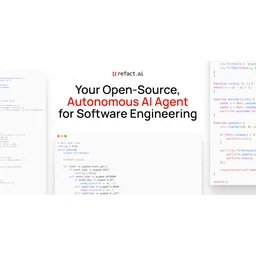
Refact
Developer Tools
Autonomous AI coding agent for development tasks
- From
- Free
- Rated
- -
The short version
- Each has a real cost: Garden incredibuild acquired Garden in November 2024 and the pricing page now redirects to documentation, so there is no public commercial offer and no published roadmap for a team betting a platform on it.; Refact requires configuration for optimal performance
- They diverge on capability: Garden covers Action graph, Refact covers Autonomous agent workflows.
- Prices and features above were last checked on 31 August 2026.
Where they differ
Only the attributes on which Garden and Refact actually diverge.
Identical on both: starting price (Free), free tier (Yes), user rating (Not yet rated), category (Developer Tools).
What each one covers
Drawn from each product's published feature list. An absence here means we hold no record of it - not that the product lacks it.
Only in Garden
- Action graph
- Shared result caching
- Remote Kubernetes environments
- In-cluster builds
- Same config everywhere
- Hot reload sync
- Helm and Kustomize support
- Templating
Only in Refact
- Autonomous agent workflows
- IDE chat
- Real-time code completions
- GitHub integration
- Database integration
- On-premise deployment
- Multi-LLM support
- 25+ language support
What people use each for
The jobs each tool is most often brought in to do.
Garden
- A platform team whose integration test suite takes longer than the coffee break and needs caching to cut the loopnot Refact
- An organisation with thirty or more services on Kubernetes where docker-compose no longer approximates productionnot Refact
- Giving every developer an ephemeral namespace instead of queuing for one shared staging environmentnot Refact
- Running the identical build and test definition locally and in CI so failures reproduce on a laptopnot Refact
Refact
- Autonomous code generation for development tasksnot Garden
- End-to-end bug fixes and refactoringnot Garden
- Multi-language software development accelerationnot Garden
- Enterprise development with data privacy requirementsnot Garden
Where each one falls short
Documented limitations, not opinions. Every one is a constraint you would hit in normal use.
Garden
- Incredibuild acquired Garden in November 2024 and the pricing page now redirects to documentation, so there is no public commercial offer and no published roadmap for a team betting a platform on it.
- It is tightly bound to Kubernetes, so teams running on ECS, Nomad, plain VMs or serverless get little from it and would need a different tool entirely.
- The YAML action graph is a real configuration surface: a large monorepo needs someone to own and maintain Garden config as a first-class artefact, which is a standing platform-engineering cost.
- Shared remote environments mean every developer needs cluster access and a cost allocation model, so cloud spend rises and namespace sprawl becomes a thing you have to police.
- Caching correctness depends on declaring dependencies accurately; an under-declared action will serve a stale cached pass and hide a genuine test failure, which is a hard class of bug to notice.
Refact
- Requires configuration for optimal performance
- On-premise deployment adds operational complexity
- Free tier limited by daily agent request quota
- Coin system adds complexity to cost calculation
Pricing, plan by plan
Garden
Free- Garden open sourceFree
- Apache 2.0 licensed CLI
- Full action graph and caching
- Self-managed clusters
- Commercial tier$undefined/year
- Hosted caching and team features
- Support and onboarding
- Pricing no longer published since the Incredibuild acquisition
Refact
Free- FreeFree
- Limited daily agent usage
- Unlimited completions
- 2,000 coins for agent and chat
- Pro$10/month
- 40 daily agent requests
- 64k context window
- 10,000 coins monthly
- Enterprise$undefined/custom
- On-premise deployment
- Custom coin allocation
- Fine-tuning support
Which should you pick?
Choose Garden if
- You need action graph.
- You want to start without paying.
- You work on Linux, macOS, Windows, Kubernetes.
- You also want shared result caching.
Choose Refact if
- You need autonomous agent workflows.
- You want to start without paying.
- You work on VS Code, Web.
- You also want ide chat.
Questions people ask
- Is Garden or Refact better?
- Neither clearly leads. Garden starts at Free and Refact at Free, and user ratings are close enough to be indistinguishable. Choose on capability and platform support.
- Which is cheaper, Garden or Refact?
- Garden starts at Free and Refact at Free.
- Does Garden or Refact run on more platforms?
- Garden runs on Linux, macOS, Windows, Kubernetes. Refact runs on VS Code, Web.
- Can I use Garden for free?
- Both have a free tier, so you can try either at no cost before committing.
- What is Garden best used for?
- Garden is most often used for a platform team whose integration test suite takes longer than the coffee break and needs caching to cut the loop, an organisation with thirty or more services on kubernetes where docker-compose no longer approximates production, giving every developer an ephemeral namespace instead of queuing for one shared staging environment, running the identical build and test definition locally and in ci so failures reproduce on a laptop. Of those, a platform team whose integration test suite takes longer than the coffee break and needs caching to cut the loop and an organisation with thirty or more services on kubernetes where docker-compose no longer approximates production are not what Refact is typically brought in for.
- What can Garden do that Refact cannot?
- Garden covers Action graph, Shared result caching, Remote Kubernetes environments, In-cluster builds. Refact covers Autonomous agent workflows, IDE chat, Real-time code completions, GitHub integration.
Answered from the vendors’ own pages
Garden: Is Garden still maintained?
The open source project remains on GitHub under Incredibuild ownership, but the commercial pricing page redirects to the docs and there is no public paid offer.
Refact: How many programming languages does Refact support?
Refact supports 25+ programming languages including Python, JavaScript, Go, Rust, Java, C++, and many others.
SourceGarden: Do I need Kubernetes?
Effectively yes. Garden is built around Kubernetes environments and offers little to teams on other runtimes.
Refact: Can I deploy Refact on-premises?
Yes. Refact offers on-premise deployment options for organizations requiring complete data control and privacy.
SourceGarden: Does it replace my CI system?
No. It runs inside GitHub Actions, GitLab CI or similar and speeds up what those pipelines execute.
Refact: What LLMs does Refact support?
Refact works with multiple LLMs including Claude, GPT-4, and open-source models, giving you flexibility in model selection.
SourceGarden: What is the actual saving?
It comes from skipping builds and tests whose inputs have not changed, so the benefit scales with how many services you have and how often only a few change.
Related pages
Other head to heads
- Garden vs Okteto
- Garden vs Depot
- Garden vs Earthly
- Garden vs Ansible
- Garden vs WarpBuild
- Garden vs Nix
- Garden vs Blacksmith
- Garden vs Tilt
- Garden vs Namespace
- Garden vs ConfigCat
- Garden vs OpsLevel
- Garden vs Webpack
- Garden vs Ona (formerly Gitpod)
- Garden vs GNU Emacs
- Garden vs Keil MDK
- Garden vs Vite
- Garden vs Bazel
- Garden vs Daytona
- Garden vs GitHub Copilot
- Garden vs Swagger UI
- Garden vs Sweep
- Garden vs Coder
- Garden vs Deep Code
- Garden vs Pieces for Developers
- Garden vs CodeSandbox
- Garden vs Moonrepo
- Garden vs Pants Build
- Garden vs Atlantis
- Garden vs Backstage
- Garden vs GitLab CI/CD
- Garden vs HCP Terraform
- Garden vs Helm
- Garden vs Jitsu
- Garden vs Notepad++
- Refact vs Okteto
- Refact vs Depot
- Refact vs Earthly
- Refact vs Ansible
- Refact vs WarpBuild
- Refact vs Nix
- Refact vs Blacksmith
- Refact vs Tilt
- Refact vs Namespace
- Refact vs ConfigCat
- Refact vs OpsLevel
- Refact vs Webpack
- Refact vs Ona (formerly Gitpod)
- Refact vs GNU Emacs
- Refact vs Keil MDK
- Refact vs Vite
- Refact vs Bazel
- Refact vs Daytona
- Refact vs GitHub Copilot
- Refact vs Swagger UI
- Refact vs Sweep
- Refact vs Coder
- Refact vs Deep Code
- Refact vs Pieces for Developers
- Refact vs CodeSandbox
- Refact vs Moonrepo
- Refact vs Pants Build
- Refact vs Atlantis
- Refact vs Backstage
- Refact vs GitLab CI/CD
- Refact vs HCP Terraform
- Refact vs Helm
- Refact vs Jitsu
- Refact vs Notepad++