
Developer Tools · head to head
Deno vs Socure
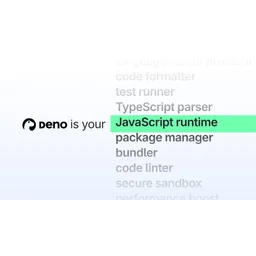
Deno
Developer Tools
A fast, open-source, fully Node-compatible JS runtime with TypeScript baked right in
- From
- Free
- Free plan
- Yes

Socure
Cybersecurity
Predictive identity verification and fraud scoring for the US market
- From
- On request
- Free plan
- No
The short version
- Only Deno has a free tier, so it costs nothing to try first.
- Each has a real cost: Deno egress bandwidth overage costs $0.20/GB which can become expensive for high-traffic applications; Socure coverage and accuracy depend on US consumer data density, so international expansion means adding a second, document-based vendor rather than scaling the same contract.
- Prices and features above were last checked on 1 September 2026.
Where they differ
Only the attributes on which Deno and Socure actually diverge.
Identical on both: user rating (Not yet rated).
What each one covers
Drawn from each product's published feature list. An absence here means we hold no record of it - not that the product lacks it.
Only in Deno
Nothing recorded that Socure does not also cover.
Only in Socure
- ID+ identity verification
- Synthetic identity detection
- Document verification
- Watchlist screening
- Consortium signals
- Reason codes
- Account intelligence
What people use each for
The jobs each tool is most often brought in to do.
Deno
- Running TypeScript natively without transpilation overheadnot Socure
- Migrating Node.js applications to secure-by-default runtimenot Socure
- Deploying edge functions and serverless containers seamlesslynot Socure
- Consolidating developer tools into single binarynot Socure
Socure
- A US lender losing money to synthetic identities that pass document verification and thin-file credit checksnot Deno
- A credit union that wants to open accounts without asking applicants to photograph a driving licencenot Deno
- A government benefits programme needing identity assurance for applicants without in-person enrolmentnot Deno
- A fintech that needs auditable reason codes for every decline to support adverse action noticesnot Deno
Where each one falls short
Documented limitations, not opinions. Every one is a constraint you would hit in normal use.
Deno
- Egress bandwidth overage costs $0.20/GB which can become expensive for high-traffic applications
- CPU time overage is $0.10/hour on Pro and Builder tiers, adding to costs for compute-intensive workloads
- Enterprise pricing is not disclosed; requires sales contact
Socure
- Coverage and accuracy depend on US consumer data density, so international expansion means adding a second, document-based vendor rather than scaling the same contract.
- Data-only verification performs worst on thin-file populations, and young, recently arrived or credit-invisible applicants are declined at higher rates, which creates a fair lending exposure a bank must monitor.
- Pricing is per decision with an annual commitment and is not published, so the cost of a traffic spike or a bot attack on your signup flow lands on your bill.
- Modules for verification, fraud and compliance are licensed separately, so the shortlist price rarely matches the final contract once screening and document fallback are added.
- A probabilistic score is harder to defend to an examiner than a documented identification procedure, so US institutions still have to map the score to explicit Customer Identification Programme controls themselves.
Pricing, plan by plan
Deno
Free- FreeFree
- 1 million requests/month
- 20GB egress bandwidth
- 10 apps
- Pro$20/month
- 5 million requests/month
- 200GB egress
- 50 apps
- Builder$200/month
- 25 million requests/month
- 2,000GB egress
- 10,000 apps
- Enterprise$null/month
- Custom limits on all metrics
- 99.95% reliability SLA
- Email support with SLA
Socure
On request- Socure ID+$undefined/year
- Priced per identity decision with annual commitment
- Modules for verification, fraud and compliance priced separately
- US data coverage strongest, international more limited
Which should you pick?
Choose Socure if
- You need id+ identity verification.
- You work on Web, iOS, Android.
- You also want synthetic identity detection.
Questions people ask
- Is Deno or Socure better?
- Neither clearly leads. Deno starts at Free and Socure at On request, and user ratings are close enough to be indistinguishable. Choose on capability and platform support.
- Which is cheaper, Deno or Socure?
- Deno has a free tier; the other does not. Paid plans start at Free for Deno and On request for Socure.
- Does Deno or Socure run on more platforms?
- Deno runs on Web. Socure runs on Web, iOS, Android.
- Can I use Deno for free?
- Yes. Deno has a free tier, so you can try it without paying. Socure starts at On request.
- What is Deno best used for?
- Deno is most often used for running typescript natively without transpilation overhead, migrating node.js applications to secure-by-default runtime, deploying edge functions and serverless containers seamlessly, consolidating developer tools into single binary. Of those, running typescript natively without transpilation overhead and migrating node.js applications to secure-by-default runtime are not what Socure is typically brought in for.
- What can Deno do that Socure cannot?
- Socure covers ID+ identity verification, Synthetic identity detection, Document verification, Watchlist screening.
Answered from the vendors’ own pages
Deno: How much does Deno Deploy cost?
Deno Deploy offers a free tier at $0/month, Pro at $20/month, and Builder at $200/month. Enterprise has custom pricing. All plans include base request and bandwidth limits, with overage charges for additional usage.
SourceSocure: Does Socure work outside the United States?
International coverage exists but the data depth that makes the US product accurate is not replicated everywhere. Most global buyers pair it with a document vendor.
Deno: What are Deno Deploy's overage charges?
Egress bandwidth overages cost $0.20 per GB. CPU time overages are $0.10 per hour on Pro and Builder tiers. Memory time and KV database operations also incur charges beyond included limits.
SourceSocure: Can it verify without a document photo?
Yes, that is the core proposition. Document verification is available as a step-up when the data-only score is inconclusive.
Deno: How many apps can I deploy on Deno's free plan?
The free tier includes 10 apps with up to 1 concurrent build. Pro tier supports 50 apps with 3 concurrent builds, and Builder supports 10,000 apps with 20 concurrent builds.
SourceSocure: Is pricing published?
No. It is quoted per decision against an annual volume commitment.
Deno: How many team members can access Deno Deploy?
The free tier supports up to 3 team members. Pro supports 10 team members. Builder supports 25 team members. Enterprise has custom seat limits.
SourceRelated pages
Other head to heads
- Deno vs Turborepo
- Deno vs ESLint
- Deno vs pnpm
- Deno vs Visual Studio Code
- Deno vs Jitsu
- Deno vs Argo CD
- Deno vs Git
- Deno vs Soketi
- Deno vs Bazel
- Deno vs Pants Build
- Deno vs Tilt
- Deno vs Dagger
- Deno vs RAD Studio
- Deno vs Refact
- Deno vs Restate
- Deno vs RubyMine
- Deno vs SonarQube
- Deno vs Jumio
- Deno vs Sumsub
- Deno vs Trulioo
- Deno vs Shufti Pro
- Deno vs Veriff
- Deno vs iDenfy
- Deno vs IDnow
- Deno vs Unit21
- Deno vs Sardine
- Deno vs NICE Actimize
- Deno vs Featurespace ARIC Risk Hub
- Deno vs Transmit Security
- Deno vs Semperis
- Deno vs SentinelOne
- Deno vs Signicat
- Deno vs SentinelOne Singularity
- Socure vs Turborepo
- Socure vs ESLint
- Socure vs pnpm
- Socure vs Visual Studio Code
- Socure vs Jitsu
- Socure vs Argo CD
- Socure vs Git
- Socure vs Soketi
- Socure vs Bazel
- Socure vs Pants Build
- Socure vs Tilt
- Socure vs Dagger
- Socure vs RAD Studio
- Socure vs Refact
- Socure vs Restate
- Socure vs RubyMine
- Socure vs SonarQube
- Socure vs Jumio
- Socure vs Sumsub
- Socure vs Trulioo
- Socure vs Shufti Pro
- Socure vs Veriff
- Socure vs iDenfy
- Socure vs IDnow
- Socure vs Unit21
- Socure vs Sardine
- Socure vs NICE Actimize
- Socure vs Featurespace ARIC Risk Hub
- Socure vs Transmit Security
- Socure vs Semperis
- Socure vs SentinelOne
- Socure vs Signicat
- Socure vs SentinelOne Singularity