
AI · head to head
CoreWeave vs Deno

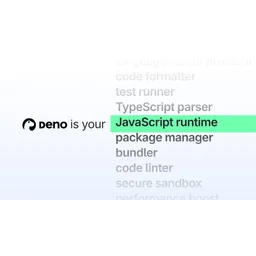
Deno
Developer Tools
A fast, open-source, fully Node-compatible JS runtime with TypeScript baked right in
- From
- Free
- Free plan
- Yes
The short version
- Deno has a free plan, then $20/mo; CoreWeave starts at $0.35/mo.
- Where CoreWeave falls short: GPU nodes are sold as full 8 GPU instances rather than single cards, so the entry cost for an H100 node is $49.24 an hour on demand.
- Where Deno falls short: egress bandwidth overage costs $0.20/GB which can become expensive for high-traffic applications.
- Prices and features on this page were last checked on 13 November 2026.
Where they differ
Only the attributes on which CoreWeave and Deno actually diverge.
Identical on both: platforms (Web).
Not yet recorded: founded for Deno.
What each one covers
Drawn from each product's published feature list. An absence here means we hold no record of it - not that the product lacks it.
Only in CoreWeave
- NVIDIA H100/A100
- Kubernetes native
- High bandwidth
- Object storage
- Kubernetes
- Terraform
- Cloud APIs
- Cloud support
Only in Deno
Nothing recorded that CoreWeave does not also cover.
What people use each for
The jobs each tool is most often brought in to do.
CoreWeave
- Renting GPU compute for model training and inferencenot Deno
- Running large scale AI workloads without buying hardwarenot Deno
Deno
- Running TypeScript natively without transpilation overheadnot CoreWeave
- Migrating Node.js applications to secure-by-default runtimenot CoreWeave
- Deploying edge functions and serverless containers seamlesslynot CoreWeave
- Consolidating developer tools into single binarynot CoreWeave
Where each one falls short
Documented limitations, not opinions. Every one is a constraint you would hit in normal use.
CoreWeave
- GPU nodes are sold as full 8 GPU instances rather than single cards, so the entry cost for an H100 node is $49.24 an hour on demand
- Spot pricing is roughly 40% of on demand, at $19.71 an hour for the same H100 node, so predictable capacity carries a large premium
- The newest hardware carries no published price and requires contacting sales
- Discounts of up to 60% require committed usage agreements negotiated with sales
- Only the GH200 is offered as a single GPU instance
Deno
- Egress bandwidth overage costs $0.20/GB which can become expensive for high-traffic applications
- CPU time overage is $0.10/hour on Pro and Builder tiers, adding to costs for compute-intensive workloads
- Enterprise pricing is not disclosed; requires sales contact
Pricing, plan by plan
CoreWeave
$0.35/per-hour- Standard$0.35/per-hour
- Various GPU types
- Kubernetes
- EnterpriseFree
- Dedicated clusters
- Custom solutions
Deno
Free- FreeFree
- 1 million requests/month
- 20GB egress bandwidth
- 10 apps
- Pro$20/mo
- 5 million requests/month
- 200GB egress
- 50 apps
- Builder$200/mo
- 25 million requests/month
- 2,000GB egress
- 10,000 apps
- EnterpriseOn request
- Custom limits on all metrics
- 99.95% reliability SLA
- Email support with SLA
Which should you pick?
Questions people ask
- Is CoreWeave or Deno better?
- Neither clearly leads. CoreWeave starts at $0.35/per-hour and Deno at Free, and user ratings are close enough to be indistinguishable. Choose on capability and platform support.
- Which is cheaper, CoreWeave or Deno?
- Deno has a free tier; the other does not. Paid plans start at $0.35/per-hour for CoreWeave and Free for Deno.
- Does CoreWeave or Deno run on more platforms?
- Both run on Web, so platform support will not decide this one for you.
- Can I use Deno for free?
- Yes. Deno has a free tier, so you can try it without paying. CoreWeave starts at $0.35/per-hour.
- What is CoreWeave best used for?
- CoreWeave is most often used for renting gpu compute for model training and inference, running large scale ai workloads without buying hardware. Of those, renting gpu compute for model training and inference and running large scale ai workloads without buying hardware are not what Deno is typically brought in for.
- What can CoreWeave do that Deno cannot?
- CoreWeave covers NVIDIA H100/A100, Kubernetes native, High bandwidth, Object storage.
Answered from the vendors’ own pages
CoreWeave: How much does CoreWeave cost?
CoreWeave does not publish pricing on its website. The company uses a quote-based pricing model and directs customers to contact their sales team directly to discuss pricing options and customized solutions.
SourceDeno: How much does Deno Deploy cost?
Deno Deploy offers a free tier at $0/month, Pro at $20/month, and Builder at $200/month. Enterprise has custom pricing. All plans include base request and bandwidth limits, with overage charges for additional usage.
SourceCoreWeave: How can I get a quote from CoreWeave?
To obtain CoreWeave pricing, you must contact their sales team directly through the Contact Us option on their website. They will provide a customized quote based on your specific compute and infrastructure requirements.
SourceDeno: What are Deno Deploy's overage charges?
Egress bandwidth overages cost $0.20 per GB. CPU time overages are $0.10 per hour on Pro and Builder tiers. Memory time and KV database operations also incur charges beyond included limits.
SourceDeno: How many apps can I deploy on Deno's free plan?
The free tier includes 10 apps with up to 1 concurrent build. Pro tier supports 50 apps with 3 concurrent builds, and Builder supports 10,000 apps with 20 concurrent builds.
SourceDeno: How many team members can access Deno Deploy?
The free tier supports up to 3 team members. Pro supports 10 team members. Builder supports 25 team members. Enterprise has custom seat limits.
SourceRelated pages
Other head to heads
- CoreWeave vs Lambda Labs
- CoreWeave vs Modal
- CoreWeave vs RunPod
- CoreWeave vs Banana
- CoreWeave vs Replicate
- CoreWeave vs AI21 Labs
- CoreWeave vs Sourcegraph Cody
- CoreWeave vs Tabnine
- CoreWeave vs Gumloop
- CoreWeave vs Rytr
- CoreWeave vs Anyword
- CoreWeave vs Anthropic API
- CoreWeave vs Helicone
- CoreWeave vs HeyGen
- CoreWeave vs Ideogram
- CoreWeave vs Jasper
- CoreWeave vs LangGraph
- CoreWeave vs Lindy
- CoreWeave vs pnpm
- CoreWeave vs Jitsu
- CoreWeave vs WebStorm
- CoreWeave vs Turborepo
- CoreWeave vs Argo CD
- CoreWeave vs Restate
- CoreWeave vs Frappe
- CoreWeave vs Git
- CoreWeave vs Soketi
- CoreWeave vs LaunchDarkly
- CoreWeave vs Sublime Text
- CoreWeave vs Bazel
- CoreWeave vs Helm
- CoreWeave vs Jenkins
- CoreWeave vs Namespace
- CoreWeave vs Notepad++
- CoreWeave vs Prettier
- CoreWeave vs Rust
- Deno vs Lambda Labs
- Deno vs Modal
- Deno vs RunPod
- Deno vs Banana
- Deno vs Replicate
- Deno vs AI21 Labs
- Deno vs Sourcegraph Cody
- Deno vs Tabnine
- Deno vs Gumloop
- Deno vs Rytr
- Deno vs Anyword
- Deno vs Anthropic API
- Deno vs Helicone
- Deno vs HeyGen
- Deno vs Ideogram
- Deno vs Jasper
- Deno vs LangGraph
- Deno vs Lindy
- Deno vs pnpm
- Deno vs Jitsu
- Deno vs WebStorm
- Deno vs Turborepo
- Deno vs Argo CD
- Deno vs Restate
- Deno vs Frappe
- Deno vs Git
- Deno vs Soketi
- Deno vs LaunchDarkly
- Deno vs Sublime Text
- Deno vs Bazel
- Deno vs Helm
- Deno vs Jenkins
- Deno vs Namespace
- Deno vs Notepad++
- Deno vs Prettier
- Deno vs Rust