
Technology · head to head
Safari vs Vercel
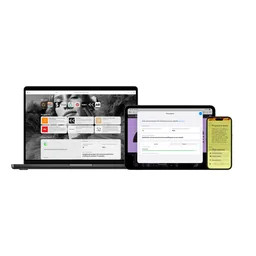
Safari
Technology
Apple's WebKit browser, available only on Apple operating systems and updated only with them.
- From
- Free
- Rated
- -

The short version
- Each has a real cost: Safari it runs only on Apple operating systems; there has been no Windows build since 2012 and none for Linux or Android, so any team that must verify Safari behaviour has to buy Mac hardware or rent it from a device cloud, which is a line item Chrome and Firefox do not create.; Vercel usage-based pricing can spike unexpectedly during traffic surges or DDoS attacks
- They diverge on capability: Safari covers WebKit engine, Vercel covers Instant deployments.
- Prices and features above were last checked on 30 August 2026.
Where they differ
Only the attributes on which Safari and Vercel actually diverge.
Identical on both: starting price (Free), free tier (Yes), user rating (Not yet rated), category (Technology).
What each one covers
Drawn from each product's published feature list. An absence here means we hold no record of it - not that the product lacks it.
Only in Safari
- WebKit engine
- Intelligent Tracking Prevention
- Energy optimisation
- iCloud Private Relay
- Passkeys in iCloud Keychain
- Handoff and tab sync
- Profiles and Tab Groups
- Web Inspector
Only in Vercel
- Instant deployments
- Preview deployments
- Serverless functions
- Edge network
- Automatic HTTPS
- Custom domains
- Git integration
- Real-time collaboration
What people use each for
The jobs each tool is most often brought in to do.
Safari
- Getting the longest battery life out of a MacBook, where the difference against Chromium browsers is hours rather than minutesnot Vercel
- Debugging a site on a real iPhone or iPad, which requires Safari's Web Inspector connected over USB from a Macnot Vercel
- An all-Apple household or team that wants tabs, passwords and passkeys to follow them across devices without a third-party accountnot Vercel
- Privacy-conscious users on iCloud+ who want tracking protection and Private Relay working by default rather than through extensionsnot Vercel
Vercel
- Static sitesnot Safari
- JAMstack applicationsnot Safari
- Serverless APIsnot Safari
- E-commerce sitesnot Safari
- Documentation sitesnot Safari
Where each one falls short
Documented limitations, not opinions. Every one is a constraint you would hit in normal use.
Safari
- It runs only on Apple operating systems; there has been no Windows build since 2012 and none for Linux or Android, so any team that must verify Safari behaviour has to buy Mac hardware or rent it from a device cloud, which is a line item Chrome and Firefox do not create.
- Safari's version is bound to the operating system's version, so a Mac that has fallen off the supported macOS list stops receiving Safari updates altogether; the browser's security life is the machine's OS life, roughly three years of updates after the last major release it can run.
- Distributing an extension means packaging it inside a signed macOS application and shipping it through the App Store with a paid Apple Developer Program membership, which makes a small internal or single-team extension impractical.
- Automated testing uses safaridriver, which runs on macOS only, has no headless mode and permits one session per machine, so Safari coverage in CI means real Macs in the pipeline rather than containers, and it does not parallelise the way Chromium does.
- Web platform features generally land in WebKit later than in Blink and Gecko, so Safari's current support is in practice the compatibility floor for any project, and a feature you can use everywhere else may be a year away here.
- Enterprise management is thin: configuration profiles cover a modest set of settings with nothing comparable to the several hundred administrative policies Chrome and Edge expose, so a managed fleet cannot control Safari to the same degree.
Vercel
- Usage-based pricing can spike unexpectedly during traffic surges or DDoS attacks
- No spending limit controls or automatic shutoff mechanisms
- Bandwidth costs ($0.15/GB) quickly accumulate for high-traffic applications
Pricing, plan by plan
Safari
FreeNo published plan breakdown. See the Safari review.
Vercel
Free- HobbyFree
- Non-commercial use only
- 100GB bandwidth
- Community support
- Pro$20/user/month
- Commercial use
- 1TB bandwidth
- $20 usage credit
- Enterprise$undefined/custom
- Custom infrastructure
- Premium support
- Compliance add-ons
Which should you pick?
Choose Safari if
- You need webkit engine.
- You want to start without paying.
- You also want intelligent tracking prevention.
Choose Vercel if
- You need instant deployments.
- You want to start without paying.
- You work on Web, CLI.
- You also want preview deployments.
Questions people ask
- Is Safari or Vercel better?
- Neither clearly leads. Safari starts at Free and Vercel at Free, and user ratings are close enough to be indistinguishable. Choose on capability and platform support.
- Which is cheaper, Safari or Vercel?
- Safari starts at Free and Vercel at Free.
- Does Safari or Vercel run on more platforms?
- Safari runs on Web. Vercel runs on Web, CLI.
- Can I use Safari for free?
- Both have a free tier, so you can try either at no cost before committing.
- What is Safari best used for?
- Safari is most often used for getting the longest battery life out of a macbook, where the difference against chromium browsers is hours rather than minutes, debugging a site on a real iphone or ipad, which requires safari's web inspector connected over usb from a mac, an all-apple household or team that wants tabs, passwords and passkeys to follow them across devices without a third-party account, privacy-conscious users on icloud+ who want tracking protection and private relay working by default rather than through extensions. Of those, getting the longest battery life out of a macbook, where the difference against chromium browsers is hours rather than minutes and debugging a site on a real iphone or ipad, which requires safari's web inspector connected over usb from a mac are not what Vercel is typically brought in for.
- What can Safari do that Vercel cannot?
- Safari covers WebKit engine, Intelligent Tracking Prevention, Energy optimisation, iCloud Private Relay. Vercel covers Instant deployments, Preview deployments, Serverless functions, Edge network.
Answered from the vendors’ own pages
Safari: Can I run Safari on Windows or Linux?
No. The last Windows version was Safari 5.1.7 in 2012 and it is long unsupported. There has never been a Linux build. Testing Safari requires macOS, either your own or a rented cloud device.
Vercel: What are Vercel's main pricing tiers?
Vercel offers a free Hobby plan (non-commercial), Pro at $20/user/month with $20 usage credit, and Enterprise with custom pricing. Additional compliance add-ons cost $150-$350/month.
SourceSafari: How do I test my site in Safari without a Mac?
Through a cloud device farm such as BrowserStack, Sauce Labs or LambdaTest, which run real macOS and iOS instances. There is no reliable local emulation, because other browsers on Windows and Linux do not use WebKit.
Vercel: How much do bandwidth overages cost on Vercel?
Bandwidth overages cost $0.15/GB after plan limits are exceeded. Hobby plan includes 100GB free bandwidth; Pro includes 1TB. Usage-based billing can cause unexpected bills.
SourceSafari: Are other iPhone browsers really different from Safari?
Historically no: Apple required all iOS browsers to use WebKit, so Chrome and Firefox on iPhone were interface shells around Safari's engine. The EU's Digital Markets Act now permits alternative engines, but adoption is limited, so in practice iOS testing still means WebKit.
Vercel: Is Vercel free for Next.js projects?
Yes, Vercel offers a free Hobby plan for non-commercial Next.js projects with automatic deployments from git. Commercial projects require Pro plan or higher.
SourceSafari: Why does Safari not get a new version on my old Mac?
Safari ships with the operating system. When a Mac can no longer run a macOS version that Apple still updates, Safari stops updating too, including its security fixes.
Vercel: Can I set spending limits on Vercel?
No, Vercel does not offer hard spending caps or automatic shutoff. High traffic, DDoS attacks, or misconfigured functions can result in unexpectedly large bills.
SourceSafari: What does it cost?
Nothing. It is included with Apple operating systems. Private Relay requires an iCloud+ subscription, and publishing an extension requires a paid Apple Developer Program membership.
Vercel: What is included in the Pro plan?
Pro ($20/user/month) includes $20 usage credit, 1TB bandwidth, support for commercial projects, git integration, and preview deployments.
SourceRelated pages
Other head to heads
- Safari vs Microsoft Edge
- Safari vs Mozilla Firefox
- Safari vs Google Chrome
- Safari vs Trino
- Safari vs Apache Spark
- Safari vs GitHub Desktop
- Safari vs ClickUp
- Safari vs Intercom
- Safari vs Monday.com
- Safari vs Maze
- Safari vs PyCharm
- Safari vs MongoDB
- Safari vs Nagios XI
- Safari vs Postgres
- Safari vs Shortcut
- Safari vs Site24x7
- Safari vs Microsoft Outlook
- Safari vs MongoDB Atlas
- Safari vs Netlify
- Safari vs Docker
- Safari vs LaunchDarkly
- Safari vs Asana
- Safari vs Okta
- Safari vs Amplitude
- Safari vs Auth0
- Safari vs Terraform
- Safari vs Pendo
- Safari vs Sublime Text
- Safari vs PagerDuty
- Safari vs Sketch
- Vercel vs Microsoft Edge
- Vercel vs Mozilla Firefox
- Vercel vs Google Chrome
- Vercel vs Trino
- Vercel vs Apache Spark
- Vercel vs GitHub Desktop
- Vercel vs ClickUp
- Vercel vs Intercom
- Vercel vs Monday.com
- Vercel vs Maze
- Vercel vs PyCharm
- Vercel vs MongoDB
- Vercel vs Nagios XI
- Vercel vs Postgres
- Vercel vs Shortcut
- Vercel vs Site24x7
- Vercel vs Microsoft Outlook
- Vercel vs MongoDB Atlas
- Vercel vs Netlify
- Vercel vs Docker
- Vercel vs LaunchDarkly
- Vercel vs Asana
- Vercel vs Okta
- Vercel vs Amplitude
- Vercel vs Auth0
- Vercel vs Terraform
- Vercel vs Pendo
- Vercel vs Sublime Text
- Vercel vs PagerDuty
- Vercel vs Sketch