
Developer Tools · head to head
Refact vs Earthly
Refact
Developer Tools
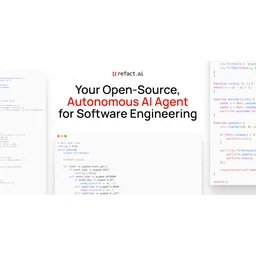
Autonomous AI coding agent for development tasks
- From
- Free
- Rated
- -
The short version
- Each has a real cost: Refact requires configuration for optimal performance; Earthly pricing model not published; requires sales contact
- They diverge on capability: Refact covers Autonomous agent workflows, Earthly covers Policy as code.
Where they differ
Only the attributes on which Refact and Earthly actually diverge.
Identical on both: starting price (Free), free tier (Yes), user rating (Not yet rated), category (Developer Tools).
What each one covers
Drawn from each product's published feature list. An absence here means we hold no record of it - not that the product lacks it.
Only in Refact
- Autonomous agent workflows
- IDE chat
- Real-time code completions
- GitHub integration
- Database integration
- On-premise deployment
- Multi-LLM support
- 25+ language support
Only in Earthly
- Policy as code
- Multi-stage enforcement
- AI agent governance
- Repository-wide policies
- Incident response automation
- Compliance management
- Earthfiles build tool
- Satellites
What people use each for
The jobs each tool is most often brought in to do.
Refact
- Autonomous code generation for development tasksnot Earthly
- End-to-end bug fixes and refactoringnot Earthly
- Multi-language software development accelerationnot Earthly
- Enterprise development with data privacy requirementsnot Earthly
Earthly
- Enforcing engineering standards across AI and human developersnot Refact
- Automating incident response procedures across all repositoriesnot Refact
- Embedding compliance requirements into development workflowsnot Refact
- Standardizing build processes with Earthfilesnot Refact
Where each one falls short
Documented limitations, not opinions. Every one is a constraint you would hit in normal use.
Refact
- Requires configuration for optimal performance
- On-premise deployment adds operational complexity
- Free tier limited by daily agent request quota
- Coin system adds complexity to cost calculation
Earthly
- Pricing model not published; requires sales contact
- Earthly Lunar is a recent launch (2025) with limited track record
- Primarily GitHub-focused; limited integration with other platforms
- No public documentation on pricing or feature tiers
Pricing, plan by plan
Refact
Free- FreeFree
- Limited daily agent usage
- Unlimited completions
- 2,000 coins for agent and chat
- Pro$10/month
- 40 daily agent requests
- 64k context window
- 10,000 coins monthly
- Enterprise$undefined/custom
- On-premise deployment
- Custom coin allocation
- Fine-tuning support
Earthly
FreeNo published plan breakdown. See the Earthly review.
Which should you pick?
Choose Refact if
- You need autonomous agent workflows.
- You want to start without paying.
- You work on VS Code, Web.
- You also want ide chat.
Choose Earthly if
- You need policy as code.
- You want to start without paying.
- You work on Web, CLI.
- You also want multi-stage enforcement.
Questions people ask
- Is Refact or Earthly better?
- Neither clearly leads. Refact starts at Free and Earthly at Free, and user ratings are close enough to be indistinguishable. Choose on capability and platform support.
- Which is cheaper, Refact or Earthly?
- Refact starts at Free and Earthly at Free.
- Does Refact or Earthly run on more platforms?
- Refact runs on VS Code, Web. Earthly runs on Web, CLI.
- Can I use Refact for free?
- Both have a free tier, so you can try either at no cost before committing.
- What is Refact best used for?
- Refact is most often used for autonomous code generation for development tasks, end-to-end bug fixes and refactoring, multi-language software development acceleration, enterprise development with data privacy requirements. Of those, autonomous code generation for development tasks and end-to-end bug fixes and refactoring are not what Earthly is typically brought in for.
- What can Refact do that Earthly cannot?
- Refact covers Autonomous agent workflows, IDE chat, Real-time code completions, GitHub integration. Earthly covers Policy as code, Multi-stage enforcement, AI agent governance, Repository-wide policies.
Answered from the vendors’ own pages
Refact: How many programming languages does Refact support?
Refact supports 25+ programming languages including Python, JavaScript, Go, Rust, Java, C++, and many others.
SourceEarthly: What is the difference between Earthfiles and Earthly Lunar?
Earthfiles is an open-source build tool that reached 12,000 GitHub stars and is used by companies like NVIDIA, Intel, and Databricks. Earthly Lunar is a separate governance platform launched in 2025 for enforcing standards across development workflows.
SourceRefact: Can I deploy Refact on-premises?
Yes. Refact offers on-premise deployment options for organizations requiring complete data control and privacy.
SourceEarthly: How does Earthly Lunar enforce standards?
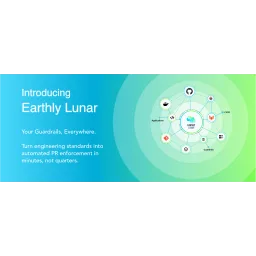
Lunar converts engineering standards, compliance requirements, and processes documented in AGENTS.md files, wikis, and incident postmortems into enforceable guardrails that apply consistently across repositories and development stages.
SourceRefact: What LLMs does Refact support?
Refact works with multiple LLMs including Claude, GPT-4, and open-source models, giving you flexibility in model selection.
SourceEarthly: What is the pricing for Earthly Lunar?
Pricing is not published on the website. Interested customers should contact Earthly's sales team for current pricing and feature tiers.
SourceRelated pages
Other head to heads
- Refact vs Visual Studio Code
- Refact vs ESLint
- Refact vs pnpm
- Refact vs Turborepo
- Refact vs GitHub Copilot
- Refact vs Penpot
- Refact vs Keycloak
- Refact vs Rust
- Refact vs CLion
- Refact vs GNAT Pro
- Refact vs IAR Embedded Workbench
- Refact vs GNU Emacs
- Refact vs Keil MDK
- Refact vs Vite
- Refact vs Bazel
- Refact vs CodeSandbox
- Refact vs Eclipse IDE
- Refact vs Moonrepo
- Earthly vs Visual Studio Code
- Earthly vs ESLint
- Earthly vs pnpm
- Earthly vs Turborepo
- Earthly vs GitHub Copilot
- Earthly vs Penpot
- Earthly vs Keycloak
- Earthly vs Rust
- Earthly vs CLion
- Earthly vs GNAT Pro
- Earthly vs IAR Embedded Workbench
- Earthly vs GNU Emacs
- Earthly vs Keil MDK
- Earthly vs Vite
- Earthly vs Bazel
- Earthly vs CodeSandbox
- Earthly vs Eclipse IDE
- Earthly vs Moonrepo