
APIs · head to head
Portkey vs Qdrant
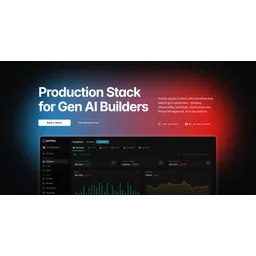
Portkey
APIs
Observe, govern, and secure every AI interaction across your enterprise
- From
- On request
- Free plan
- No

Qdrant
Databases
High-performance vector database for similarity search and embedding-based retrieval
- From
- Free
- Free plan
- Yes
The short version
- Qdrant is an open-source vector search engine.
- Qdrant is free; Portkey prices on request.
- Where Qdrant falls short: free tier extremely limited (0.5 vCPU, 1GB RAM, 4GB disk); suitable only for experiments.
- Prices and features on this page were last checked on 20 November 2026.
How do Portkey and Qdrant differ?
Portkey and Qdrant differ on starting price (On request against Free), free tier (No against Yes) and platforms. Only the attributes on which Portkey and Qdrant actually diverge.
Not yet recorded: pricing model for Portkey, founded for Portkey.
What is each one used for?
Portkey is most often brought in for accessing 1,600+ language models through unified API gateway; Qdrant for retrieval-augmented generation (RAG) backends for LLM applications. The jobs each tool is most often brought in to do.
Portkey
- Accessing 1,600+ language models through unified API gatewaynot Qdrant
- Monitoring and observing LLM behavior in production environmentsnot Qdrant
- Managing costs and setting budget limits for AI spendingnot Qdrant
- Implementing guardrails and PII redaction for secure AI interactionsnot Qdrant
Qdrant
- Retrieval-augmented generation (RAG) backends for LLM applicationsnot Portkey
- Semantic search across large document corporanot Portkey
- Multimodal retrieval (text, images, video) for recommendation systemsnot Portkey
- Similarity-based product or content recommendationsnot Portkey
- Real-time vector indexing for streaming embedding datanot Portkey
Where do Portkey and Qdrant fall short?
Qdrant's most cited limit: free tier extremely limited (0.5 vCPU, 1GB RAM, 4GB disk); suitable only for experiments. Documented limitations, not opinions. Every one is a constraint you would hit in normal use.
Portkey
- The free Developer tier records only 10,000 logs per month with 3 day log retention; the $49 per month Production tier raises that to 100,000 logs with $9 per additional 100,000 requests, as of August 2026
- The product is now sold to enterprises as Palo Alto Networks' Prisma AIRS AI Gateway, and the old pricing page redirects to Palo Alto content
Qdrant
- Free tier extremely limited (0.5 vCPU, 1GB RAM, 4GB disk); suitable only for experiments
- Standard and Premium pricing usage-based; specific costs not published; requires calculator or quote
- Requires understanding of embeddings and vector search concepts; not suitable for SQL-only teams
- Early-stage serverless offering (coming soon) suggests maturity gaps in that deployment model
How much do Portkey and Qdrant cost?
Qdrant is free to use. Plan by plan below, from each vendor's own pricing page.
Portkey
On requestNo published plan breakdown. See the Portkey review.
Qdrant
Free- FreeFree
- Single-node cluster
- 0.5 vCPU
- 1GB RAM
- StandardOn request
- Dedicated resources
- Flexible scaling
- High availability
- PremiumOn request
- SSO and SAML
- Private VPC links
- 99.9% uptime SLA
Which should you pick?
Choose Portkey if
Nothing in the data separates Portkey from Qdrant on the points above - pick on price and on how each one feels to use.
Choose Qdrant if
- You want to start without paying.
- You work on Web, Self-hosted, Browser extension, Serverless (coming).
Questions people ask
- Is Portkey or Qdrant better?
- Neither clearly leads. Portkey starts at On request and Qdrant at Free, and user ratings are close enough to be indistinguishable. Choose on capability and platform support.
- Which is cheaper, Portkey or Qdrant?
- Qdrant has a free tier; the other does not. Paid plans start at On request for Portkey and Free for Qdrant.
- Does Portkey or Qdrant run on more platforms?
- Portkey runs on Web. Qdrant runs on Web, Self-hosted, Browser extension, Serverless (coming).
- Can I use Qdrant for free?
- Yes. Qdrant has a free tier, so you can try it without paying. Portkey starts at On request.
- What is Portkey best used for?
- Portkey is most often used for accessing 1,600+ language models through unified api gateway, monitoring and observing llm behavior in production environments, managing costs and setting budget limits for ai spending, implementing guardrails and pii redaction for secure ai interactions. Of those, accessing 1,600+ language models through unified api gateway and monitoring and observing llm behavior in production environments are not what Qdrant is typically brought in for.
Answered from the vendors’ own pages
Portkey: What happens if I exceed my Portkey plan's request limit?
Production tier ($49/month) charges $9 per additional 100,000 requests beyond the included 100,000. Enterprise customers have custom limits determined through their service agreement. Source: https://portkey.ai/pricing
SourceQdrant: Can I use Qdrant for free?
Yes, Qdrant offers a free tier that provides a single node cluster with 0.5 vCPU, 1GB RAM, and 4GB disk space. It includes free cloud inference with selected models and is described as free forever for testing and prototypes.
SourcePortkey: Can I self-host Portkey to avoid per-request billing?
Yes. Portkey offers an Open Source self-hosted version with unlimited requests at no cost, including universal API, routing, guardrails, and load balancing features. Source: https://portkey.ai/pricing
SourceQdrant: How is Qdrant Cloud billing calculated?
Billing is calculated based on actual resource usage during each billing period. You are charged hourly for compute (vCPU), memory (GB), storage (GB), backups, and any paid inference tokens used.
SourcePortkey: How long does Portkey retain my logs and metrics?
Free Developer tier retains logs 3 days and metrics 30 days. Production tier retains logs 30 days and metrics 90 days. Enterprise tier offers custom retention periods. Source: https://portkey.ai/pricing
SourceQdrant: What happens if I scale beyond the free tier?
The Standard Tier uses the same usage-based billing model as the free tier but adds features like dedicated resources with flexible scaling, highly available setups with backup and disaster recovery, and a 99.5% uptime SLA.
SourcePortkey: What compliance features are included in the Enterprise plan?
Enterprise tier includes SOC2 Type 2 certification, GDPR compliance, HIPAA compliance, VPC hosting, SSO, advanced guardrails, and dedicated support. Custom pricing required. Source: https://portkey.ai/pricing
SourceQdrant: What SLA does Qdrant offer?
The Standard Tier provides 99.5% uptime SLA. The Premium Tier, which requires a minimum spend for enterprises, offers 99.9% uptime SLA along with single sign-on and private VPC links.
SourceQdrant: Are there dedicated cloud infrastructure options?
Yes, Qdrant offers Hybrid Cloud (runs on your infrastructure) and Private Cloud (complete isolation) options, both with custom pricing that requires contacting the sales team.
SourceRelated pages
Other head to heads
- Portkey vs LiteLLM
- Portkey vs Kong Gateway
- Portkey vs Tink
- Portkey vs Apigee
- Portkey vs AWS API Gateway
- Portkey vs WSO2 API Manager
- Portkey vs Treblle
- Portkey vs Volt
- Portkey vs 3scale
- Portkey vs Akana
- Portkey vs TrueLayer
- Portkey vs Mambu
- Portkey vs Fintech Farm
- Portkey vs Formance
- Portkey vs GraphQL Playground
- Portkey vs IBM API Connect
- Portkey vs Janus Gateway
- Portkey vs Method Financial
- Portkey vs Zilliz
- Portkey vs Chroma
- Portkey vs Vespa
- Portkey vs LanceDB
- Portkey vs turbopuffer
- Portkey vs YugabyteDB
- Portkey vs NATS
- Portkey vs QuestDB
- Portkey vs Cockroach Labs
- Portkey vs Elasticsearch
- Portkey vs DynamoDB
- Portkey vs Couchbase
- Portkey vs Apache Hadoop
- Portkey vs Cloudinary
- Portkey vs etcd
- Portkey vs Fivetran HVR
- Portkey vs Marqo
- Portkey vs Nile
- Qdrant vs LiteLLM
- Qdrant vs Kong Gateway
- Qdrant vs Tink
- Qdrant vs Apigee
- Qdrant vs AWS API Gateway
- Qdrant vs WSO2 API Manager
- Qdrant vs Treblle
- Qdrant vs Volt
- Qdrant vs 3scale
- Qdrant vs Akana
- Qdrant vs TrueLayer
- Qdrant vs Mambu
- Qdrant vs Fintech Farm
- Qdrant vs Formance
- Qdrant vs GraphQL Playground
- Qdrant vs IBM API Connect
- Qdrant vs Janus Gateway
- Qdrant vs Method Financial
- Qdrant vs Zilliz
- Qdrant vs Chroma
- Qdrant vs Vespa
- Qdrant vs LanceDB
- Qdrant vs turbopuffer
- Qdrant vs YugabyteDB
- Qdrant vs NATS
- Qdrant vs QuestDB
- Qdrant vs Cockroach Labs
- Qdrant vs Elasticsearch
- Qdrant vs DynamoDB
- Qdrant vs Couchbase
- Qdrant vs Apache Hadoop
- Qdrant vs Cloudinary
- Qdrant vs etcd
- Qdrant vs Fivetran HVR
- Qdrant vs Marqo
- Qdrant vs Nile