
Developer Tools · head to head
Deno vs Tenable Nessus
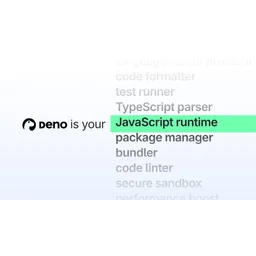
Deno
Developer Tools
A fast, open-source, fully Node-compatible JS runtime with TypeScript baked right in
- From
- Free
- Free plan
- Yes

The short version
- Each has a real cost: Deno egress bandwidth overage costs $0.20/GB which can become expensive for high-traffic applications; Tenable Nessus nessus Professional is $4,790 for one year, sold as an annual licence rather than a per scan or usage based fee
- Prices and features above were last checked on 30 August 2026.
Where they differ
Only the attributes on which Deno and Tenable Nessus actually diverge.
| Attribute | Deno | Tenable Nessus |
|---|---|---|
| Pricing model | freemium | subscription |
| Platforms | Web | Windows, Linux, Macos, Cloud |
| Category | Developer Tools | Cybersecurity |
| Founded | Unknown | 2002 |
Identical on both: starting price (Free), free tier (Yes), user rating (Not yet rated).
What each one covers
Drawn from each product's published feature list. An absence here means we hold no record of it - not that the product lacks it.
Only in Deno
Nothing recorded that Tenable Nessus does not also cover.
Only in Tenable Nessus
- Network scanning
- Vulnerability detection
- Configuration assessment
- Malware detection
- Compliance checking
- Cloud security assessment
- Mobile scanning
- API access
What people use each for
The jobs each tool is most often brought in to do.
Deno
- Running TypeScript natively without transpilation overheadnot Tenable Nessus
- Migrating Node.js applications to secure-by-default runtimenot Tenable Nessus
- Deploying edge functions and serverless containers seamlesslynot Tenable Nessus
- Consolidating developer tools into single binarynot Tenable Nessus
Tenable Nessus
- Vulnerability scanning of servers, network devices and web applicationsnot Deno
- Configuration and compliance auditing against hardening benchmarksnot Deno
- Point in time assessments by consultants and penetration testersnot Deno
Where each one falls short
Documented limitations, not opinions. Every one is a constraint you would hit in normal use.
Deno
- Egress bandwidth overage costs $0.20/GB which can become expensive for high-traffic applications
- CPU time overage is $0.10/hour on Pro and Builder tiers, adding to costs for compute-intensive workloads
- Enterprise pricing is not disclosed; requires sales contact
Tenable Nessus
- Nessus Professional is $4,790 for one year, sold as an annual licence rather than a per scan or usage based fee
- Support beyond the base entitlement costs an extra $400 per year for Advanced Support with 24x365 phone and chat access
- The on demand training course is a separate $275 purchase for a single person for one year
- Multi year discounts require paying for two or three years up front
Pricing, plan by plan
Deno
Free- FreeFree
- 1 million requests/month
- 20GB egress bandwidth
- 10 apps
- Pro$20/month
- 5 million requests/month
- 200GB egress
- 50 apps
- Builder$200/month
- 25 million requests/month
- 2,000GB egress
- 10,000 apps
- Enterprise$null/month
- Custom limits on all metrics
- 99.95% reliability SLA
- Email support with SLA
Tenable Nessus
Free- Nessus EssentialsFree
- Up to 16 ips
- Network scanning
- Vulnerability assessment
- Nessus Professional$2600/year
- Unlimited targets
- Enterprise features
- Advanced analytics
- Nessus Expert$5200/year
- All Professional features
- Cloud integration
- Advanced reporting
Which should you pick?
Choose Tenable Nessus if
- You need network scanning.
- You want to start without paying.
- You work on Windows, Linux, Macos, Cloud.
- You also want vulnerability detection.
Questions people ask
- Is Deno or Tenable Nessus better?
- Neither clearly leads. Deno starts at Free and Tenable Nessus at Free, and user ratings are close enough to be indistinguishable. Choose on capability and platform support.
- Which is cheaper, Deno or Tenable Nessus?
- Deno starts at Free and Tenable Nessus at Free.
- Does Deno or Tenable Nessus run on more platforms?
- Deno runs on Web. Tenable Nessus runs on Windows, Linux, Macos, Cloud.
- Can I use Deno for free?
- Both have a free tier, so you can try either at no cost before committing.
- What is Deno best used for?
- Deno is most often used for running typescript natively without transpilation overhead, migrating node.js applications to secure-by-default runtime, deploying edge functions and serverless containers seamlessly, consolidating developer tools into single binary. Of those, running typescript natively without transpilation overhead and migrating node.js applications to secure-by-default runtime are not what Tenable Nessus is typically brought in for.
- What can Deno do that Tenable Nessus cannot?
- Tenable Nessus covers Network scanning, Vulnerability detection, Configuration assessment, Malware detection.
Answered from the vendors’ own pages
Deno: How much does Deno Deploy cost?
Deno Deploy offers a free tier at $0/month, Pro at $20/month, and Builder at $200/month. Enterprise has custom pricing. All plans include base request and bandwidth limits, with overage charges for additional usage.
SourceTenable Nessus: What are the three Nessus offerings?
Nessus Essentials is a free introductory offering for educators, students, and career starters, limited to 16 IPs for scanning. Nessus Professional is designed for consultants and SMBs, providing unlimited IT scans across any location. Nessus Expert is the premium offering extending Professional with web application scanning, infrastructure-as-code scanning, and external attack surface assessment up to 5 domains.
SourceDeno: What are Deno Deploy's overage charges?
Egress bandwidth overages cost $0.20 per GB. CPU time overages are $0.10 per hour on Pro and Builder tiers. Memory time and KV database operations also incur charges beyond included limits.
SourceTenable Nessus: What OS platforms does Nessus support?
Nessus runs on Debian/Kali Linux, Fedora, FreeBSD, Mac OS X, Red Hat/CentOS, SUSE Linux, Ubuntu, and various Windows versions including Server 2008, 2012, and Windows 7-10.
SourceDeno: How many apps can I deploy on Deno's free plan?
The free tier includes 10 apps with up to 1 concurrent build. Pro tier supports 50 apps with 3 concurrent builds, and Builder supports 10,000 apps with 20 concurrent builds.
SourceTenable Nessus: Can I use Nessus to scan third-party networks as a consultant?
Yes, Tenable permits you to use Nessus to scan third-party networks. Nessus Professional is ideal for consultants.
SourceDeno: How many team members can access Deno Deploy?
The free tier supports up to 3 team members. Pro supports 10 team members. Builder supports 25 team members. Enterprise has custom seat limits.
SourceTenable Nessus: Can Nessus perform PCI external scanning?
Yes, you can use Nessus Professional to perform external network scans as required by the PCI DSS 11.2.2 requirement.
SourceTenable Nessus: What additional features does Nessus Expert provide?
Web application scanning, which is dynamic application security testing (DAST) providing comprehensive visibility and insight into web application security issues; scanning code repositories for vulnerabilities; and assessing external attack surface with subdomain discovery.
SourceTenable Nessus: What support options exist for Nessus Professional?
Standard Support includes software upgrades, patches, plugin access, and 24x7 support via chat and community portal. Advanced Support adds 24x7 phone access and committed SLAs: P1 less than 2 hours, P2 less than 4 hours, P3 less than 12 hours, P4 less than 24 hours.
SourceTenable Nessus: How frequently are Nessus plugins updated?
Nessus plugins are updated daily, based on when vendors and security research sites publish new vulnerabilities.
SourceTenable Nessus: How does licensing work in virtual machine environments?
Whether you are using Nessus in a physical or a virtual environment, the IP addresses or hosts that you are scanning from must be licensed.
SourceRelated pages
More on Tenable Nessus
Other head to heads
- Deno vs Turborepo
- Deno vs ESLint
- Deno vs pnpm
- Deno vs Visual Studio Code
- Deno vs Jitsu
- Deno vs Argo CD
- Deno vs Git
- Deno vs Soketi
- Deno vs Bazel
- Deno vs Pants Build
- Deno vs Tilt
- Deno vs Dagger
- Deno vs RAD Studio
- Deno vs Refact
- Deno vs Restate
- Deno vs RubyMine
- Deno vs SonarQube
- Deno vs 1Password
- Deno vs Bitdefender Total Security
- Deno vs Norton 360
- Deno vs LastPass
- Deno vs Fortinet FortiGate
- Deno vs Darktrace
- Deno vs Qualys VMDR
- Deno vs Acunetix
- Deno vs Rapid7 InsightVM
- Deno vs Recorded Future
- Deno vs Private Internet Access
- Deno vs Microsoft Defender for Endpoint
- Deno vs Unit21
- Deno vs Veracode
- Deno vs Very Good Security
- Deno vs VIVOTEK VAST Security Station
- Deno vs Windscribe
- Deno vs Yoti
- Tenable Nessus vs Turborepo
- Tenable Nessus vs ESLint
- Tenable Nessus vs pnpm
- Tenable Nessus vs Visual Studio Code
- Tenable Nessus vs Jitsu
- Tenable Nessus vs Argo CD
- Tenable Nessus vs Git
- Tenable Nessus vs Soketi
- Tenable Nessus vs Bazel
- Tenable Nessus vs Pants Build
- Tenable Nessus vs Tilt
- Tenable Nessus vs Dagger
- Tenable Nessus vs RAD Studio
- Tenable Nessus vs Refact
- Tenable Nessus vs Restate
- Tenable Nessus vs RubyMine
- Tenable Nessus vs SonarQube
- Tenable Nessus vs 1Password
- Tenable Nessus vs Bitdefender Total Security
- Tenable Nessus vs Norton 360
- Tenable Nessus vs LastPass
- Tenable Nessus vs Fortinet FortiGate
- Tenable Nessus vs Darktrace
- Tenable Nessus vs Qualys VMDR
- Tenable Nessus vs Acunetix
- Tenable Nessus vs Rapid7 InsightVM
- Tenable Nessus vs Recorded Future
- Tenable Nessus vs Private Internet Access
- Tenable Nessus vs Microsoft Defender for Endpoint
- Tenable Nessus vs Unit21
- Tenable Nessus vs Veracode
- Tenable Nessus vs Very Good Security
- Tenable Nessus vs VIVOTEK VAST Security Station
- Tenable Nessus vs Windscribe
- Tenable Nessus vs Yoti