
Developer Tools · head to head
Deno vs Semantic Kernel
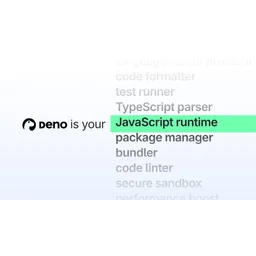
Deno
Developer Tools
A fast, open-source, fully Node-compatible JS runtime with TypeScript baked right in
- From
- Free
- Free plan
- Yes

Semantic Kernel
Machine Learning
Model-agnostic SDK for AI orchestration
- From
- Free
- Free plan
- Yes
The short version
- Semantic Kernel is an open-source SDK.
- Semantic Kernel is free; Deno starts at $20/mo.
- Where Deno falls short: egress bandwidth overage costs $0.20/GB which can become expensive for high-traffic applications.
- Where Semantic Kernel falls short: steep learning curve for advanced features.
- Prices and features on this page were last checked on 20 November 2026.
How do Deno and Semantic Kernel differ?
Deno and Semantic Kernel differ on pricing model, platforms (Web against API, Windows) and category (Developer Tools against Machine Learning). Only the attributes on which Deno and Semantic Kernel actually diverge.
| Attribute | Deno | Semantic Kernel |
|---|---|---|
| Pricing model | Freemium | Open source, no pricing |
| Platforms | Web | API, Windows |
| Category | Developer Tools | Machine Learning |
Identical on both: starting price (Free), free tier (Yes).
Not yet recorded: founded for Semantic Kernel.
Which features does each one have?
They share no listed features; 8 only for Semantic Kernel. Drawn from each product's published feature list. An absence here means we hold no record of it - not that the product lacks it.
Only in Deno
Nothing recorded that Semantic Kernel does not also cover.
Only in Semantic Kernel
- Multi-model support
- Agent framework
- Multi-agent systems
- Plugin ecosystem
- Vector database integration
- Multimodal support
- Local model support
- Enterprise observability
What is each one used for?
Deno is most often brought in for running TypeScript natively without transpilation overhead; Semantic Kernel for building enterprise AI applications with LLM integration. The jobs each tool is most often brought in to do.
Deno
- Running TypeScript natively without transpilation overheadnot Semantic Kernel
- Migrating Node.js applications to secure-by-default runtimenot Semantic Kernel
- Deploying edge functions and serverless containers seamlesslynot Semantic Kernel
- Consolidating developer tools into single binarynot Semantic Kernel
Semantic Kernel
- Building enterprise AI applications with LLM integrationnot Deno
- Creating multi-agent systems for complex workflowsnot Deno
- Developing AI-powered chatbots and assistantsnot Deno
- Implementing RAG systems with vector databasesnot Deno
Where do Deno and Semantic Kernel fall short?
Deno's most cited limit: egress bandwidth overage costs $0.20/GB which can become expensive for high-traffic applications. Semantic Kernel's: steep learning curve for advanced features. Documented limitations, not opinions. Every one is a constraint you would hit in normal use.
Deno
- Egress bandwidth overage costs $0.20/GB which can become expensive for high-traffic applications
- CPU time overage is $0.10/hour on Pro and Builder tiers, adding to costs for compute-intensive workloads
- Enterprise pricing is not disclosed; requires sales contact
Semantic Kernel
- Steep learning curve for advanced features
- Documentation focuses on Azure cloud services
- Configuration complexity for multi-model scenarios
- Requires understanding of AI/LLM concepts
How much do Deno and Semantic Kernel cost?
Deno has a free plan, with paid plans from $20/mo; Semantic Kernel is free to use. Plan by plan below, from each vendor's own pricing page.
Deno
Free- FreeFree
- 1 million requests/month
- 20GB egress bandwidth
- 10 apps
- Pro$20/mo
- 5 million requests/month
- 200GB egress
- 50 apps
- Builder$200/mo
- 25 million requests/month
- 2,000GB egress
- 10,000 apps
- EnterpriseOn request
- Custom limits on all metrics
- 99.95% reliability SLA
- Email support with SLA
Semantic Kernel
Free- Open SourceFree
- MIT license
- Full framework access
- All language SDKs
Which should you pick?
Choose Semantic Kernel if
- You need multi-model support.
- You want to start without paying.
- You work on API, Windows.
- You also want agent framework.
Questions people ask
- Is Deno or Semantic Kernel better?
- Neither clearly leads. Deno starts at Free and Semantic Kernel at Free, and user ratings are close enough to be indistinguishable. Choose on capability and platform support.
- Which is cheaper, Deno or Semantic Kernel?
- Deno starts at Free and Semantic Kernel at Free.
- Does Deno or Semantic Kernel run on more platforms?
- Deno runs on Web. Semantic Kernel runs on API, Windows.
- Can I use Deno for free?
- Both have a free tier, so you can try either at no cost before committing.
- What is Deno best used for?
- Deno is most often used for running typescript natively without transpilation overhead, migrating node.js applications to secure-by-default runtime, deploying edge functions and serverless containers seamlessly, consolidating developer tools into single binary. Of those, running typescript natively without transpilation overhead and migrating node.js applications to secure-by-default runtime are not what Semantic Kernel is typically brought in for.
- What can Deno do that Semantic Kernel cannot?
- Semantic Kernel covers Multi-model support, Agent framework, Multi-agent systems, Plugin ecosystem.
Answered from the vendors’ own pages
Deno: How much does Deno Deploy cost?
Deno Deploy offers a free tier at $0/month, Pro at $20/month, and Builder at $200/month. Enterprise has custom pricing. All plans include base request and bandwidth limits, with overage charges for additional usage.
SourceSemantic Kernel: What LLM providers does Semantic Kernel support?
Semantic Kernel supports OpenAI, Azure OpenAI, Hugging Face, Nvidia, and other providers through extensible model implementations.
SourceDeno: What are Deno Deploy's overage charges?
Egress bandwidth overages cost $0.20 per GB. CPU time overages are $0.10 per hour on Pro and Builder tiers. Memory time and KV database operations also incur charges beyond included limits.
SourceSemantic Kernel: Can I run Semantic Kernel locally?
Yes. Semantic Kernel supports local models through Ollama, LMStudio, and ONNX for complete data control and offline operation.
SourceDeno: How many apps can I deploy on Deno's free plan?
The free tier includes 10 apps with up to 1 concurrent build. Pro tier supports 50 apps with 3 concurrent builds, and Builder supports 10,000 apps with 20 concurrent builds.
SourceSemantic Kernel: Is Semantic Kernel free?
Yes. Semantic Kernel is MIT-licensed open source and completely free. You only pay for external LLM APIs you use.
SourceDeno: How many team members can access Deno Deploy?
The free tier supports up to 3 team members. Pro supports 10 team members. Builder supports 25 team members. Enterprise has custom seat limits.
SourceRelated pages
More on Semantic Kernel
Other head to heads
- Deno vs pnpm
- Deno vs Yarn
- Deno vs AWS CDK
- Deno vs Jitsu
- Deno vs Gitea
- Deno vs WebStorm
- Deno vs Argo CD
- Deno vs Turborepo
- Deno vs Git
- Deno vs Soketi
- Deno vs Restate
- Deno vs Frappe
- Deno vs Depot
- Deno vs Neovim
- Deno vs Azure DevOps
- Deno vs Bitbucket
- Deno vs Daytona
- Deno vs Helix
- Deno vs LangChain
- Deno vs Haystack
- Deno vs LlamaIndex
- Deno vs Snowflake
- Deno vs Fal AI
- Deno vs Hugging Face
- Deno vs Cohere
- Deno vs OpenAI API
- Deno vs AWS SageMaker
- Deno vs Google Vertex AI
- Deno vs OpenRouter
- Deno vs Ollama
- Deno vs Weights & Biases
- Deno vs Jupyter
- Deno vs SAS
- Deno vs KNIME
- Deno vs Pinecone
- Deno vs Weaviate
- Semantic Kernel vs pnpm
- Semantic Kernel vs Yarn
- Semantic Kernel vs AWS CDK
- Semantic Kernel vs Jitsu
- Semantic Kernel vs Gitea
- Semantic Kernel vs WebStorm
- Semantic Kernel vs Argo CD
- Semantic Kernel vs Turborepo
- Semantic Kernel vs Git
- Semantic Kernel vs Soketi
- Semantic Kernel vs Restate
- Semantic Kernel vs Frappe
- Semantic Kernel vs Depot
- Semantic Kernel vs Neovim
- Semantic Kernel vs Azure DevOps
- Semantic Kernel vs Bitbucket
- Semantic Kernel vs Daytona
- Semantic Kernel vs Helix
- Semantic Kernel vs LangChain
- Semantic Kernel vs Haystack
- Semantic Kernel vs LlamaIndex
- Semantic Kernel vs Snowflake
- Semantic Kernel vs Fal AI
- Semantic Kernel vs Hugging Face
- Semantic Kernel vs Cohere
- Semantic Kernel vs OpenAI API
- Semantic Kernel vs AWS SageMaker
- Semantic Kernel vs Google Vertex AI
- Semantic Kernel vs OpenRouter
- Semantic Kernel vs Ollama
- Semantic Kernel vs Weights & Biases
- Semantic Kernel vs Jupyter
- Semantic Kernel vs SAS
- Semantic Kernel vs KNIME
- Semantic Kernel vs Pinecone
- Semantic Kernel vs Weaviate