
APIs · head to head
Codat vs Deno

Codat
APIs
One API for small business accounting, banking and commerce data
- From
- On request
- Free plan
- No
Deno
Developer Tools
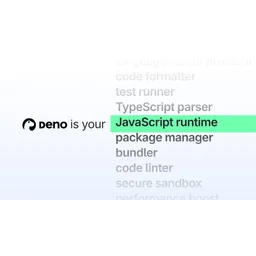
A fast, open-source, fully Node-compatible JS runtime with TypeScript baked right in
- From
- Free
- Free plan
- Yes
The short version
- Deno starts at $20/mo; Codat prices on request.
- Where Deno falls short: egress bandwidth overage costs $0.20/GB which can become expensive for high-traffic applications.
- Prices and features on this page were last checked on 20 November 2026.
How do Codat and Deno differ?
Codat and Deno differ on starting price (On request against Free), pricing model (Quote against Freemium) and free tier (No against Yes). Only the attributes on which Codat and Deno actually diverge.
Not yet recorded: founded for Codat.
Which features does each one have?
They share no listed features; 8 appear only for Codat. Drawn from each product's published feature list. An absence here means we hold no record of it - not that the product lacks it.
Only in Codat
- Normalised accounting API
- Banking and commerce data
- Lending products
- Write-back
- Business verification
- Supplier onboarding
- Connection management
- Data quality handling
Only in Deno
Nothing recorded that Codat does not also cover.
What is each one used for?
Deno is most often brought in for running TypeScript natively without transpilation overhead. The jobs each tool is most often brought in to do.
Codat
- A business lender that wants live ledger data for underwriting rather than a borrower emailing exported PDF accountsnot Deno
- A commercial bank monitoring covenant compliance across a portfolio of small business borrowers continuously rather than quarterlynot Deno
- A payment company verifying a merchant trading history before extending working capitalnot Deno
- A B2B platform writing bills and payments back into a customer accounting system so reconciliation happens automaticallynot Deno
Deno
- Running TypeScript natively without transpilation overheadnot Codat
- Migrating Node.js applications to secure-by-default runtimenot Codat
- Deploying edge functions and serverless containers seamlesslynot Codat
- Consolidating developer tools into single binarynot Codat
Where do Codat and Deno fall short?
Deno's most cited limit: egress bandwidth overage costs $0.20/GB which can become expensive for high-traffic applications. Documented limitations, not opinions. Every one is a constraint you would hit in normal use.
Codat
- The accounting platforms are metering developer access themselves, with Xero introducing tiered connection based developer pricing from 2 March 2026, so a cost you do not control has been inserted between you and the data and it scales with the number of customers you connect
- Pricing is opaque and enterprise shaped for a product developers expect to evaluate technically first, so build decisions get made before anyone knows the unit economics
- Normalisation hides but does not remove the underlying differences between accounting systems, and edge cases in multi-currency, journals and tax handling surface as data quality problems that your team must reason about in each source system anyway
- Data quality depends on the small business keeping its books properly, so a lender using ledger data for underwriting inherits the bookkeeping standard of its worst borrower and needs its own validation layer regardless
- Connection breakage from expired tokens and platform API changes is an ongoing operational load, and a borrower whose connection lapses stops being monitored silently, which is the failure mode that matters most in a lending portfolio
Deno
- Egress bandwidth overage costs $0.20/GB which can become expensive for high-traffic applications
- CPU time overage is $0.10/hour on Pro and Builder tiers, adding to costs for compute-intensive workloads
- Enterprise pricing is not disclosed; requires sales contact
How much do Codat and Deno cost?
Codat is priced on request; Deno has a free plan, with paid plans from $20/mo. Plan by plan below, from each vendor's own pricing page.
Codat
On request- Codat PlatformOn request
- Priced by connected companies, data types and products
- Lending and verification products priced above core data access
- Annual enterprise agreements
Deno
Free- FreeFree
- 1 million requests/month
- 20GB egress bandwidth
- 10 apps
- Pro$20/mo
- 5 million requests/month
- 200GB egress
- 50 apps
- Builder$200/mo
- 25 million requests/month
- 2,000GB egress
- 10,000 apps
- EnterpriseOn request
- Custom limits on all metrics
- 99.95% reliability SLA
- Email support with SLA
Which should you pick?
Choose Codat if
- You need normalised accounting api.
- You work on API, Web.
- You also want banking and commerce data.
Questions people ask
- Is Codat or Deno better?
- Neither clearly leads. Codat starts at On request and Deno at Free, and user ratings are close enough to be indistinguishable. Choose on capability and platform support.
- Which is cheaper, Codat or Deno?
- Deno has a free tier; the other does not. Paid plans start at On request for Codat and Free for Deno.
- Does Codat or Deno run on more platforms?
- Codat runs on API, Web. Deno runs on Web.
- Can I use Deno for free?
- Yes. Deno has a free tier, so you can try it without paying. Codat starts at On request.
- What is Codat best used for?
- Codat is most often used for a business lender that wants live ledger data for underwriting rather than a borrower emailing exported pdf accounts, a commercial bank monitoring covenant compliance across a portfolio of small business borrowers continuously rather than quarterly, a payment company verifying a merchant trading history before extending working capital, a b2b platform writing bills and payments back into a customer accounting system so reconciliation happens automatically. Of those, a business lender that wants live ledger data for underwriting rather than a borrower emailing exported pdf accounts and a commercial bank monitoring covenant compliance across a portfolio of small business borrowers continuously rather than quarterly are not what Deno is typically brought in for.
- What can Codat do that Deno cannot?
- Codat covers Normalised accounting API, Banking and commerce data, Lending products, Write-back.
Answered from the vendors’ own pages
Codat: What is changing with Xero in 2026?
Xero is introducing a tiered, usage based developer pricing model effective 2 March 2026, with tiers based on the number of customer connections an app holds. That is a new cost in the chain for anyone reading Xero data at scale, whether directly or through Codat.
Deno: How much does Deno Deploy cost?
Deno Deploy offers a free tier at $0/month, Pro at $20/month, and Builder at $200/month. Enterprise has custom pricing. All plans include base request and bandwidth limits, with overage charges for additional usage.
SourceCodat: Can Codat write data back?
Yes. It supports pushing bills, payments and journal entries into accounting systems, not only reading from them.
Deno: What are Deno Deploy's overage charges?
Egress bandwidth overages cost $0.20 per GB. CPU time overages are $0.10 per hour on Pro and Builder tiers. Memory time and KV database operations also incur charges beyond included limits.
SourceCodat: Is pricing published?
No. It is quoted by connected companies, data types and products, and users consistently describe it as opaque.
Deno: How many apps can I deploy on Deno's free plan?
The free tier includes 10 apps with up to 1 concurrent build. Pro tier supports 50 apps with 3 concurrent builds, and Builder supports 10,000 apps with 20 concurrent builds.
SourceCodat: Does it replace bank data aggregation?
Not entirely. It covers banking alongside accounting and commerce, but lenders commonly run it beside a bank aggregator for transaction level cash flow.
Deno: How many team members can access Deno Deploy?
The free tier supports up to 3 team members. Pro supports 10 team members. Builder supports 25 team members. Enterprise has custom seat limits.
SourceRelated pages
Other head to heads
- Codat vs Rutter
- Codat vs Tink
- Codat vs Swan
- Codat vs Fintech Farm
- Codat vs Solaris
- Codat vs Treasury Prime
- Codat vs Synctera
- Codat vs Column
- Codat vs Increase
- Codat vs Lithic
- Codat vs Griffin
- Codat vs Unit
- Codat vs Bud Financial
- Codat vs Dwolla
- Codat vs Liveblocks
- Codat vs Parse Server
- Codat vs Payload CMS
- Codat vs PubNub
- Codat vs pnpm
- Codat vs Yarn
- Codat vs AWS CDK
- Codat vs Jitsu
- Codat vs Gitea
- Codat vs WebStorm
- Codat vs Argo CD
- Codat vs Turborepo
- Codat vs Git
- Codat vs Soketi
- Codat vs Restate
- Codat vs Frappe
- Codat vs Depot
- Codat vs Neovim
- Codat vs Azure DevOps
- Codat vs Bitbucket
- Codat vs Daytona
- Codat vs Helix
- Deno vs Rutter
- Deno vs Tink
- Deno vs Swan
- Deno vs Fintech Farm
- Deno vs Solaris
- Deno vs Treasury Prime
- Deno vs Synctera
- Deno vs Column
- Deno vs Increase
- Deno vs Lithic
- Deno vs Griffin
- Deno vs Unit
- Deno vs Bud Financial
- Deno vs Dwolla
- Deno vs Liveblocks
- Deno vs Parse Server
- Deno vs Payload CMS
- Deno vs PubNub
- Deno vs pnpm
- Deno vs Yarn
- Deno vs AWS CDK
- Deno vs Jitsu
- Deno vs Gitea
- Deno vs WebStorm
- Deno vs Argo CD
- Deno vs Turborepo
- Deno vs Git
- Deno vs Soketi
- Deno vs Restate
- Deno vs Frappe
- Deno vs Depot
- Deno vs Neovim
- Deno vs Azure DevOps
- Deno vs Bitbucket
- Deno vs Daytona
- Deno vs Helix