
Databases · head to head
Aiven vs Chroma

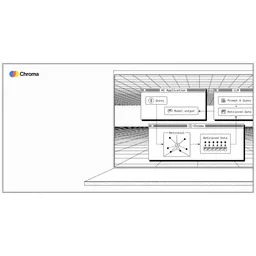
Chroma
Databases
Apache 2.0 vector and full-text search engine that runs as an embedded library, a single server or a distributed cloud service.
- From
- Free
- Rated
- -
The short version
- Each has a real cost: Aiven the free plan gives 1 VM with 1 CPU, 1 GB RAM and 1 GB storage, and cannot pick a specific cloud or region; Chroma on a single node, available memory sets a hard upper bound on collection size, roughly 245,000 records per gigabyte of RAM at 1024 dimensions, so capacity planning is a memory purchase and the ceiling arrives without warning.
- They diverge on capability: Aiven covers Multi-cloud Support, Chroma covers Embedded mode.
- Prices and features above were last checked on 30 August 2026.
Where they differ
Only the attributes on which Aiven and Chroma actually diverge.
Identical on both: starting price (Free), pricing model (usage-based), free tier (Yes), user rating (Not yet rated), category (Databases).
What each one covers
Drawn from each product's published feature list. An absence here means we hold no record of it - not that the product lacks it.
Only in Aiven
- Multi-cloud Support
- Automated Backups
- Seamless Upgrades
- VPC Peering
- End-to-end Encryption
- Compliance
- Observability
- PostgreSQL
Only in Chroma
- Embedded mode
- Single-node server
- Distributed architecture
- Vector search
- Full-text search
- Metadata filtering
- Consistent API across modes
- Multi-language clients
What people use each for
The jobs each tool is most often brought in to do.
Aiven
- Running managed open source databases without operating themnot Chroma
- Multi-cloud deployment across AWS, Google Cloud, Azure, DigitalOcean, OVH and UpCloudnot Chroma
- Highly available data services with automatic failovernot Chroma
- Prototyping on a small free instance before scaling upnot Chroma
Chroma
- Prototyping retrieval-augmented generation where the priority is having a working index in minutes rather than choosing a permanent storenot Aiven
- Agent memory in a single application process, where an embedded store avoids adding a network dependencynot Aiven
- A departmental search application under roughly ten million records where one server is sufficient and simplicity is worth more than headroomnot Aiven
- Local and CI testing of retrieval code with the same client library used in productionnot Aiven
Where each one falls short
Documented limitations, not opinions. Every one is a constraint you would hit in normal use.
Aiven
- The free plan gives 1 VM with 1 CPU, 1 GB RAM and 1 GB storage, and cannot pick a specific cloud or region
- Free and Developer tiers have no integrations and no connection pooling
- Connection pooling, database forks and dynamic disk sizing need the Business or Premium plan
- A 99.99 percent uptime SLA starts at the Startup plan from $75 a month
- High availability with automatic failover starts at Business from $180 a month
Chroma
- On a single node, available memory sets a hard upper bound on collection size, roughly 245,000 records per gigabyte of RAM at 1024 dimensions, so capacity planning is a memory purchase and the ceiling arrives without warning.
- Single-node queries parallelise only up to the number of vCPUs, after which requests queue and latency rises linearly with concurrency, so throughput problems appear as a slow application rather than as errors.
- The distributed deployment behind Chroma Cloud is a different architecture from the embedded library, so latency, consistency and failure behaviour observed in a local prototype do not predict production behaviour.
- The open source server has no built-in authentication or multi-tenancy worth relying on, so a self-hosted deployment needs its own auth proxy and network controls before anything untrusted can reach it.
- The project has moved quickly through major internal rewrites and version changes, so upgrades have historically involved data migrations and client changes, and pinning versions is necessary rather than cautious.
Pricing, plan by plan
Aiven
Free- Free TrialFree
- $300 credits
- 30 day trial
- All services
- Startup$19/month
- Single node
- Basic support
- Daily backups
Chroma
Free- StarterFree
- 10 databases
- 10 team members
- Community Slack access
- Team$250/month
- 100 databases
- 30 team members
- $100 in included credits
- Enterprise$null/month
- Unlimited databases
- Unlimited team members
- Dedicated support
Which should you pick?
Choose Aiven if
- You need multi-cloud support.
- You want to start without paying.
- You work on Web, Aws, Azure, Gcp, Do.
- You also want automated backups.
Choose Chroma if
- You need embedded mode.
- You want to start without paying.
- You also want single-node server.
Questions people ask
- Is Aiven or Chroma better?
- Neither clearly leads. Aiven starts at Free and Chroma at Free, and user ratings are close enough to be indistinguishable. Choose on capability and platform support.
- Which is cheaper, Aiven or Chroma?
- Aiven starts at Free and Chroma at Free.
- Does Aiven or Chroma run on more platforms?
- Aiven runs on Web, Aws, Azure, Gcp, Do. Chroma runs on Web.
- Can I use Aiven for free?
- Both have a free tier, so you can try either at no cost before committing.
- What is Aiven best used for?
- Aiven is most often used for running managed open source databases without operating them, multi-cloud deployment across aws, google cloud, azure, digitalocean, ovh and upcloud, highly available data services with automatic failover, prototyping on a small free instance before scaling up. Of those, running managed open source databases without operating them and multi-cloud deployment across aws, google cloud, azure, digitalocean, ovh and upcloud are not what Chroma is typically brought in for.
- What can Aiven do that Chroma cannot?
- Aiven covers Multi-cloud Support, Automated Backups, Seamless Upgrades, VPC Peering. Chroma covers Embedded mode, Single-node server, Distributed architecture, Vector search.
Answered from the vendors’ own pages
Aiven: What does Aiven's free tier include and does it have any time limit?
The free tier includes PostgreSQL with 1 VM, 1 CPU, 1 GB RAM, and 1 GB storage with access to limited cloud and region selections. There are no time limitations on the free tier, though Aiven reserves the right to shut down accounts that violate policies or remain unused for extended periods.
SourceChroma: Do I need to run a server?
No. Chroma runs embedded in your process with persistence to a local directory, which is how most projects start. The server and distributed modes exist for when multiple clients or larger collections require them.
Aiven: How is Aiven billed and what are the monthly costs for each tier?
Aiven bills services by the hour and invoices monthly, charging only for what you actually run. PostgreSQL pricing starts at 5 dollars per month for Developer, 12 dollars per month for Hobbyist, 75 dollars per month for Startup, 180 dollars per month for Business, and 270 dollars per month for Premium. All paid tiers offer hourly billing options as well.
SourceChroma: How large can a single node get?
The project puts single-node deployments at fewer than about ten million records across a handful of collections, with collection size bounded by system memory at roughly 245,000 records per gigabyte at 1024 dimensions.
Aiven: What backup retention periods are included at different Aiven tiers?
Backup retention increases with tier level: Startup tier provides 2 days of backup retention, Business tier offers 14 days, and Premium tier includes 30 days. Point-in-time restore is available on all paid tiers.
SourceChroma: Is Chroma Cloud the same software?
It is the same API and project, but the distributed deployment is a different architecture, using independent services, object storage and SSD caches rather than a single process. Behaviour under load differs accordingly.
Aiven: Is high availability included in Aiven pricing or charged separately?
High availability, backups, and routine maintenance are all included in the tier costs with no separate charges. The Business tier includes 2 VMs with automatic failover, and Premium includes 3 VMs with a second standby node.
SourceChroma: How does it compare with pgvector?
pgvector keeps vectors in a Postgres database you already operate, with SQL, joins and transactions. Chroma is a dedicated retrieval engine with a lower setup cost and a retrieval-shaped API. If you already run Postgres, pgvector removes a system; if you do not, Chroma removes a decision.
Aiven: Does Aiven offer a trial period to test premium features?
Aiven offers a 30-day free trial to access premium features beyond what the free plan provides.
SourceChroma: What licence is it under?
Apache 2.0, which permits self-hosting and embedding in commercial products without a competing-use restriction.
Related pages
Other head to heads
- Aiven vs PostgreSQL
- Aiven vs Instaclustr
- Aiven vs Amazon Aurora
- Aiven vs Cockroach Labs
- Aiven vs Airtable
- Aiven vs Google Cloud SQL
- Aiven vs Apache Kafka
- Aiven vs RabbitMQ
- Aiven vs Azure SQL
- Aiven vs MariaDB
- Aiven vs LanceDB
- Aiven vs Marqo
- Aiven vs Nile
- Aiven vs Ninox
- Aiven vs Presto
- Aiven vs Privacera
- Aiven vs Amazon RDS
- Aiven vs Apache Flink
- Aiven vs DuckDB
- Aiven vs turbopuffer
- Aiven vs Vespa
- Aiven vs Qdrant
- Aiven vs SQLite
- Aiven vs Timeplus
- Aiven vs EMQX
- Aiven vs Firebase Realtime Database
- Aiven vs Memcached
- Aiven vs MotherDuck
- Aiven vs Neo4j
- Aiven vs OpenSearch
- Aiven vs Firestore
- Chroma vs PostgreSQL
- Chroma vs Instaclustr
- Chroma vs Amazon Aurora
- Chroma vs Cockroach Labs
- Chroma vs Airtable
- Chroma vs Google Cloud SQL
- Chroma vs Apache Kafka
- Chroma vs RabbitMQ
- Chroma vs Azure SQL
- Chroma vs MariaDB
- Chroma vs LanceDB
- Chroma vs Marqo
- Chroma vs Nile
- Chroma vs Ninox
- Chroma vs Presto
- Chroma vs Privacera
- Chroma vs Amazon RDS
- Chroma vs Apache Flink
- Chroma vs DuckDB
- Chroma vs turbopuffer
- Chroma vs Vespa
- Chroma vs Qdrant
- Chroma vs SQLite
- Chroma vs Timeplus
- Chroma vs EMQX
- Chroma vs Firebase Realtime Database
- Chroma vs Memcached
- Chroma vs MotherDuck
- Chroma vs Neo4j
- Chroma vs OpenSearch
- Chroma vs Firestore