
APIs · head to head
Portkey vs RubyMine
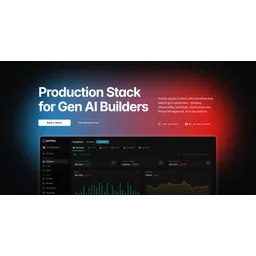
Portkey
APIs
Observe, govern, and secure every AI interaction across your enterprise
- From
- On request
- Free plan
- No

RubyMine
Developer Tools
JetBrains IDE for Ruby and Ruby on Rails development
- From
- $24/month
- Free plan
- No
The short version
- RubyMine starts at $24/mo; Portkey prices on request.
- Where RubyMine falls short: no permanently free tier for commercial use; requires an ongoing subscription.
- Prices and features on this page were last checked on 20 November 2026.
How do Portkey and RubyMine differ?
Portkey and RubyMine differ on starting price (On request against $24/month), platforms and category (APIs against Developer Tools). Only the attributes on which Portkey and RubyMine actually diverge.
Identical on both: free tier (No).
Not yet recorded: pricing model for Portkey, founded for Portkey.
Which features does each one have?
They share no listed features; 6 only for RubyMine. Drawn from each product's published feature list. An absence here means we hold no record of it - not that the product lacks it.
Only in Portkey
Nothing recorded that RubyMine does not also cover.
Only in RubyMine
- Rails-aware coding assistance
- Integrated debugger
- Test runner integration
- Database tools
- Version control integration
- Docker support
What is each one used for?
Portkey is most often brought in for accessing 1,600+ language models through unified API gateway; RubyMine for building and maintaining Ruby on Rails applications. The jobs each tool is most often brought in to do.
Portkey
- Accessing 1,600+ language models through unified API gatewaynot RubyMine
- Monitoring and observing LLM behavior in production environmentsnot RubyMine
- Managing costs and setting budget limits for AI spendingnot RubyMine
- Implementing guardrails and PII redaction for secure AI interactionsnot RubyMine
RubyMine
- Building and maintaining Ruby on Rails applicationsnot Portkey
- Debugging Ruby web applicationsnot Portkey
- Running and managing RSpec or Minitest suitesnot Portkey
- Working across Ruby, JavaScript, and SQL in one projectnot Portkey
Where do Portkey and RubyMine fall short?
RubyMine's most cited limit: no permanently free tier for commercial use; requires an ongoing subscription. Documented limitations, not opinions. Every one is a constraint you would hit in normal use.
Portkey
- The free Developer tier records only 10,000 logs per month with 3 day log retention; the $49 per month Production tier raises that to 100,000 logs with $9 per additional 100,000 requests, as of August 2026
- The product is now sold to enterprises as Palo Alto Networks' Prisma AIRS AI Gateway, and the old pricing page redirects to Palo Alto content
RubyMine
- No permanently free tier for commercial use; requires an ongoing subscription
- More resource-intensive than lightweight editors such as Sublime Text
- Focused primarily on Ruby, so polyglot teams may prefer IntelliJ IDEA Ultimate with plugins instead
- Startup time can be slower than simpler text editors on older hardware
How much do Portkey and RubyMine cost?
RubyMine starts at $24/mo. Plan by plan below, from each vendor's own pricing page.
Portkey
On requestNo published plan breakdown. See the Portkey review.
RubyMine
$24/month- Individual$24/mo
- Personal use license
- Access to RubyMine
- Free for students and open-source maintainers
- Organization$34/mo
- Business use license
- Access to RubyMine
- Volume and renewal discounts
Which should you pick?
Choose Portkey if
Nothing in the data separates Portkey from RubyMine on the points above - pick on price and on how each one feels to use.
Choose RubyMine if
- You need rails-aware coding assistance.
- You work on Windows, macOS, Linux.
- You also want integrated debugger.
Questions people ask
- Is Portkey or RubyMine better?
- Neither clearly leads. Portkey starts at On request and RubyMine at $24/month, and user ratings are close enough to be indistinguishable. Choose on capability and platform support.
- Which is cheaper, Portkey or RubyMine?
- Portkey starts at On request and RubyMine at $24/month.
- Does Portkey or RubyMine run on more platforms?
- Portkey runs on Web. RubyMine runs on Windows, macOS, Linux.
- What is Portkey best used for?
- Portkey is most often used for accessing 1,600+ language models through unified api gateway, monitoring and observing llm behavior in production environments, managing costs and setting budget limits for ai spending, implementing guardrails and pii redaction for secure ai interactions. Of those, accessing 1,600+ language models through unified api gateway and monitoring and observing llm behavior in production environments are not what RubyMine is typically brought in for.
- What can Portkey do that RubyMine cannot?
- RubyMine covers Rails-aware coding assistance, Integrated debugger, Test runner integration, Database tools.
Answered from the vendors’ own pages
Portkey: What happens if I exceed my Portkey plan's request limit?
Production tier ($49/month) charges $9 per additional 100,000 requests beyond the included 100,000. Enterprise customers have custom limits determined through their service agreement. Source: https://portkey.ai/pricing
SourceRubyMine: How much does RubyMine cost?
RubyMine is sold as a JetBrains Toolbox subscription starting around $24/month for individuals and $34/month for organizations, with free licenses available for students and open-source maintainers.
SourcePortkey: Can I self-host Portkey to avoid per-request billing?
Yes. Portkey offers an Open Source self-hosted version with unlimited requests at no cost, including universal API, routing, guardrails, and load balancing features. Source: https://portkey.ai/pricing
SourceRubyMine: Is there a free trial?
JetBrains provides a free trial period for RubyMine so developers can evaluate it before purchasing a subscription.
SourcePortkey: How long does Portkey retain my logs and metrics?
Free Developer tier retains logs 3 days and metrics 30 days. Production tier retains logs 30 days and metrics 90 days. Enterprise tier offers custom retention periods. Source: https://portkey.ai/pricing
SourceRubyMine: What platforms does RubyMine support?
RubyMine runs as a desktop application on Windows, macOS, and Linux via JetBrains Toolbox.
SourcePortkey: What compliance features are included in the Enterprise plan?
Enterprise tier includes SOC2 Type 2 certification, GDPR compliance, HIPAA compliance, VPC hosting, SSO, advanced guardrails, and dedicated support. Custom pricing required. Source: https://portkey.ai/pricing
SourceRelated pages
Other head to heads
- Portkey vs LiteLLM
- Portkey vs Kong Gateway
- Portkey vs Tink
- Portkey vs Apigee
- Portkey vs AWS API Gateway
- Portkey vs WSO2 API Manager
- Portkey vs Treblle
- Portkey vs Volt
- Portkey vs 3scale
- Portkey vs Akana
- Portkey vs TrueLayer
- Portkey vs Mambu
- Portkey vs Fintech Farm
- Portkey vs Formance
- Portkey vs GraphQL Playground
- Portkey vs IBM API Connect
- Portkey vs Janus Gateway
- Portkey vs Method Financial
- Portkey vs Visual Studio Code
- Portkey vs Sublime Text
- Portkey vs Neovim
- Portkey vs Sweep
- Portkey vs Eclipse
- Portkey vs Namespace
- Portkey vs Bazel
- Portkey vs Ona (formerly Gitpod)
- Portkey vs GNU Emacs
- Portkey vs Harness
- Portkey vs Coder
- Portkey vs Cody
- Portkey vs Restate
- Portkey vs Steampipe
- Portkey vs Storybook
- Portkey vs Trunk Code Quality
- Portkey vs AI SDK
- Portkey vs Warp
- RubyMine vs LiteLLM
- RubyMine vs Kong Gateway
- RubyMine vs Tink
- RubyMine vs Apigee
- RubyMine vs AWS API Gateway
- RubyMine vs WSO2 API Manager
- RubyMine vs Treblle
- RubyMine vs Volt
- RubyMine vs 3scale
- RubyMine vs Akana
- RubyMine vs TrueLayer
- RubyMine vs Mambu
- RubyMine vs Fintech Farm
- RubyMine vs Formance
- RubyMine vs GraphQL Playground
- RubyMine vs IBM API Connect
- RubyMine vs Janus Gateway
- RubyMine vs Method Financial
- RubyMine vs Visual Studio Code
- RubyMine vs Sublime Text
- RubyMine vs Neovim
- RubyMine vs Sweep
- RubyMine vs Eclipse
- RubyMine vs Namespace
- RubyMine vs Bazel
- RubyMine vs Ona (formerly Gitpod)
- RubyMine vs GNU Emacs
- RubyMine vs Harness
- RubyMine vs Coder
- RubyMine vs Cody
- RubyMine vs Restate
- RubyMine vs Steampipe
- RubyMine vs Storybook
- RubyMine vs Trunk Code Quality
- RubyMine vs AI SDK
- RubyMine vs Warp