
Databases · head to head
Firestore vs Portkey

Firestore
Databases
Flexible, scalable NoSQL cloud database from Firebase
- From
- Free
- Free plan
- Yes
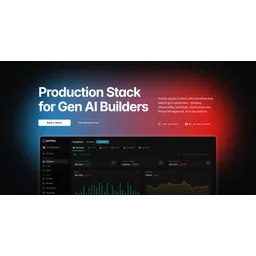
Portkey
APIs
Observe, govern, and secure every AI interaction across your enterprise
- From
- On request
- Free plan
- No
The short version
- Firestore is free; Portkey prices on request.
- Where Firestore falls short: the no-cost Spark plan caps Standard edition at 50,000 document reads, 20,000 writes and 20,000 deletes per day.
- Prices and features on this page were last checked on 20 November 2026.
How do Firestore and Portkey differ?
Firestore and Portkey differ on starting price (Free against On request), free tier (Yes against No) and platforms. Only the attributes on which Firestore and Portkey actually diverge.
Not yet recorded: pricing model for Portkey, founded for Portkey.
Which features does each one have?
They share no listed features; 16 appear only for Firestore. Drawn from each product's published feature list. An absence here means we hold no record of it - not that the product lacks it.
Only in Firestore
- Document Model
- Real-time Updates
- Offline Support
- ACID Transactions
- Expressive Queries
- Multi-region
- Security Rules
- Firebase Auth
Only in Portkey
Nothing recorded that Firestore does not also cover.
What is each one used for?
Firestore is most often brought in for storing structured application data with realtime listeners; Portkey for accessing 1,600+ language models through unified API gateway. The jobs each tool is most often brought in to do.
Firestore
- Storing structured application data with realtime listenersnot Portkey
- Backing mobile and web apps with a serverless document databasenot Portkey
- Building offline first apps that sync when connectivity returnsnot Portkey
Portkey
- Accessing 1,600+ language models through unified API gatewaynot Firestore
- Monitoring and observing LLM behavior in production environmentsnot Firestore
- Managing costs and setting budget limits for AI spendingnot Firestore
- Implementing guardrails and PII redaction for secure AI interactionsnot Firestore
Where do Firestore and Portkey fall short?
Firestore's most cited limit: the no-cost Spark plan caps Standard edition at 50,000 document reads, 20,000 writes and 20,000 deletes per day. Documented limitations, not opinions. Every one is a constraint you would hit in normal use.
Firestore
- The no-cost Spark plan caps Standard edition at 50,000 document reads, 20,000 writes and 20,000 deletes per day
- The Spark plan caps storage at 1 GiB and network egress at 10 GiB per month
- Charging is per document read, so a query returning many documents bills for every one of them
- Going beyond the free thresholds requires the pay as you go Blaze plan billed at Google Cloud rates with no fixed monthly ceiling
Portkey
- The free Developer tier records only 10,000 logs per month with 3 day log retention; the $49 per month Production tier raises that to 100,000 logs with $9 per additional 100,000 requests, as of August 2026
- The product is now sold to enterprises as Palo Alto Networks' Prisma AIRS AI Gateway, and the old pricing page redirects to Palo Alto content
How much do Firestore and Portkey cost?
Firestore is free to use. Plan by plan below, from each vendor's own pricing page.
Firestore
Free- SparkFree
- 1GB storage
- 50K reads/day
- 20K writes/day
- BlazeFree
- Pay as you go
- Unlimited operations
- Multi-region
Portkey
On requestNo published plan breakdown. See the Portkey review.
Which should you pick?
Choose Firestore if
- You need document model.
- You want to start without paying.
- You work on Web, iOS, Android, Flutter.
- You also want real-time updates.
Choose Portkey if
Nothing in the data separates Portkey from Firestore on the points above - pick on price and on how each one feels to use.
Questions people ask
- Is Firestore or Portkey better?
- Neither clearly leads. Firestore starts at Free and Portkey at On request, and user ratings are close enough to be indistinguishable. Choose on capability and platform support.
- Which is cheaper, Firestore or Portkey?
- Firestore has a free tier; the other does not. Paid plans start at Free for Firestore and On request for Portkey.
- Does Firestore or Portkey run on more platforms?
- Firestore runs on Web, iOS, Android, Flutter. Portkey runs on Web.
- Can I use Firestore for free?
- Yes. Firestore has a free tier, so you can try it without paying. Portkey starts at On request.
- What is Firestore best used for?
- Firestore is most often used for storing structured application data with realtime listeners, backing mobile and web apps with a serverless document database, building offline first apps that sync when connectivity returns. Of those, storing structured application data with realtime listeners and backing mobile and web apps with a serverless document database are not what Portkey is typically brought in for.
- What can Firestore do that Portkey cannot?
- Firestore covers Document Model, Real-time Updates, Offline Support, ACID Transactions.
Answered from the vendors’ own pages
Firestore: What are the free limits on Cloud Firestore?
The Spark Plan includes 1 GiB of stored data, 50,000 reads per day, 20,000 writes per day, and 20,000 deletes per day at no cost.
SourcePortkey: What happens if I exceed my Portkey plan's request limit?
Production tier ($49/month) charges $9 per additional 100,000 requests beyond the included 100,000. Enterprise customers have custom limits determined through their service agreement. Source: https://portkey.ai/pricing
SourceFirestore: What happens when I exceed the Spark Plan free tier?
Exceeding the free tier requires upgrading to the Blaze Plan, which bills based on actual usage through Google Cloud pricing. Charges apply for reads, writes, deletes, and data storage.
SourcePortkey: Can I self-host Portkey to avoid per-request billing?
Yes. Portkey offers an Open Source self-hosted version with unlimited requests at no cost, including universal API, routing, guardrails, and load balancing features. Source: https://portkey.ai/pricing
SourceFirestore: Can I use Firestore without a credit card?
Yes, you can use the Spark Plan indefinitely without a credit card. To use the Blaze Plan (pay-as-you-go), a credit card is required.
SourcePortkey: How long does Portkey retain my logs and metrics?
Free Developer tier retains logs 3 days and metrics 30 days. Production tier retains logs 30 days and metrics 90 days. Enterprise tier offers custom retention periods. Source: https://portkey.ai/pricing
SourceFirestore: Is there a trial period for Cloud Firestore?
No trial period is specified. The Spark Plan free tier serves as the trial, with no time limit.
SourcePortkey: What compliance features are included in the Enterprise plan?
Enterprise tier includes SOC2 Type 2 certification, GDPR compliance, HIPAA compliance, VPC hosting, SSO, advanced guardrails, and dedicated support. Custom pricing required. Source: https://portkey.ai/pricing
SourceRelated pages
Other head to heads
- Firestore vs Supabase
- Firestore vs FaunaDB
- Firestore vs MongoDB
- Firestore vs DynamoDB
- Firestore vs CosmosDB
- Firestore vs Couchbase
- Firestore vs CouchDB
- Firestore vs RavenDB
- Firestore vs ArangoDB
- Firestore vs Estuary
- Firestore vs Dremio
- Firestore vs EMQX
- Firestore vs Firebolt
- Firestore vs LanceDB
- Firestore vs SurrealDB
- Firestore vs Timeplus
- Firestore vs MongoDB Atlas
- Firestore vs Apache Pinot
- Firestore vs LiteLLM
- Firestore vs Kong Gateway
- Firestore vs Tink
- Firestore vs Apigee
- Firestore vs AWS API Gateway
- Firestore vs WSO2 API Manager
- Firestore vs Treblle
- Firestore vs Volt
- Firestore vs 3scale
- Firestore vs Akana
- Firestore vs TrueLayer
- Firestore vs Mambu
- Firestore vs Fintech Farm
- Firestore vs Formance
- Firestore vs GraphQL Playground
- Firestore vs IBM API Connect
- Firestore vs Janus Gateway
- Firestore vs Method Financial
- Portkey vs Supabase
- Portkey vs FaunaDB
- Portkey vs MongoDB
- Portkey vs DynamoDB
- Portkey vs CosmosDB
- Portkey vs Couchbase
- Portkey vs CouchDB
- Portkey vs RavenDB
- Portkey vs ArangoDB
- Portkey vs Estuary
- Portkey vs Dremio
- Portkey vs EMQX
- Portkey vs Firebolt
- Portkey vs LanceDB
- Portkey vs SurrealDB
- Portkey vs Timeplus
- Portkey vs MongoDB Atlas
- Portkey vs Apache Pinot
- Portkey vs LiteLLM
- Portkey vs Kong Gateway
- Portkey vs Tink
- Portkey vs Apigee
- Portkey vs AWS API Gateway
- Portkey vs WSO2 API Manager
- Portkey vs Treblle
- Portkey vs Volt
- Portkey vs 3scale
- Portkey vs Akana
- Portkey vs TrueLayer
- Portkey vs Mambu
- Portkey vs Fintech Farm
- Portkey vs Formance
- Portkey vs GraphQL Playground
- Portkey vs IBM API Connect
- Portkey vs Janus Gateway
- Portkey vs Method Financial