
Databases · head to head
Chroma vs TIBCO Enterprise Message Service
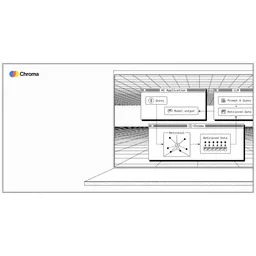
Chroma
Databases
Apache 2.0 vector and full-text search engine that runs as an embedded library, a single server or a distributed cloud service.
- From
- Free
- Rated
- -

TIBCO Enterprise Message Service
Databases
JMS message broker underpinning bank and telecom estates, now maintained rather than expanded
- From
- On request
- Rated
- -
The short version
- Only Chroma has a free tier, so it costs nothing to try first.
- Each has a real cost: Chroma on a single node, available memory sets a hard upper bound on collection size, roughly 245,000 records per gigabyte of RAM at 1024 dimensions, so capacity planning is a memory purchase and the ceiling arrives without warning.; TIBCO Enterprise Message Service the 2026 roadmap is oriented to modernising existing estates rather than winning new deployments, so a greenfield buyer is choosing a product its vendor is not investing in for growth.
- They diverge on capability: Chroma covers Embedded mode, TIBCO Enterprise Message Service covers JMS 2.0 broker.
- Prices and features above were last checked on 31 August 2026.
Where they differ
Only the attributes on which Chroma and TIBCO Enterprise Message Service actually diverge.
| Attribute | Chroma | TIBCO Enterprise Message Service |
|---|---|---|
| Starting price | Free | On request |
| Pricing model | usage-based | quote |
| Free tier | Yes | No |
| Platforms | Web | Linux, Windows, Solaris, AIX, Docker |
Identical on both: user rating (Not yet rated), category (Databases).
What each one covers
Drawn from each product's published feature list. An absence here means we hold no record of it - not that the product lacks it.
Only in Chroma
- Embedded mode
- Single-node server
- Distributed architecture
- Vector search
- Full-text search
- Metadata filtering
- Consistent API across modes
- Multi-language clients
Only in TIBCO Enterprise Message Service
- JMS 2.0 broker
- Fault tolerant pairs
- Server routing
- Rendezvous and FTL bridging
- Kafka transport
- Multiple client languages
- FIPS 140-3 compliance
- Central administration
What people use each for
The jobs each tool is most often brought in to do.
Chroma
- Prototyping retrieval-augmented generation where the priority is having a working index in minutes rather than choosing a permanent storenot TIBCO Enterprise Message Service
- Agent memory in a single application process, where an embedded store avoids adding a network dependencynot TIBCO Enterprise Message Service
- A departmental search application under roughly ten million records where one server is sufficient and simplicity is worth more than headroomnot TIBCO Enterprise Message Service
- Local and CI testing of retrieval code with the same client library used in productionnot TIBCO Enterprise Message Service
TIBCO Enterprise Message Service
- A bank with thousands of JMS applications deciding whether to renew maintenance or fund a migrationnot Chroma
- An organisation needing a JMS broker bridged to both TIBCO Rendezvous and Apache Kafka during a phased modernisationnot Chroma
- A telecom operator with fault-tolerant messaging requirements already standardised on the TIBCO stacknot Chroma
- A regulated deployment requiring FIPS 140-3 validated cryptography in the messaging layernot Chroma
Where each one falls short
Documented limitations, not opinions. Every one is a constraint you would hit in normal use.
Chroma
- On a single node, available memory sets a hard upper bound on collection size, roughly 245,000 records per gigabyte of RAM at 1024 dimensions, so capacity planning is a memory purchase and the ceiling arrives without warning.
- Single-node queries parallelise only up to the number of vCPUs, after which requests queue and latency rises linearly with concurrency, so throughput problems appear as a slow application rather than as errors.
- The distributed deployment behind Chroma Cloud is a different architecture from the embedded library, so latency, consistency and failure behaviour observed in a local prototype do not predict production behaviour.
- The open source server has no built-in authentication or multi-tenancy worth relying on, so a self-hosted deployment needs its own auth proxy and network controls before anything untrusted can reach it.
- The project has moved quickly through major internal rewrites and version changes, so upgrades have historically involved data migrations and client changes, and pinning versions is necessary rather than cautious.
TIBCO Enterprise Message Service
- The 2026 roadmap is oriented to modernising existing estates rather than winning new deployments, so a greenfield buyer is choosing a product its vendor is not investing in for growth.
- Nothing is published on price, licensing is per server or per core, and renewal pricing across the Cloud Software Group portfolio has risen sharply since the 2022 Citrix and TIBCO combination.
- It is a JMS broker, not a durable event log, so replay, stream reprocessing and long retention patterns require Kafka alongside it rather than instead of it.
- Skills are concentrated in a contractor market that is ageing, and hiring engineers who want to work on EMS is materially harder than hiring for Kafka.
- Deep integration with the rest of the TIBCO stack, particularly BusinessWorks, makes partial migration difficult; teams commonly find that leaving EMS means replacing several products at once.
Pricing, plan by plan
Chroma
Free- StarterFree
- 10 databases
- 10 team members
- Community Slack access
- Team$250/month
- 100 databases
- 30 team members
- $100 in included credits
- Enterprise$null/month
- Unlimited databases
- Unlimited team members
- Dedicated support
TIBCO Enterprise Message Service
On request- TIBCO Enterprise Message Service$undefined/year
- Licensed per server or per core with annual maintenance
- No pricing published at any tier
- Bundled in TIBCO Messaging and platform agreements
Which should you pick?
Choose Chroma if
- You need embedded mode.
- You want to start without paying.
- You also want single-node server.
Choose TIBCO Enterprise Message Service if
- You need jms 2.0 broker.
- You work on Linux, Windows, Solaris, AIX, Docker.
- You also want fault tolerant pairs.
Questions people ask
- Is Chroma or TIBCO Enterprise Message Service better?
- Neither clearly leads. Chroma starts at Free and TIBCO Enterprise Message Service at On request, and user ratings are close enough to be indistinguishable. Choose on capability and platform support.
- Which is cheaper, Chroma or TIBCO Enterprise Message Service?
- Chroma has a free tier; the other does not. Paid plans start at Free for Chroma and On request for TIBCO Enterprise Message Service.
- Does Chroma or TIBCO Enterprise Message Service run on more platforms?
- Chroma runs on Web. TIBCO Enterprise Message Service runs on Linux, Windows, Solaris, AIX, Docker.
- Can I use Chroma for free?
- Yes. Chroma has a free tier, so you can try it without paying. TIBCO Enterprise Message Service starts at On request.
- What is Chroma best used for?
- Chroma is most often used for prototyping retrieval-augmented generation where the priority is having a working index in minutes rather than choosing a permanent store, agent memory in a single application process, where an embedded store avoids adding a network dependency, a departmental search application under roughly ten million records where one server is sufficient and simplicity is worth more than headroom, local and ci testing of retrieval code with the same client library used in production. Of those, prototyping retrieval-augmented generation where the priority is having a working index in minutes rather than choosing a permanent store and agent memory in a single application process, where an embedded store avoids adding a network dependency are not what TIBCO Enterprise Message Service is typically brought in for.
- What can Chroma do that TIBCO Enterprise Message Service cannot?
- Chroma covers Embedded mode, Single-node server, Distributed architecture, Vector search. TIBCO Enterprise Message Service covers JMS 2.0 broker, Fault tolerant pairs, Server routing, Rendezvous and FTL bridging.
Answered from the vendors’ own pages
Chroma: Do I need to run a server?
No. Chroma runs embedded in your process with persistence to a local directory, which is how most projects start. The server and distributed modes exist for when multiple clients or larger collections require them.
TIBCO Enterprise Message Service: Is TIBCO EMS still supported?
Yes, releases continue under Cloud Software Group, with 10.x versions shipping and FIPS 140-3 compliance added.
Chroma: How large can a single node get?
The project puts single-node deployments at fewer than about ten million records across a handful of collections, with collection size bounded by system memory at roughly 245,000 records per gigabyte at 1024 dimensions.
TIBCO Enterprise Message Service: What does it cost?
Nothing is published. It is licensed per server or per core with annual maintenance, usually inside a wider TIBCO agreement.
Chroma: Is Chroma Cloud the same software?
It is the same API and project, but the distributed deployment is a different architecture, using independent services, object storage and SSD caches rather than a single process. Behaviour under load differs accordingly.
TIBCO Enterprise Message Service: Should a new project choose EMS?
Rarely. The vendor roadmap targets existing estates, and greenfield event-driven projects generally start with Kafka or a cloud broker.
Chroma: How does it compare with pgvector?
pgvector keeps vectors in a Postgres database you already operate, with SQL, joins and transactions. Chroma is a dedicated retrieval engine with a lower setup cost and a retrieval-shaped API. If you already run Postgres, pgvector removes a system; if you do not, Chroma removes a decision.
TIBCO Enterprise Message Service: Can EMS talk to Kafka?
Yes, an EMS transport for Apache Kafka is supported on Linux, which is the usual bridge during modernisation.
Chroma: What licence is it under?
Apache 2.0, which permits self-hosting and embedding in commercial products without a competing-use restriction.
Related pages
More on TIBCO Enterprise Message Service
Other head to heads
- Chroma vs Airtable
- Chroma vs PostgreSQL
- Chroma vs Cockroach Labs
- Chroma vs Amazon Aurora
- Chroma vs DuckDB
- Chroma vs turbopuffer
- Chroma vs Vespa
- Chroma vs Qdrant
- Chroma vs SQLite
- Chroma vs Timeplus
- Chroma vs EMQX
- Chroma vs LanceDB
- Chroma vs Firebase Realtime Database
- Chroma vs Memcached
- Chroma vs MotherDuck
- Chroma vs Neo4j
- Chroma vs OpenSearch
- Chroma vs Firestore
- Chroma vs RabbitMQ
- Chroma vs Apache Kafka
- Chroma vs Solace PubSub+
- Chroma vs VerneMQ
- Chroma vs Couchbase
- Chroma vs Microsoft SQL Server
- Chroma vs IBM Db2
- Chroma vs Oracle Database
- Chroma vs ArangoDB
- Chroma vs Canary Labs
- Chroma vs Cloudinary
- Chroma vs Apache Pulsar
- Chroma vs Apache Solr
- Chroma vs Apache Doris
- TIBCO Enterprise Message Service vs Airtable
- TIBCO Enterprise Message Service vs PostgreSQL
- TIBCO Enterprise Message Service vs Cockroach Labs
- TIBCO Enterprise Message Service vs Amazon Aurora
- TIBCO Enterprise Message Service vs DuckDB
- TIBCO Enterprise Message Service vs turbopuffer
- TIBCO Enterprise Message Service vs Vespa
- TIBCO Enterprise Message Service vs Qdrant
- TIBCO Enterprise Message Service vs SQLite
- TIBCO Enterprise Message Service vs Timeplus
- TIBCO Enterprise Message Service vs EMQX
- TIBCO Enterprise Message Service vs LanceDB
- TIBCO Enterprise Message Service vs Firebase Realtime Database
- TIBCO Enterprise Message Service vs Memcached
- TIBCO Enterprise Message Service vs MotherDuck
- TIBCO Enterprise Message Service vs Neo4j
- TIBCO Enterprise Message Service vs OpenSearch
- TIBCO Enterprise Message Service vs Firestore
- TIBCO Enterprise Message Service vs RabbitMQ
- TIBCO Enterprise Message Service vs Apache Kafka
- TIBCO Enterprise Message Service vs Solace PubSub+
- TIBCO Enterprise Message Service vs VerneMQ
- TIBCO Enterprise Message Service vs Couchbase
- TIBCO Enterprise Message Service vs Microsoft SQL Server
- TIBCO Enterprise Message Service vs IBM Db2
- TIBCO Enterprise Message Service vs Oracle Database
- TIBCO Enterprise Message Service vs ArangoDB
- TIBCO Enterprise Message Service vs Canary Labs
- TIBCO Enterprise Message Service vs Cloudinary
- TIBCO Enterprise Message Service vs Apache Pulsar
- TIBCO Enterprise Message Service vs Apache Solr
- TIBCO Enterprise Message Service vs Apache Doris