
Testing · head to head
BrowserStack vs Earthly
BrowserStack
Testing
Real device cloud for web and mobile testing
- From
- $12.5/month
- Free plan
- No
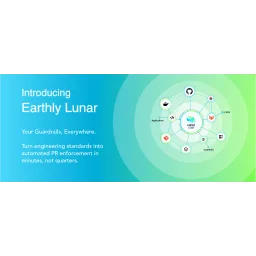
Earthly
Developer Tools
Engineering guardrails for the AI era
- From
- Free
- Free plan
- Yes
The short version
- Earthly is free; BrowserStack starts at $12.5/mo.
- Where BrowserStack falls short: volume pricing for 25+ users and custom pricing for higher parallel counts not publicly listed.
- Where Earthly falls short: pricing model not published; requires sales contact.
- Prices and features on this page were last checked on 20 November 2026.
How do BrowserStack and Earthly differ?
BrowserStack and Earthly differ on starting price ($12.5/month against Free), pricing model and free tier (No against Yes). Only the attributes on which BrowserStack and Earthly actually diverge.
| Attribute | BrowserStack | Earthly |
|---|---|---|
| Starting price | $12.5/month | Free |
| Pricing model | Subscription | No pricing published on website |
| Free tier | No | Yes |
| Platforms | Web | Web, API |
| Category | Testing | Developer Tools |
| Founded | 2011 | 2020 |
Which features does each one have?
They share no listed features; 8 only for Earthly. Drawn from each product's published feature list. An absence here means we hold no record of it - not that the product lacks it.
Only in BrowserStack
Nothing recorded that Earthly does not also cover.
Only in Earthly
- Policy as code
- Multi-stage enforcement
- AI agent governance
- Repository-wide policies
- Incident response automation
- Compliance management
- Earthfiles build tool
- Satellites
What is each one used for?
BrowserStack is most often brought in for testing on 3500+ real browser combinations; Earthly for enforcing engineering standards across AI and human developers. The jobs each tool is most often brought in to do.
BrowserStack
- Testing on 3500+ real browser combinationsnot Earthly
- Validating payment workflows on real devicesnot Earthly
- Testing web performance on real devicesnot Earthly
- Testing localization from 100+ countriesnot Earthly
Earthly
- Enforcing engineering standards across AI and human developersnot BrowserStack
- Automating incident response procedures across all repositoriesnot BrowserStack
- Embedding compliance requirements into development workflowsnot BrowserStack
- Standardizing build processes with Earthfilesnot BrowserStack
Where do BrowserStack and Earthly fall short?
BrowserStack's most cited limit: volume pricing for 25+ users and custom pricing for higher parallel counts not publicly listed. Earthly's: pricing model not published; requires sales contact. Documented limitations, not opinions. Every one is a constraint you would hit in normal use.
BrowserStack
- Volume pricing for 25+ users and custom pricing for higher parallel counts not publicly listed
- Annual billing saves up to 25% versus monthly, but specific annual prices not published for all tiers
- Freelancer plan includes only 100 Live minutes, one user, and excludes screenshot testing
- Automate plans start with 1 parallel test; extra parallels are a paid option
- Accessibility Test & Monitor, Enterprise add-on (SSO, IP whitelisting) and Custom Device Lab are priced separately
Earthly
- Pricing model not published; requires sales contact
- Earthly Lunar is a recent launch (2025) with limited track record
- Primarily GitHub-focused; limited integration with other platforms
- No public documentation on pricing or feature tiers
How much do BrowserStack and Earthly cost?
BrowserStack starts at $12.5/mo; Earthly is free to use. Plan by plan below, from each vendor's own pricing page.
BrowserStack
$12.5/month- Freelancer$12.5/mo
- 100 minutes monthly
- 1 user
- Desktop testing
- Desktop$29/mo
- Unlimited testing minutes
- Individual plan
- 3000+ desktop browsers
- Desktop & Mobile$39/mo
- Unlimited testing minutes
- 3000+ desktop and 30000+ mobile device combinations
- Marked as Best Value
- Team$150/mo
- 5+ users
- Unlimited testing minutes
- Multi-device testing
Earthly
FreeNo published plan breakdown. See the Earthly review.
Which should you pick?
Choose BrowserStack if
Nothing in the data separates BrowserStack from Earthly on the points above - pick on price and on how each one feels to use.
Choose Earthly if
- You need policy as code.
- You want to start without paying.
- You work on Web, API.
- You also want multi-stage enforcement.
Questions people ask
- Is BrowserStack or Earthly better?
- Neither clearly leads. BrowserStack starts at $12.5/month and Earthly at Free, and user ratings are close enough to be indistinguishable. Choose on capability and platform support.
- Which is cheaper, BrowserStack or Earthly?
- Earthly has a free tier; the other does not. Paid plans start at $12.5/month for BrowserStack and Free for Earthly.
- Does BrowserStack or Earthly run on more platforms?
- BrowserStack runs on Web. Earthly runs on Web, API.
- Can I use Earthly for free?
- Yes. Earthly has a free tier, so you can try it without paying. BrowserStack starts at $12.5/month.
- What is BrowserStack best used for?
- BrowserStack is most often used for testing on 3500+ real browser combinations, validating payment workflows on real devices, testing web performance on real devices, testing localization from 100+ countries. Of those, testing on 3500+ real browser combinations and validating payment workflows on real devices are not what Earthly is typically brought in for.
- What can BrowserStack do that Earthly cannot?
- Earthly covers Policy as code, Multi-stage enforcement, AI agent governance, Repository-wide policies.
Answered from the vendors’ own pages
BrowserStack: How much does BrowserStack cost?
BrowserStack Freelancer plan starts at $12.50/month (100 minutes, 1 user), Desktop plan costs $29/month, Desktop & Mobile plan costs $39/month (marked as best value), and Team plans start at $150/month for 5+ users. Annual billing saves up to 25% compared to monthly billing. All prices are for annual commitment.
SourceEarthly: What is the difference between Earthfiles and Earthly Lunar?
Earthfiles is an open-source build tool that reached 12,000 GitHub stars and is used by companies like NVIDIA, Intel, and Databricks. Earthly Lunar is a separate governance platform launched in 2025 for enforcing standards across development workflows.
SourceBrowserStack: What testing minute limits does BrowserStack provide?
Freelancer plan includes 100 testing minutes monthly. All other individual and team plans provide unlimited testing minutes. Team sizes start at 5+ users for team plans.
SourceEarthly: How does Earthly Lunar enforce standards?
Lunar converts engineering standards, compliance requirements, and processes documented in AGENTS.md files, wikis, and incident postmortems into enforceable guardrails that apply consistently across repositories and development stages.
SourceBrowserStack: How many devices can you test simultaneously on BrowserStack?
Individual plans allow standard device testing. Team Pro plans enable 4 simultaneous devices, Team Ultimate enables higher simultaneous testing. Automation Pro plans support multiple parallel tests, with volume discounts available for higher parallel counts (2, 5, 5+).
SourceEarthly: What is the pricing for Earthly Lunar?
Pricing is not published on the website. Interested customers should contact Earthly's sales team for current pricing and feature tiers.
SourceBrowserStack: What automation testing plans does BrowserStack offer?
Automate Chrome plan costs $59/month for 1 parallel. Automate Desktop costs $99/month (1 parallel, 3000+ browsers). Automate Standard costs $175/month (1 parallel, desktop and mobile). Automate Pro costs $225/month and adds SIM card testing, real device performance testing, and AI agents for self-healing and failure analysis.
SourceRelated pages
More on BrowserStack
Other head to heads
- BrowserStack vs Sauce Labs
- BrowserStack vs Playwright
- BrowserStack vs Selenium
- BrowserStack vs mabl
- BrowserStack vs Percy
- BrowserStack vs Katalon
- BrowserStack vs Cypress
- BrowserStack vs Testsigma
- BrowserStack vs QA Wolf
- BrowserStack vs Xray Test Management
- BrowserStack vs Applitools
- BrowserStack vs Appium
- BrowserStack vs PractiTest
- BrowserStack vs Qase
- BrowserStack vs Robot Framework
- BrowserStack vs Zephyr Scale
- BrowserStack vs Ranorex
- BrowserStack vs Split
- BrowserStack vs Depot
- BrowserStack vs Spacelift
- BrowserStack vs Dagger
- BrowserStack vs Nixpacks
- BrowserStack vs Bazel
- BrowserStack vs Cloud Native Buildpacks
- BrowserStack vs Trunk Code Quality
- BrowserStack vs OpsLevel
- BrowserStack vs Namespace
- BrowserStack vs GitLab
- BrowserStack vs Jenkins
- BrowserStack vs Bitbucket
- BrowserStack vs Daytona
- BrowserStack vs Helix
- BrowserStack vs Nx Cloud
- BrowserStack vs Pants Build
- BrowserStack vs Ansible
- BrowserStack vs Kubernetes
- Earthly vs Sauce Labs
- Earthly vs Playwright
- Earthly vs Selenium
- Earthly vs mabl
- Earthly vs Percy
- Earthly vs Katalon
- Earthly vs Cypress
- Earthly vs Testsigma
- Earthly vs QA Wolf
- Earthly vs Xray Test Management
- Earthly vs Applitools
- Earthly vs Appium
- Earthly vs PractiTest
- Earthly vs Qase
- Earthly vs Robot Framework
- Earthly vs Zephyr Scale
- Earthly vs Ranorex
- Earthly vs Split
- Earthly vs Depot
- Earthly vs Spacelift
- Earthly vs Dagger
- Earthly vs Nixpacks
- Earthly vs Bazel
- Earthly vs Cloud Native Buildpacks
- Earthly vs Trunk Code Quality
- Earthly vs OpsLevel
- Earthly vs Namespace
- Earthly vs GitLab
- Earthly vs Jenkins
- Earthly vs Bitbucket
- Earthly vs Daytona
- Earthly vs Helix
- Earthly vs Nx Cloud
- Earthly vs Pants Build
- Earthly vs Ansible
- Earthly vs Kubernetes