
APIs · head to head
3scale vs Deno

3scale
APIs
API management platform for designing, securing, and monetizing APIs
- From
- $300/monthly
- Free plan
- No
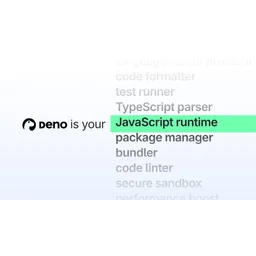
Deno
Developer Tools
A fast, open-source, fully Node-compatible JS runtime with TypeScript baked right in
- From
- Free
- Free plan
- Yes
The short version
- Deno has a free plan, then $20/mo; 3scale starts at $300/mo.
- Where 3scale falls short: sold as part of Red Hat middleware rather than standalone, and 3scale.net redirects into redhat.com.
- Where Deno falls short: egress bandwidth overage costs $0.20/GB which can become expensive for high-traffic applications.
- Prices and features on this page were last checked on 20 November 2026.
How do 3scale and Deno differ?
3scale and Deno differ on starting price ($300/monthly against Free), pricing model (Subscription against Freemium) and free tier (No against Yes). Only the attributes on which 3scale and Deno actually diverge.
Which features does each one have?
They share no listed features; 10 appear only for 3scale. Drawn from each product's published feature list. An absence here means we hold no record of it - not that the product lacks it.
Only in 3scale
- API Gateway
- Developer Portal
- API Monetization
- Red Hat OpenShift
- AWS
- Azure
- Kubernetes
- Cloud support
Only in Deno
Nothing recorded that 3scale does not also cover.
What is each one used for?
3scale is most often brought in for API gateway and lifecycle management; Deno for running TypeScript natively without transpilation overhead. The jobs each tool is most often brought in to do.
3scale
- API gateway and lifecycle managementnot Deno
- Rate limiting and traffic control across API consumersnot Deno
- Developer portal and access key managementnot Deno
- Monetising APIs with usage-based plansnot Deno
- Hybrid deployment across on-premises and cloudnot Deno
Deno
- Running TypeScript natively without transpilation overheadnot 3scale
- Migrating Node.js applications to secure-by-default runtimenot 3scale
- Deploying edge functions and serverless containers seamlesslynot 3scale
- Consolidating developer tools into single binarynot 3scale
Where do 3scale and Deno fall short?
3scale's most cited limit: sold as part of Red Hat middleware rather than standalone, and 3scale.net redirects into redhat.com. Deno's: egress bandwidth overage costs $0.20/GB which can become expensive for high-traffic applications. Documented limitations, not opinions. Every one is a constraint you would hit in normal use.
3scale
- Red Hat's managed 3scale services end on 30 June 2027, so anyone adopting the hosted option now is choosing a product with a published end date
- Sold as part of Red Hat middleware rather than standalone, and 3scale.net redirects into redhat.com
- Pricing is not published and a subscription is required for some services
Deno
- Egress bandwidth overage costs $0.20/GB which can become expensive for high-traffic applications
- CPU time overage is $0.10/hour on Pro and Builder tiers, adding to costs for compute-intensive workloads
- Enterprise pricing is not disclosed; requires sales contact
How much do 3scale and Deno cost?
3scale starts at $300/mo; Deno has a free plan, with paid plans from $20/mo. Plan by plan below, from each vendor's own pricing page.
3scale
$300/monthly- Starter$300/mo
- API gateway
- Developer portal
- Basic analytics
- Professional$750/mo
- Advanced features
- API monetization
- Enhanced support
- EnterpriseOn request
- Custom deployment
- Dedicated support
- Premium SLA
Deno
Free- FreeFree
- 1 million requests/month
- 20GB egress bandwidth
- 10 apps
- Pro$20/mo
- 5 million requests/month
- 200GB egress
- 50 apps
- Builder$200/mo
- 25 million requests/month
- 2,000GB egress
- 10,000 apps
- EnterpriseOn request
- Custom limits on all metrics
- 99.95% reliability SLA
- Email support with SLA
Which should you pick?
Choose 3scale if
- You need api gateway.
- You work on Web, Self-hosted, Hybrid.
- You also want developer portal.
Questions people ask
- Is 3scale or Deno better?
- Neither clearly leads. 3scale starts at $300/monthly and Deno at Free, and user ratings are close enough to be indistinguishable. Choose on capability and platform support.
- Which is cheaper, 3scale or Deno?
- Deno has a free tier; the other does not. Paid plans start at $300/monthly for 3scale and Free for Deno.
- Does 3scale or Deno run on more platforms?
- 3scale runs on Web, Self-hosted, Hybrid. Deno runs on Web.
- Can I use Deno for free?
- Yes. Deno has a free tier, so you can try it without paying. 3scale starts at $300/monthly.
- What is 3scale best used for?
- 3scale is most often used for api gateway and lifecycle management, rate limiting and traffic control across api consumers, developer portal and access key management, monetising apis with usage-based plans. Of those, api gateway and lifecycle management and rate limiting and traffic control across api consumers are not what Deno is typically brought in for.
- What can 3scale do that Deno cannot?
- 3scale covers API Gateway, Developer Portal, API Monetization, Red Hat OpenShift.
Answered from the vendors’ own pages
3scale: Does Red Hat 3scale require a subscription?
Yes. The page states a subscription may be required for some services, though specific subscription details and costs are not published on this page.
SourceDeno: How much does Deno Deploy cost?
Deno Deploy offers a free tier at $0/month, Pro at $20/month, and Builder at $200/month. Enterprise has custom pricing. All plans include base request and bandwidth limits, with overage charges for additional usage.
Source3scale: Is a trial available for 3scale?
A 'Start a trial' link is mentioned in navigation, but trial duration, included features, and limitations are not specified on this page.
SourceDeno: What are Deno Deploy's overage charges?
Egress bandwidth overages cost $0.20 per GB. CPU time overages are $0.10 per hour on Pro and Builder tiers. Memory time and KV database operations also incur charges beyond included limits.
Source3scale: When will Red Hat 3scale end support?
Red Hat 3scale API Management maintenance and managed services will end on June 30, 2027. Customers should plan migrations accordingly.
SourceDeno: How many apps can I deploy on Deno's free plan?
The free tier includes 10 apps with up to 1 concurrent build. Pro tier supports 50 apps with 3 concurrent builds, and Builder supports 10,000 apps with 20 concurrent builds.
SourceDeno: How many team members can access Deno Deploy?
The free tier supports up to 3 team members. Pro supports 10 team members. Builder supports 25 team members. Enterprise has custom seat limits.
SourceRelated pages
Other head to heads
- 3scale vs Apigee
- 3scale vs WSO2 API Manager
- 3scale vs Kong Gateway
- 3scale vs Tyk
- 3scale vs Gravitee
- 3scale vs Akana
- 3scale vs Boomi API Management
- 3scale vs TIBCO Mashery
- 3scale vs Microsoft Azure API Management
- 3scale vs IBM API Connect
- 3scale vs 10x Banking
- 3scale vs Sensedia
- 3scale vs TrueLayer
- 3scale vs Directus
- 3scale vs Mambu
- 3scale vs Yapily
- 3scale vs Appwrite
- 3scale vs Bruno
- 3scale vs pnpm
- 3scale vs Yarn
- 3scale vs AWS CDK
- 3scale vs Jitsu
- 3scale vs Gitea
- 3scale vs WebStorm
- 3scale vs Argo CD
- 3scale vs Turborepo
- 3scale vs Git
- 3scale vs Soketi
- 3scale vs Restate
- 3scale vs Frappe
- 3scale vs Depot
- 3scale vs Neovim
- 3scale vs Azure DevOps
- 3scale vs Bitbucket
- 3scale vs Daytona
- 3scale vs Helix
- Deno vs Apigee
- Deno vs WSO2 API Manager
- Deno vs Kong Gateway
- Deno vs Tyk
- Deno vs Gravitee
- Deno vs Akana
- Deno vs Boomi API Management
- Deno vs TIBCO Mashery
- Deno vs Microsoft Azure API Management
- Deno vs IBM API Connect
- Deno vs 10x Banking
- Deno vs Sensedia
- Deno vs TrueLayer
- Deno vs Directus
- Deno vs Mambu
- Deno vs Yapily
- Deno vs Appwrite
- Deno vs Bruno
- Deno vs pnpm
- Deno vs Yarn
- Deno vs AWS CDK
- Deno vs Jitsu
- Deno vs Gitea
- Deno vs WebStorm
- Deno vs Argo CD
- Deno vs Turborepo
- Deno vs Git
- Deno vs Soketi
- Deno vs Restate
- Deno vs Frappe
- Deno vs Depot
- Deno vs Neovim
- Deno vs Azure DevOps
- Deno vs Bitbucket
- Deno vs Daytona
- Deno vs Helix